

When To Resurface Brake Rotors – And When You Should Just Replace Them
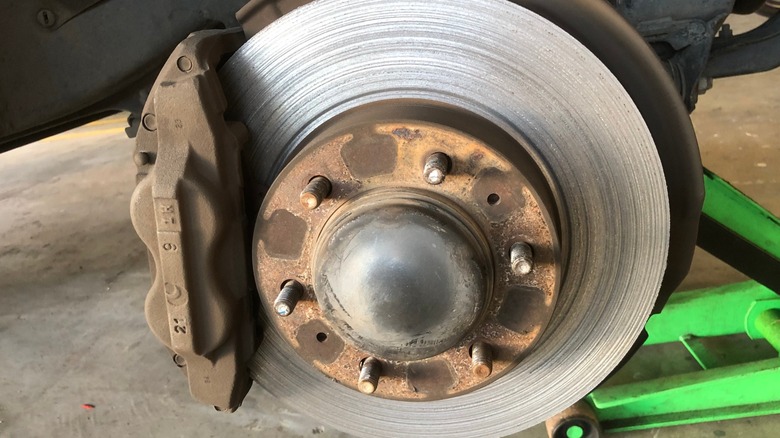
Are you hearing that squeal or feeling that vibration when you press on the brake? Then you're probably in one of two camps — either you're a little tight on cash right now and you're hoping you can get by with just resurfacing your rotors when you replace the pads, or you're willing to spend the extra money to go straight to replacing the rotors, "just to be safe." But it's not always recommended to replace your rotors. The manufacturers have specific guidelines about that sort of thing.
If rotors still meet spec, staying above the minimum thickness set by the manufacturers, without cracks or excessive warping, replacing them may not be necessary. Of course, if they are under that minimum thickness or even just a little cracked, it's time to replace those rotors. As much as you may want to avoid the expense of new rotors, there are just some things surfacing can't fix, like grooves that are too deep. Trying to fix those kinds of grooves by resurfacing can take enough off of the rotor surface so that it is thinner than the minimum thickness.
If you want to avoid having to get new rotors, the best thing you can do is to get your brakes serviced as soon as you detect something wrong, like the squeal or vibration we mentioned earlier. Letting a pad wear down can mess up your rotors beyond repair. So it's best to catch it early.
When to resurface and when to replace
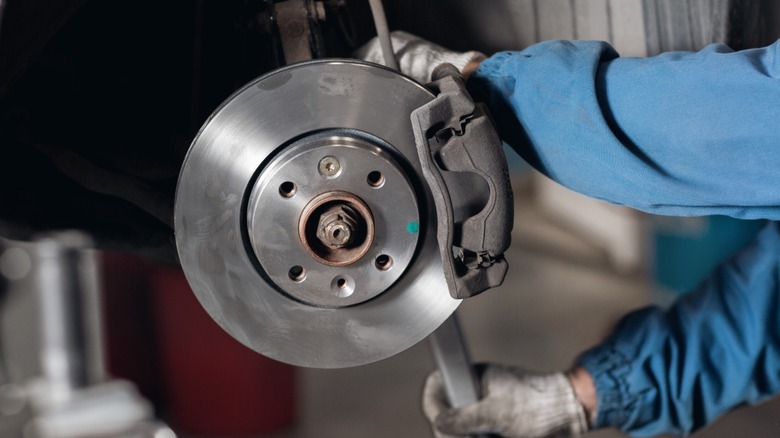
The first thing you should check is the thickness of your rotors. The manufacturer typically has a minimum thickness for your rotors. If your rotors are still at least that thick, don't replace them. Manufacturers are pretty consistent about that. That doesn't necessarily mean you should resurface them, however. Resurfacing always takes a little bit away from the thickness of the rotor. So before you resurface, you'll need to figure out whether your rotor is thick enough that it will still meet minimum thickness after being resurfaced. And, of course, if the rotor is below minimum thickness, replace it.
Resurfacing can also fix some pedal pulsation or judder due to a warped rotor, which is also known as lateral runout. The same is true if there's just some light scoring caused by dirt on the rotor or glazing, which is caused by overheated pads. Resurfacing can take care of those things, unless the rotor is cracked. In that case, it should be replaced, regardless of how thick it is. It is also possible for a rotor to be too warped to be refinished, which would be another sign that the rotor needs to be replaced.
If you're resurfacing due to runout, check the hub. A hub that is even a little dirty or rusted can cause rotor warping. So clean it well before reinstalling those rotors. And make sure the lugs are torqued correctly. Lugs that are too tight can also cause rotors to get warped.
What manufacturers say
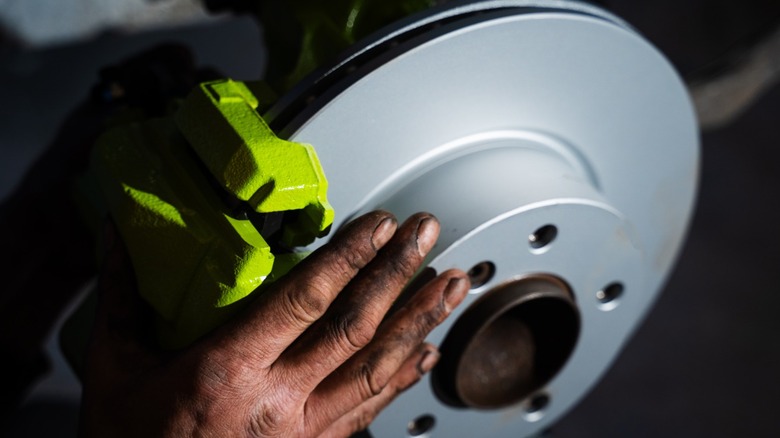
GM put out a bulletin (archived by the National Highway Traffic Safety Administration) to its service personnel back in 2013 regarding brake service. Yes, that's a while ago, but the whole principle about not replacing rotors if they meet specs for thickness won't really change until brake pads and rotors themselves are obsolete. Among other things, the bulletin stated directly, "Important: Only replace the rotors if they do not meet the Minimum Thickness specification." And then, under "Brake Warranty," it listed a bunch of conditions that are not reasons to replace rotors. It stated that rotors should not be replaced during normal pad replacement. In fact, they shouldn't even be resurfaced in that case. According to GM, their rotors shouldn't be surfaced to fix a squeal. They shouldn't be replaced for cosmetic rust, for rotor discoloration, or for "customer pulsation concerns."
BMW sent out its own bulletin (available via the NHTSA's public repository) in 2018 about brake service. It reminded techs that the minimum thickness of its rotors is stamped right on the rotor. Brake pad replacement is prohibited if the rotor is below the minimum thickness. In other words, it's time to replace that rotor. However, the bulletin made it clear that rotors shouldn't be replaced if they are at or above minimum thickness.
So don't just replace your rotors every time you hear a squeal. And if you'd like to learn more, check out our post on how long brake rotors usually last.