

Which Chevy Trucks Came With A 454 V8 Engine?
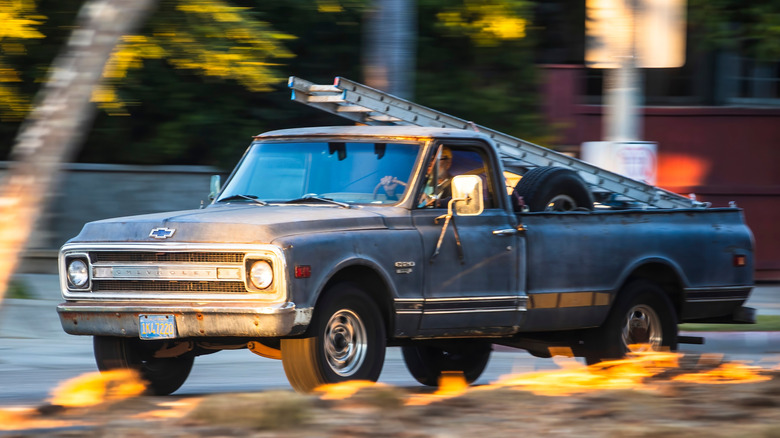
Chevy's small-block V8 is bound to pop up in conversations thanks to its omnipresence in American automotive culture. But it had a larger sibling that made a strong case for the phrase "There is no replacement for displacement." That sibling was the 454 V8, a heavy and thirsty cast-iron engine that you chose for your pickup or SUV if you needed serious towing muscle.
The 454 V8 was seen in muscle cars such as the 1970 Chevelle SS and C3 Corvette, as well as SUVs like the Suburban. However, its true home was under the hood of Chevy's rugged work trucks. It was the engine to go for if you wanted to tow horse trailers across the Rockies, or even win stoplight drag races. It even had enough differences to stand apart from the Pontiac 455 V8 despite both being thirsty pushrod V8s under the General Motors umbrella. Despite its thirst, the Chevy 454 survived for decades as the ultimate workhorse, as diesel options at the time weren't particularly refined or powerful until Duramax engines arrived and replaced them.
The 454 was also called the "Rat" motor to distinguish it from the smaller "Mouse" motor nickname boasted by Chevy small-block V8s. Trucks that left the factory with the 7.4-liter 454 V8 include the C/K 20 and 30 series, the 454 SS, the R2500 and R3500, the C3500 HD, and the Kodiak L21. And unlike the Chevrolet El Camino 454 Super Sport, these are proper trucks.
Chevrolet C/K 20 and 30 series (1973-1991)
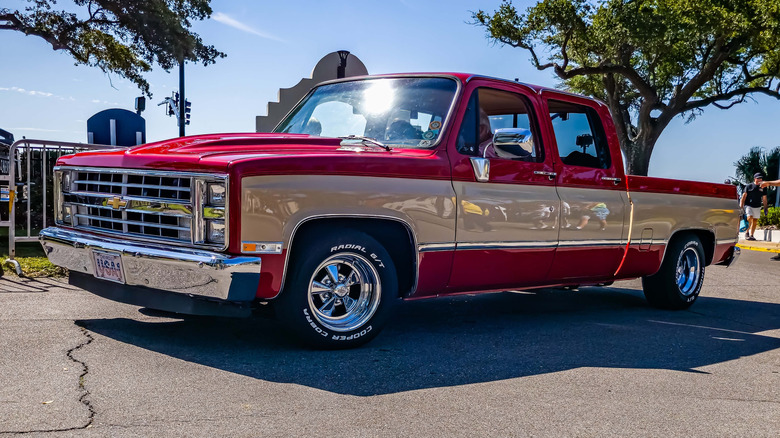
With the square-body C/K series, the 454 V8 went from being a muscle car transplant motor to a proper work truck engine legend. The smaller C10 pickup got the small-block V8, though from 1973 onward, the 454 was available as an option. Chevrolet also started offering the 454 V8 in its three-quarter-ton (C20/C20 HD) and one-ton (C30/K30) pickup trucks. In this era, pickups were not flashy runabouts, but proper workhorses designed for farmers and contractors who needed torque more than bragging rights.
The early 454s were heavy haulers. The EPA regulations and fuel crisis meant they were detuned to deliver a measly 240 horsepower, but even with this strangled tune, the V8s delivered fantastic grunt. These engines powered the "Camper Specials" and dual rear-wheeled "Dually" that hauled large slide-in campers and gooseneck trailers. They also delivered catastrophic fuel economy, but they were virtually indestructible. 454s were designed to run all day at low rpm, and that's a reason why many survive even today.
Chevrolet 454 SS (1990-1993)
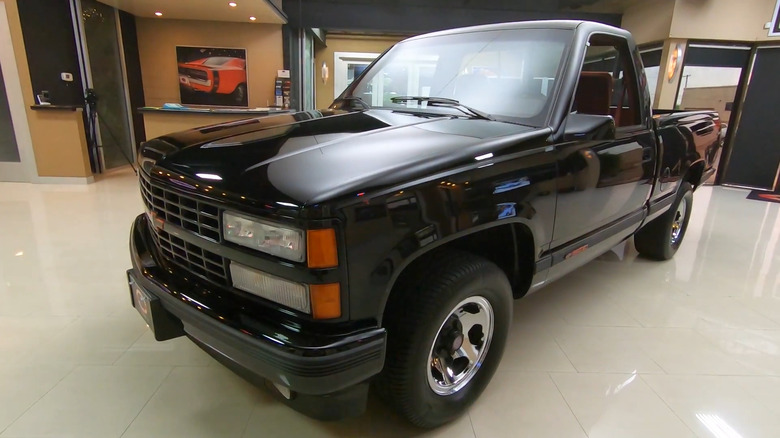
Chevy's idea of a muscle truck was taking the lightest full-sized truck it had, which was the C1500 with the regular cab and short bed, and plonking in the 454 V8 under the hood. The 454 SS initially came only with a black paint job with red interiors, beefed-up suspension, and 454 SS decals. While the engine made only 230 horsepower, it delivered 385 pound-feet of torque in a lightweight truck. Plus, the truck could accelerate to 60 miles per hour from a standstill in under eight seconds, which was especially impressive back in 1990.
The 454 SS initially came with a three-speed automatic gearbox, which didn't help much with fuel economy. On a good day, it would deliver around 10 miles per gallon. Even so, it continues to be counted among Chevrolet's best forgotten pickup trucks. With close to 17,000 units produced, the Chevy 454 went on to become a cultural icon of that era and is a highly sought-after collectible today, with well-preserved, low-mileage examples easily fetching up to $50,000.
Chevrolet R2500 and R3500 (1987-1991)
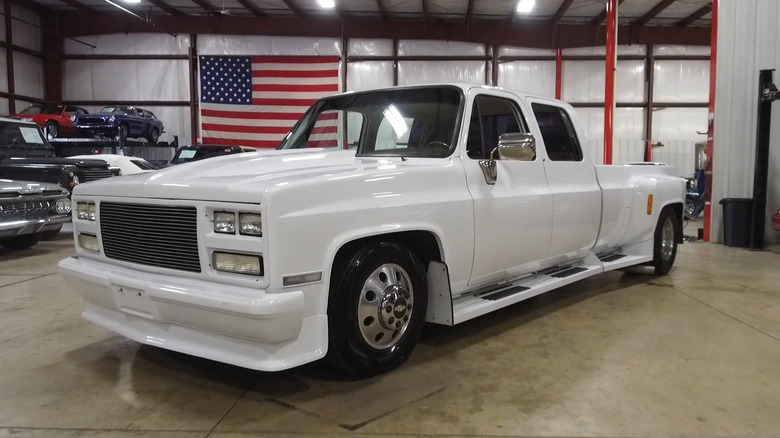
The R2500 and R3500 represent a pivotal era of Chevrolet's 454 work trucks. This was when the automaker introduced the next-generation C/K trucks with the GMT400 body style in 1988. The R2500 and R3500 continued with the old square body style crew cab versions by renaming them R (and V for 4WD) instead of the C/K nomenclature. Unfortunately, they didn't last long, and these short-lived models became the swan song for the square body 454.
The V8 motor ditched the Quadrajet carburetor for electronic fuel injection. While it didn't help the relatively low horsepower ratings, it improved the motor's reliability and cold start performance. These trucks were the last of Chevy's "Rounded Line" trucks and became highly sought after, primarily thanks to the unique combination of a classic boxy truck body style and modern conveniences like fuel injection. Even today, trucks like the R3500 Crew Cab Dually with the 454 are serious haulers and stars in vintage truck scenes.
Chevrolet C3500 HD (1991-2000)
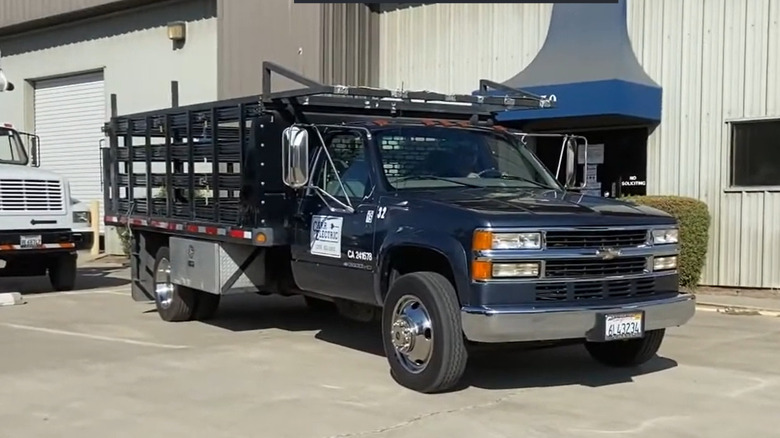
The C3500 HD can easily be confused with the C3500, but unlike the latter, it only came with a single cab body style from the factory floor. It was built to bridge the gap between a pickup and a medium-duty truck. This model had a more robust frame than Chevy's one-ton pickup trucks, as well as a longer wheelbase and heavy-duty axles.
Under the hood, the C3500 HD gasoline variants featured the 454 V8. Later models transitioned to the Vortec 7400 — a high-performance version of the 454 V8. This motor featured improvements such as hydraulic roller cams and multi-port fuel injection, which pushed performance to around 290 horsepower and 410 pound-feet of torque. Given how C3500 HD models were designed to operate as tow trucks and dump trucks, the motor was paired with the 4L80E heavy-duty automatic transmission and the Dana 80 rear axle. The result was a beast designed to effortlessly pull heavy trailers and campers, making it the ultimate expression of the 454 V8's industrial capabilities.
Chevrolet Kodiak L21 (1981-2001)
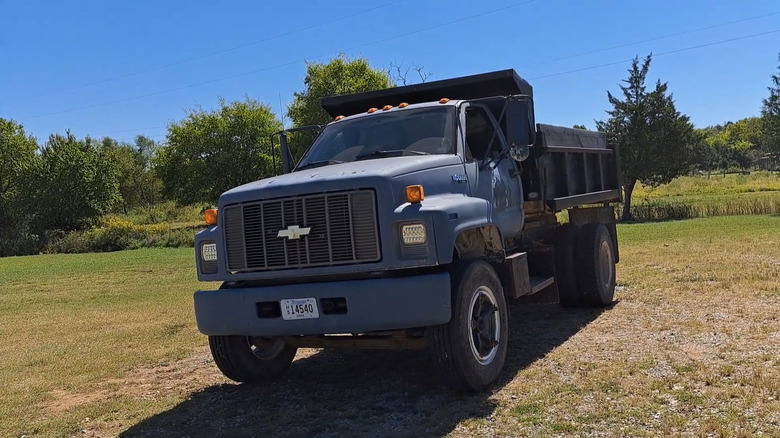
The 454 exits the realm of Chevrolet pickup trucks and enters the medium-duty truck territory with the Kodiak. This allowed it to take on the duties of school buses, delivery trucks, and fire tenders. While most people associate the Kodiak with heavy-duty Caterpillar or Duramax diesel power plants, the L21 model came with the 454 V8. The engine was reinforced with a forged crankshaft and forged pistons to sustain high load for extended periods of time.
The gasoline engine was a popular choice for fleets that wanted to avoid the higher initial buying costs and complex maintenance of a diesel engine. Despite improvements in diesel technology, the big-block 454 still held its own in trucking thanks to being paired with an Allison transmission. In the end, though, the 7.4-liter gasoline V8 was replaced by a larger 8.1-liter Vortec 8100 V8.
Ultimately, the 454's demise was led by factors such as tightening emissions standards, an increasing expectation for fuel economy, rising gas costs, and improvements in diesel technology. General Motors' new breed of LS small-block V8s simply offered a better balance between performance and fuel efficiency than the 454 ever could.