

The First Things To Check When Your Engine Is Hemorrhaging Horsepower

The internal combustion engine that we all know and love needs diligent maintenance to keep running in tip-top form. Even the best engines require frequent servicing to deliver peak performance, while even the most reliable diesels could face an untimely death without frequent oil changes, calibrations, and routine inspections.
However, engines tend to lose horsepower as the years and miles go by, and that's just how it is. Holistic vehicle servicing can delay the inevitable, but engines succumb to daily wear and tear, relentless friction, and immense heat with every revolution, which eventually leads to power loss.
For instance, the piston rings and cylinder walls can wear out and lead to compression loss, while sludge and carbon buildup on the valvetrain, injectors, and pistons can significantly reduce combustion efficiency. All of which can make your car feel sluggish and slow. The point is that engines can hemorrhage power for a bevy of reasons, but there are a few things worth checking to ensure that you're only dealing with maintenance and part issues, rather than a costly and time-consuming rebuild.
Among the first things to check is the engine air filter. You can clean it if you have a washable or reusable kind, but replacing an OEM air filter every 12,000 miles or 12 months will ensure your car's engine won't be starved of air, enabling it to consistently unleash its full potential.
Fuel filters, spark plugs, and injectors
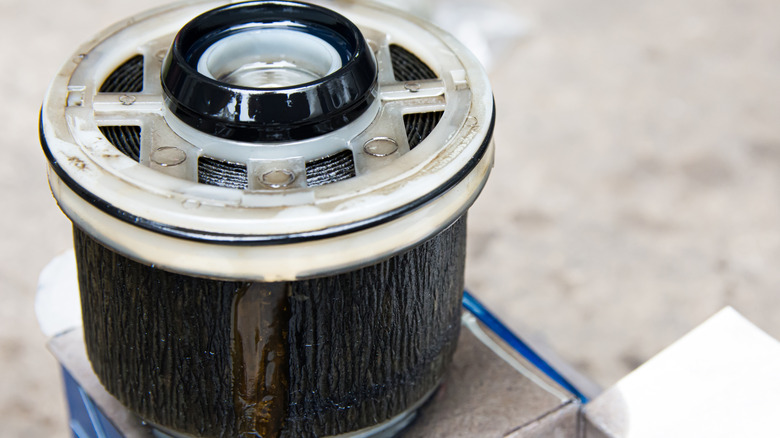
If your engine is not as peppy as it used to be, the next things to check are clogs or blockages in the fuel filter and fuel injectors. The former protects the latter from particles, deposits, and other contaminants, but no fuel filter lasts forever. It will eventually gum up with dirt and debris over time, usually enough to disrupt fuel delivery and eventually lead to power loss. You should also check and replace the spark plugs, as the electrodes that produce the spark can become fouled.
Meanwhile, dirty fuel filters will increase the likelihood of dirt and particles entering the fuel lines and clogging up the injectors, leading to reduced power output and other problems like misfires, rough idling, hard starting, and poor fuel economy. Older cars have separate fuel filter canisters under the hood and are easily replaceable. It's not that easy with modern cars, since the fuel pump and filter assembly are typically inside the gas tank, located under the rear seats (save for some GDI engines that have secondary filters under the hood).
But it's not the end of the world. You can clean the fuel filter and injectors with commercially available fuel injector and fuel system cleaners. Whether it's worth using such fuel injector cleaners or not depends on who you ask, but pouring a bottle of fuel injector cleaner in your car's tank doesn't require ASE certification and costs less than a trip to the dealership. To our mind, it's definitely worth a go if you think you're dealing with dirty injectors.
Other things to check if your engine is down on power
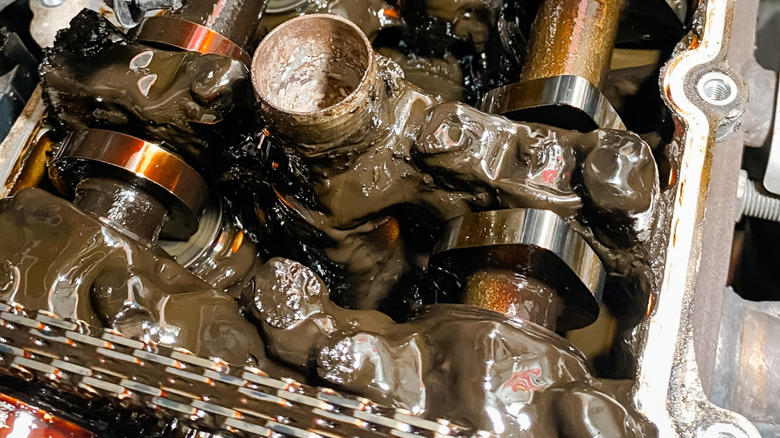
When was the last time you had the oil changed? If your answer is a wince and a few seconds of mindless recalling, then you're probably not changing the oil frequently enough, which could mean your engine is suffering from carbon deposit buildup and sludge.
The latter is that thick, gooey, tar-like substance that will clog the engine's insides. When oil breaks down due to contaminants, heat, and neglect, it turns into sludge, and that nasty stuff will cling to vital internal parts like the crankshafts, camshafts, valvetrain, pistons, and the oil pump – parts that need constant lubrication.
Your engine needs to work harder when dealing with sludge issues, and this can seriously affect performance. Worst case, sludge can kill your engine, so it's better to keep up with scheduled oil changes than deal with the consequences later on. In some cases, sludge buildup can cause sensors to malfunction and trigger the check engine light or send the car into limp mode, making it seem as though the engine is down on power.
Finally, a clogged catalytic converter or dirty exhaust pipe can drastically cut the horsepower output of your ride. Problems with the air filter, injectors, and the combustion process in general could lead to soot buildup and blockages in the exhaust and catalytic converters, eventually leading to power loss. If the "cat" is clogged, fuel additives might help, or you can remove it and soak it in degreaser overnight, then power wash it. But if the material has broken up into chunks, it'll need replacement.