

Here's Your First Onboard Look At The New Generation Of Formula 1 Cars
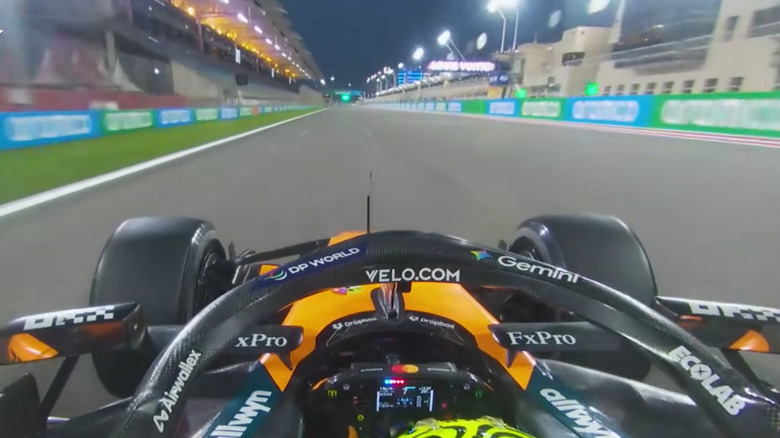
Formula 1 will return to racing for the 2026 season in a little under a month's time, bringing with it a completely new set of engine and chassis regulations. There's no telling exactly what that means in terms of shaking up the performance, as we haven't yet figured out which teams and drivers will adapt best to the changes. While F1 held a private test at Barcelona a couple of weeks ago, Wednesday marked the first official day of testing available for the public to watch. This official onboard video is our first real indication of what the cars are capable of and how they work.
Our first onboard of 2026! 😍
Jump aboard Lando Norris' McLaren as he set the fastest time of day one 👀#F1 #F1Testing pic.twitter.com/DjP6D5fbuc
— Formula 1 (@F1) February 11, 2026
Lando Norris set the fastest lap of the day in Bahrain, putting a 1 minute 34.669 second run on the table. That put him just over a tenth quicker than Max Verstappen's Red Bull Ford, and half a second up on Charles Leclerc's Ferrari. I wouldn't read too much into the running order just yet, as there is still plenty of sandbagging going on out on course, and the times don't tell the full picture of variables like tire compound or fuel load. I would say that it's a bit eye-opening how slow that time is, though.
We always knew the 2026 cars would be slower than the 2025 spec, thanks to a significant reduction in downforce and a wholesale change to how the drivetrains make power. Even still, Oscar Piastri's 2025 Bahrain Grand Prix pole position time was just shy of five seconds quicker than his McLaren teammate managed on Wednesday.
How's the lap?
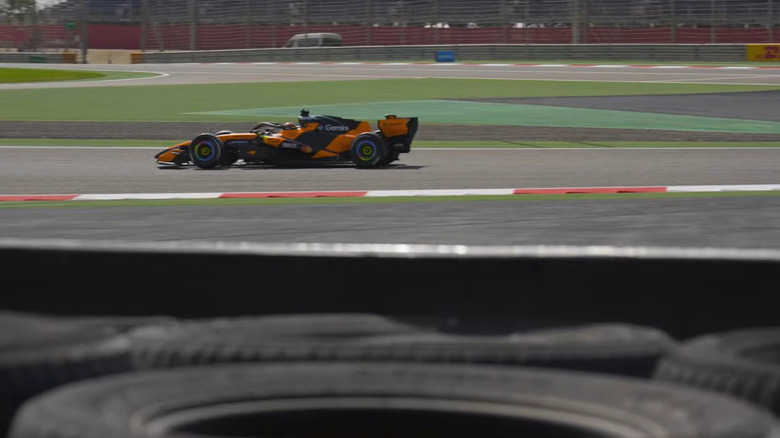
On Norris' best lap he didn't even manage three fast sectors, running slower than his personal best in sector one, so there's definitely some more time left on the table in the McLaren than what's on display in this lap.
First up, there is still a bit of the bouncing at speed on the main straight that was a signature of the outgoing regulations. With the FIA all but abolishing ground effect downforce, the cars should be running a little higher and less porpoising will occur. That's borne out in the fact that we don't hear the McLaren bottoming out while at speed.
Because of the way Formula 1 cars make power in 2026, split about 50/50 between the gasoline engine and the electric hybrid unit, the cars seem to be running out of steam partway down many of the longer straights at the Bahrain track. This is another thing for drivers to manage, and an aerodynamic slipstream plus a well-timed energy deployment could be quite effective for overtaking maneuvers.
Nearly unanimously, the drivers seem to agree that this set of regulations leads to a looser driving experience and many of them have indicated they find the driving more fun. With a bit more sliding around on track and less reliance on aerodynamic downforce, the drivers will actually be forced to drive again, instead of piloting. This sport will always demand inch-perfect inputs, but it seems the driver is more plugged in than recent seasons.
Don't forget that Carlos Sainz set the fastest lap of pre-season testing in 2025, so take all of this as lightly as you want. We'll have to wait and see what happens in Australia next month, but for now, I'm intrigued.
Takeaways from the first day of testing?
As mentioned before, it's still pre-season testing, so we should take a lot of what's happened as politicking and gamesmanship. Here are some of the takeaways from day one of testing that stood out to me.
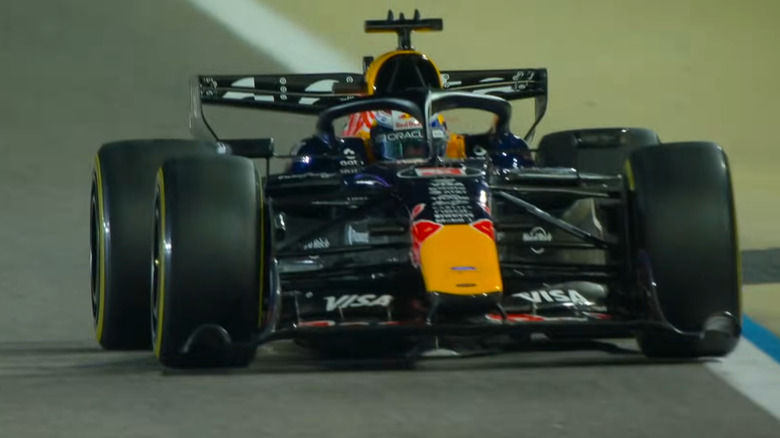
Mercedes boss Toto Wolff believes, based on his reading of telemetry, that Red Bull have found as much as one second per lap, thanks to its incredibly powerful Red Bull Ford engine. Max was nearly six miles per hour quicker in the main straight speed trap than his Mercedes rivals, clocking a 209.02 mile per hour run versus George Russell's 203.5. Using the same powertrain, rookie Arvin Lindblad in the sister team Racing Bulls was right behind Max with a 204.8 mph trap.
Max Verstappen was experimenting with more violent downshifting, in order to spin the engine at higher revs under braking and maximize energy recovery. With the removal of the old MGU-H system and a new more powerful MGU-K system, keeping energy in the system is vital to turning a fast lap.
Despite not having their car ready in time for the earlier Barcelona test, Williams Grand Prix showed up ready to rumble in Bahrain. Still setting times in the bottom half of the grid, both Carlos Sainz and Alex Albon managed to put in some serious time behind the wheel with 77 and 68 laps respectively, more laps than any other team.
At the other end of that table was Aston Martin, which saw only 36 laps on track in fits and starts. The brand new Honda engine seemed to be overheating significantly, and wasn't producing nearly as much speed as Lance Stroll's fastest lap was more than five seconds off the pace of the lead McLaren.