

Why F1 Teams Can't Just Race Bare Carbon Cars
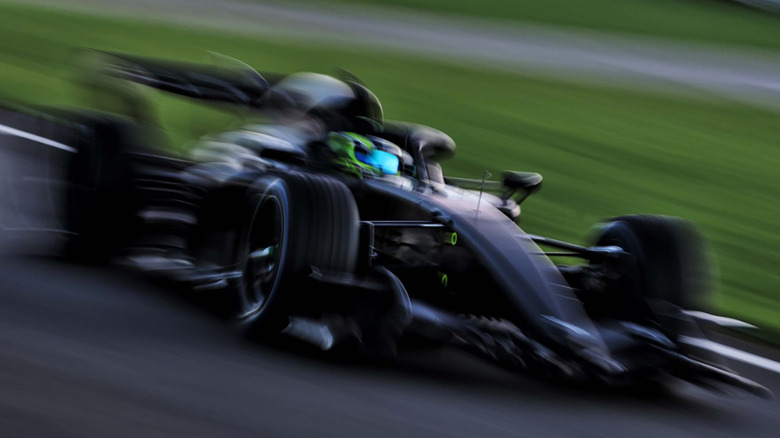
Every ounce matters in Formula 1, with teams ideally building cars beneath the championship's required minimum weight and using ballast to comply. Being above the 1,693-pound limit is simply a disadvantage. When the paint on an F1 car doesn't improve performance and weighs just over 13 pounds, it's usually the first thing to get stripped off of an overweight car. However, the teams can't be too ambitious and race with bare bodywork, as they're required to paint a certain percentage of their car's surface — like Cadillac did with its monochrome camo livery.
That prescribed area is even being increased for the 2026 season. The teams agreed in November that at least 55% percent of a car should either be painted or covered in stickers. F1 noted that the motivation was to "increase visual differentiation between cars." While these modern machines are fitted with cameras and transponders, it's important for race officials and track marshals to visually identify them. For instance, marshals need to wave blue flags at the correct lapped cars to have them yield to the drivers on the lead lap. This reasoning is also why the teams are required to put number decals on their cars that are visible from the front and sides.
F1's livery rules used to be far more restrictive
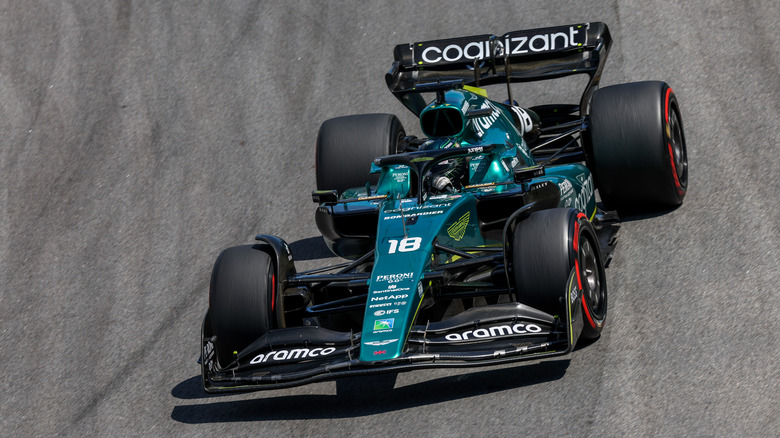
Teams tend to have the most trouble meeting weight after a significant regulations change. The last difficult season was 2022, when the wheel size increased from 13 to 18 inches. This led to teams like Aston Martin saving weight by stripping a portion of their livery. While the primary goal is to reduce the car's weight to under the minimum, the teams also aim to shift weight from the livery to ballast that can be positioned low in the chassis, improving driver balance.
The FIA used to have much more control over the liveries raced in Formula One. Until 1968, the sport's global governing body mandated that teams race with colors determined by their country. While these rules have been struck from the books for almost six decades, Aston Martin and Ferrari still compete with traditional colors. Red was assigned to Italian teams, blue to French entries, and green to British teams. Germany was assigned white, but some of those teams "switched" to silver during the 1930s.
Legally, the factory teams defended their aesthetic decision by arguing that white and silver are treated as the same color in the European heraldry tradition. Alfred Neubauer, the legendary Mercedes team boss, crafted the "Silver Arrows" myth you're likely familiar with and claimed it was a practical move. He stated that the Silver Arrows were created at the 1934 Avusrennen to meet a maximum weight limit. However, the race had no weight limit, and Auto Union also entered silver cars.