

These Are The Cheapest New Cars On The Market For 2026
With the cost-of-living squeeze continuing to bite hard, it's no wonder customers are looking for the cheapest deals around. For some, the solution lies with simply buying used rather than new. Used cars present significant savings to buyers because they've already taken the biggest depreciation hit. And, as a result, bargain hunters can snap up a well-stocked car at a fraction of the price of a new model.
Others, meanwhile, are more sold on the idea of having an affordable brand-new car that they're the first to use. Additional selling points such as the presence of the latest features, manufacturer warranty, and the fact that new cars are usually cheaper to run are also aspects that lure in car buyers. However, following the discontinuation of the Nissan Versa last year, new cars with sticker price below $20,000 have vanished from the market.
Accordingly, the threshold for affordability has moved up, with a sub-$25,000 starting price now seen as the new "cheap," especially now that average new car prices have surpassed $50,000. But if you're on the lookout for a new bargain, these are the five cheapest new cars you can buy in the U.S. in 2026, ranked in order from the most expensive to the cheapest.
2026 Hyundai Elantra: starts from $23,870
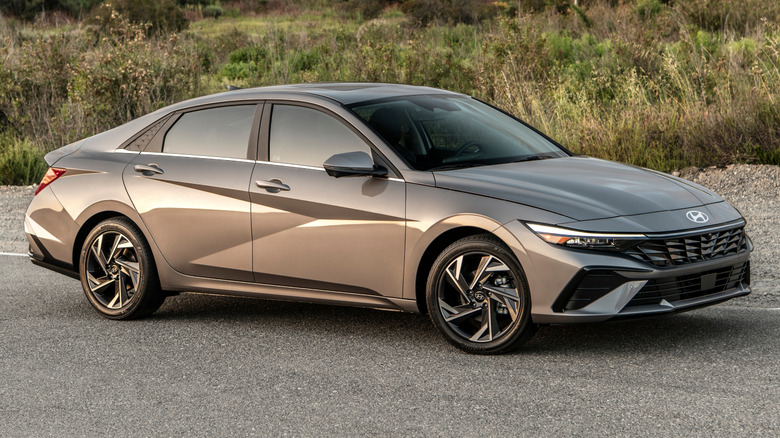
Voted by Jalopnik readers as one of the best value used cars on sale at the moment, the entry-level Hyundai Elantra is one of the most obvious choices for drivers who prioritize affordability. Base-spec 2026 Elantra SE models begin from $23,870 (including a $1,245 destination fee) and offer an 8.0-inch touchscreen display, wireless Apple CarPlay and Android Auto, LED headlights, driver attention warning, as well as blind-spot warning with rear cross-traffic warning.
Power comes from the same 2.0-liter inline four-cylinder engine that carried over from the previous sixth-generation Elantra back in 2021. And as before, the long-surviving mill sends 147 horsepower and 132 lb-ft of torque to the front wheels via a continuously variable automatic (CVT). It's a combination that helps the Hyundai achieve an average fuel economy of 35 mpg in combined city-highway driving.
Additionally, taller people will find the Elantra offers a decent amount of head and legroom, even with its sloped roof. There's 40.6 inches of headroom and 42.3 inches of legroom, with those out back getting 37.3 inches of headroom and 38.0 inches of legroom. The Elantra's cargo space is also excellent for a car its size, given the 14.2 cubic feet on offer.
2026 Nissan Sentra: starts from $23,845
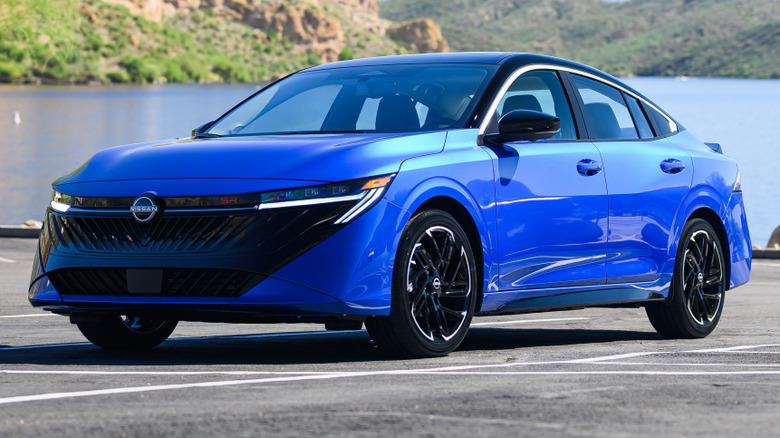
The Nissan Sentra compact car is more appealing than ever, thanks to a thorough overhaul. The 2026 model ushers in the ninth-generation Sentra model and thanks to the revamp, brings an extremely modern design, an upgraded cabin, and a reasonable amount of desirable tech. You now get a 12.3-inch infotainment touchscreen along with wireless Apple CarPlay and Android Auto connectivity and three USB-C ports.
If that's not enough, higher-end trims are within reach too, as the 2026 Nissan Sentra tops out under $30,000. The range-topping SL trim, for example, asks $29,235 in exchange for additional niceties such as a power driver's seat, heated front seats, a heated steering wheel, a wireless charger, an eight-speaker Bose audio system, quilted synthetic leather seat upholstery, a sunroof, and heated outside mirrors.
Beneath the skin, the new Sentra carries over the familiar Renault-Nissan CMF-C/D platform that underpinned the old eighth-gen model and also uses the same engine as the previous car. It's a 2.0-liter four-cylinder that directs 149 horsepower and 146 lb-ft to the front wheels through a continuously variable transmission (CVT), which Nissan claims has been retuned to provide "a more natural, smooth acceleration feel."
2026 Kia K4: starts from $23,535
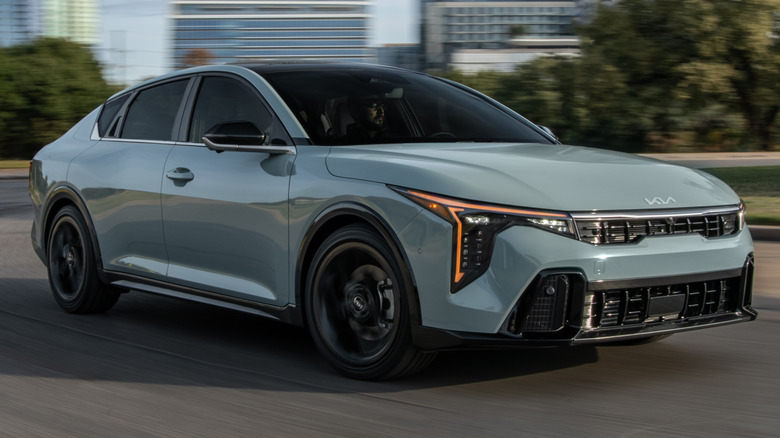
The pleasant K4 is the successor to the Kia Forte. It was first introduced for the 2025 model year and sits on the same Hyundai-Kia K3 platform as the Hyundai Kona and the Elantra mentioned above. So much so that it even shares its engines with the Hyundai.
The standard 2.0-liter four-cylinder provides 147 horsepower and 132 lb-ft of torque, or customers can choose a 1.6-liter turbo four-cylinder. Admittedly, that latter engine is detuned by 11 horsepower compared with the Elantra N Line, so the K4 gets 190 horses, instead of the Elantra N Line's 201 horsepower.
As our review of the K4 noted, the Kia is thoroughly impressive and good value. It is quieter and more refined than you'd expect for a car at this price, while base models are offered with loads of connectivity and safety technology. That includes adaptive cruise control, driver attention monitor, rear passenger, reminder, a 12.3-inch infotainment touchscreen, as well as wireless Apple CarPlay and Android Auto connectivity, all for a reasonably accessible $23,535.
2026 Chevrolet Trax: starts from $23,495 ($22,995 after a $500 offer)
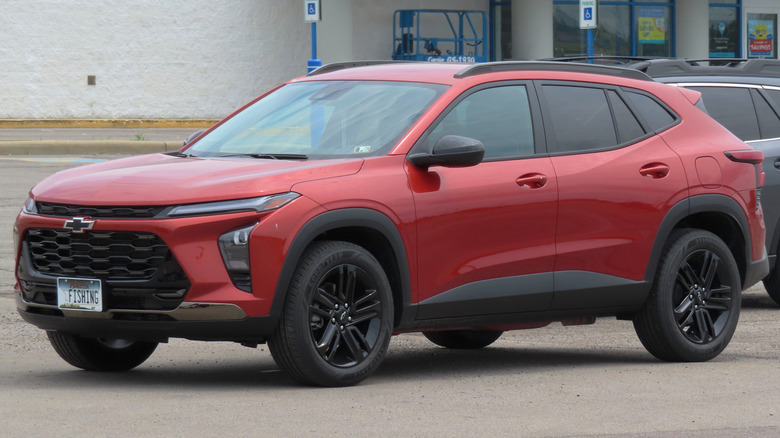
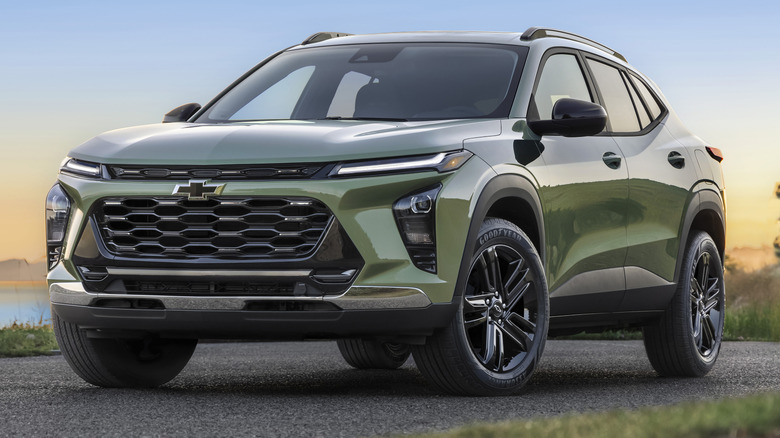
The popularity of crossovers and SUVs is booming, so the prospect of landing one as competent as the Chevrolet Trax for around $23,000 is good news for customers. Many manufacturers will sell you a cheap-feeling interior with very modest features at that price, but Chevy goes above and beyond to provide a cabin that's generously equipped, comfortable, quiet, and feels very well made.
Crucially, the second-generation Trax has moved away from the tall and dumpy look of the first-gen model and instead dons a lower, more extended, boxier shape with sleek lines. Chevrolet claims the second-gen Trax's larger dimensions result in it being more refined and composed than its forebear, and our test found the crossover handles and rides as well as advertised.
Of course, an increase in the overall size also means the Trax is more practical than before, with a larger cargo space to play with. With all seats up, cargo space is 25.6 cubic feet. Fold away the second row and you'll have a vast 54.1 cubic feet of space. That's significantly better than the 18.7 and 48.4 cubic feet of room offered by the first-gen Trax.
2026 Hyundai Venue: starts from $22,650
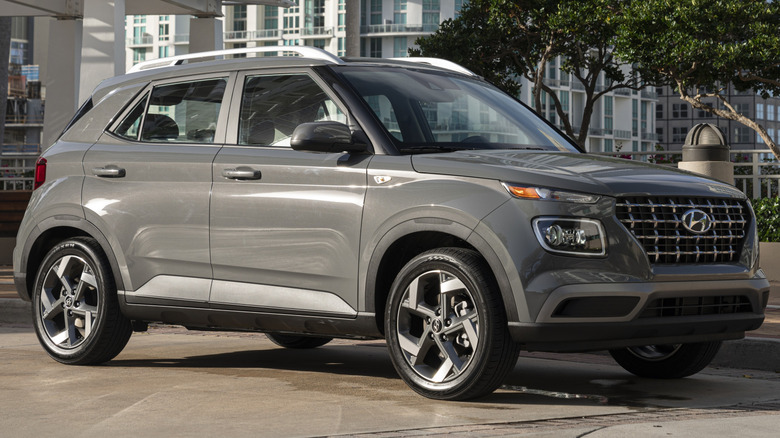
With a starting price of $22,650 (including a $1,600 destination fee), the Hyundai Venue is the cheapest new car you can buy in 2026. Coming in at around 13 feet long and six feet wide, the Venue's narrow body and small footprint makes it great for maneuvering in busy city streets and parking lots.
Its cabin is also decently roomy given its pint-sized build. Front occupants get 39.4 inches of headroom, 41.3 inches of legroom, and 53.9 inches of shoulder room. For the three occupants in the rear, the amount of space available reduces to 38.6 inches of headroom, 34.3 inches of legroom, and 53.7 inches of shoulder room.
As for cargo space, the Hyundai Venue offers 18.7 cubic feet behind the second row and 31.9 behind the front seats. Equipment-wise, there's a standard 8.0-inch touchscreen display, wireless Apple CarPlay and Android Auto connectivity, driver attention warning, forward collision mitigation, and lane keep assist.