

Here's How Snow Mode Changes Driving Dynamics To Keep You Out Of Ditches
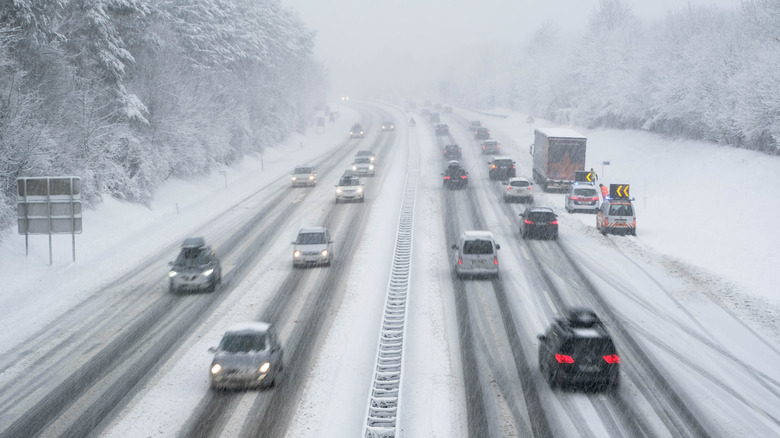
Snow can be challenging for drivers as stopping distance increases, traction becomes an issue, and overall maneuverability suffers. And some vehicles are worse than others when it starts sticking to the ground. According to you, these are the worst cars to drive in bad winter weather – and, surprisingly, they all aren't sports cars.
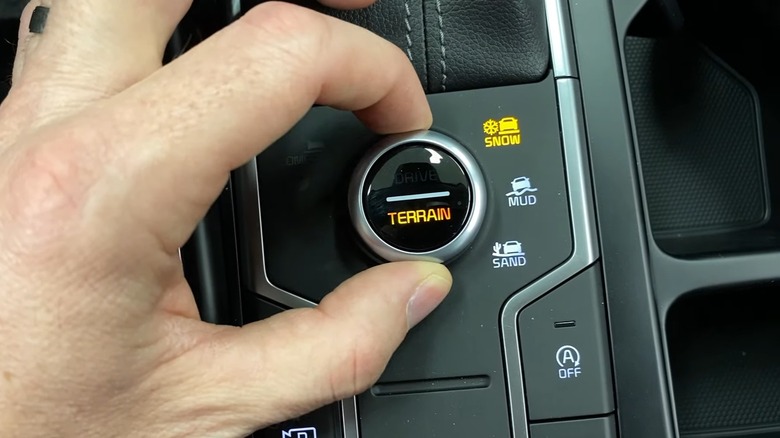
Fortunately, some vehicles come with a snow mode, which is part of a larger traction system. This technology can make changes to the transmission, engine, and brakes, in an effort to prevent the wheels from slipping. The system uses sensors in the wheels to feed data to the vehicle's electronic control unit, monitoring for scenarios when wheels start spinning at different speeds. This is an indication of traction loss, which snow mode (with its enhanced sensitivity) will attempt to counteract.
For example, Volkswagen's 4Motion system alters both engine output and shift timing, lowering power under the hood and forcing earlier shifts than usual. This combination allows the tires more time to grab the slippery road surface. Meanwhile, with Jeep Grand Cherokee's Selec-Terrain system, the front and back wheels receive equal amounts of torque while snow mode is engaged. Another automaker – Kia – adjusts braking when switching into snow mode, as hard stops contribute to sliding.
Snow mode limitations
While these driving modes can be helpful, they don't fundamentally transform your vehicle. Snow mode simply offers a bit of extra support when you're trying not to skate out of control across winter roads. If your area experiences sub-45-degree Fahrenheit temperatures frequently during the cold season, you should consider winter tires. The rubber compound that makes them up is different, allowing them to remain flexible when freezing conditions strike. In fact, because of their malleable nature at lower temperatures, winter tires are still beneficial when the pavement is dry and free of snow or ice. (And these are the best winter and snow tires, per Consumer Reports.)
In addition, you should resist the urge to feel overconfident once you engage your vehicle's snow mode. According to the U.S. Department of Transportation, 116,800 motorists are hurt and more than 1,300 are killed each year in collisions on roads covered with ice, snow, and slush. Good winter driving habits, such as traveling slower and adding extra space between your car and the motorist in front of you, are still recommended even with special driving modes. Additionally, visibility is crucial for safe travel in winter weather, and these US states will fine you for driving with snow on your car. So, be sure to brush off the exterior before hitting the road.
There are also times where engaging snow mode could be a detriment, even in appropriate conditions. For example, if you ended up sliding off the road into a ditch of deeper snow, getting unstuck might be more difficult with snow mode activated. You won't be able to engage the wheels as forcefully with the system softening the amount of torque available.