

5 Things You Should Do When Storing A Car Long-Term
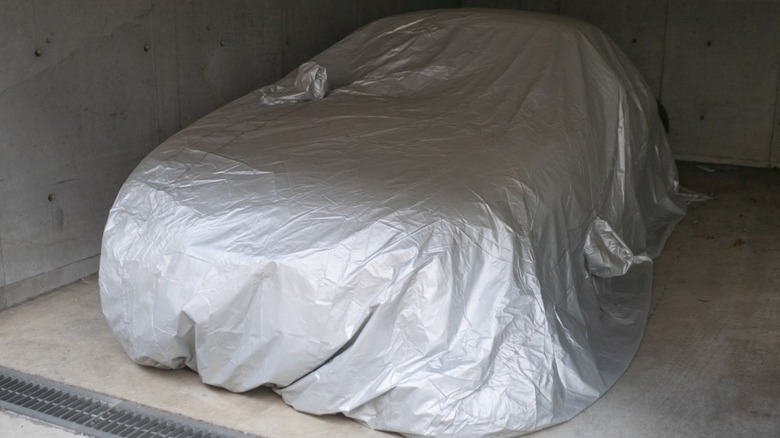
Do you need to store your vehicle for a while? If you plan to park it in a garage or shed for less than a month, you should be fine, though it's important to take steps to keep your battery charged. However, if you're going to store it longer than that, you need to think about protecting the engine, tires, and other parts of the car. Doing these few things can go a long way toward preserving your vehicle.
Disconnecting your battery can save it from draining if you're just leaving it sitting for a couple of weeks. Otherwise, a trickle charger can save it from dying while the car is in storage. You'll also want to disconnect or remove your wiper blades so that they don't stick to the windshield, and unscrew the antenna if you're going to use a car cover. Additionally, you'll need to take the weight off of your tires so that they don't end up flat by the time your get back to your vehicle. One way to do this is to remove them from the car. If you don't want to remove your tires, you can use a set of jack stands or tire cradles.
It's also a good idea to "disconnect" your car from the surrounding environment by sealing all the entry points into the vehicle. This will help prevent pests from nesting in your car. A little preparation goes a long way toward preserving your stored vehicle.
Prepare the battery and other electronics
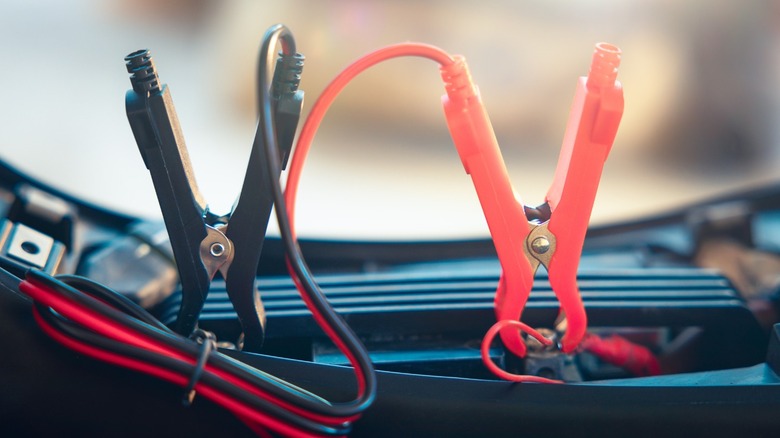
One thing you have to worry about when storing your car is something called parasitic drain. There are a number of things in newer cars that draw power from the battery, even when the vehicle is turned off. Services like OnStar are always on and have to connect from time to time. The same goes for anything that gets over-the-air software updates. Pretty much any connectivity features will drain the battery while the car is in storage. Always-on devices like car alarms and dashcams will also produce parasitic drain, as can trunks and doors that aren't completely closed.
The simplest way to avoid parasitic drain is to disconnect the battery or to take it out entirely. This may work if you are storing your car for a couple of weeks, but car batteries die if they are not used over a long period of time. A better solution is to disable all of those electronics and connect a trickle charger that will keep your battery charged the whole time it is stored.
What about electric vehicles? You should take the same precautions to protect the 12-volt battery in an EV as you would a gas-driven vehicle. But you should not try to disconnect the high-voltage battery. Instead, you should charge it to 40 to 60%. If you have a Level 2 charger, you may be able to control charging remotely. Check to see if your EV has a storage or deep sleep mode.
Take care of the windshield wipers and other external items
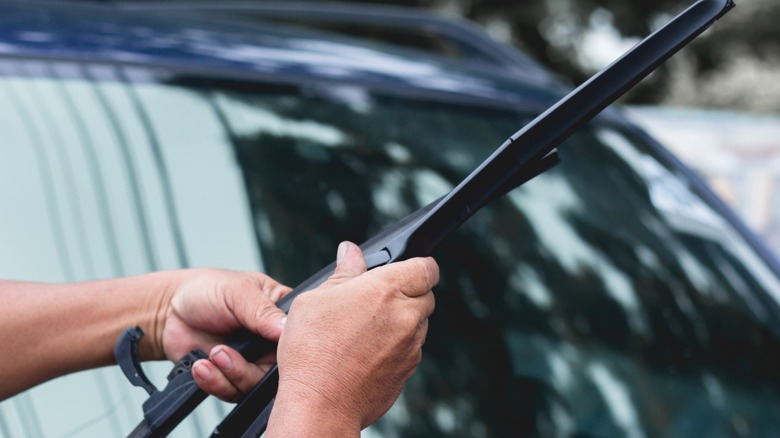
How hot does it get in the garage or shed where you're going to store your car? Really hot summer weather can soften rubber and even cause it to start melting. That's not good for your windshield wipers. Why? The softened rubber of the blades can stick to the windshield. Even without excessive heat, the rubber can break down over time since it's resting without interruption on the glass, which can cause it to stick to the windshield as well.
So, what can you do? You have a few options. First, you can disconnect your blades from the wipers and store them separately. Secondly, you can just lift the wiper blades straight up and store them that way. However, that can make it easier to break or bend them if you're going to cover your car. Thirdly, you could wrap your blades in plastic, which should protect them while your vehicle is in storage. Bonus tip: Consider upgrading to silicone wiper blades, which don't break down as quickly as rubber.
Speaking of things that can break off, you might think about removing your antenna stem if you have one and you're planning to use a car cover. The cover can bend or snap your antenna, especially if you're a little rough with the cover when putting it on. Antennas screw off pretty easily, so this shouldn't add too much time while prepping your car for storage.
Prepare the tires for storage
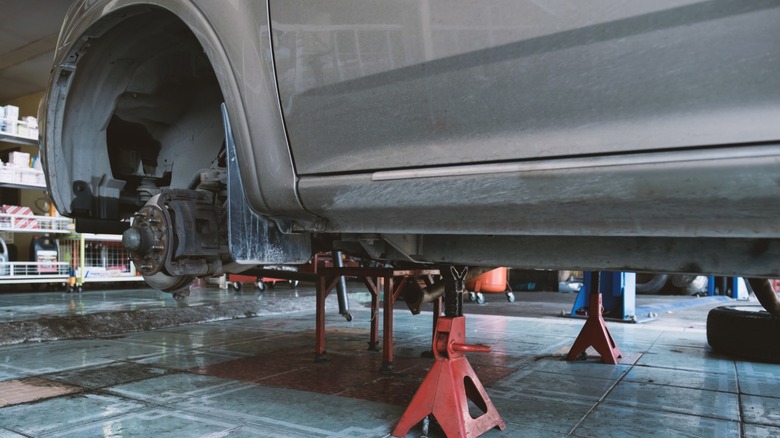
Tires don't do very well when they sit still for a long time. You've seen this if you've come across cars that have been abandoned a while — they almost always have flat tires. This is because one section of the tire is bearing the weight 24/7 when a car is parked for a long time. So, flat spots and cracks develop.
You can avoid this by taking the weight off of the tires. One way to do that is to take the tires off of the car and store them separately. This isn't strictly necessary, but you may check out our guide on how to store tires if you choose to do so. Alternatively, you could simply put the car on stationary jack stands, though you should never leave a car long term on hydraulic jacks. Another more stable solution would be to invest in a set of tire cradles, which help keep the tires in their round shape by preventing flat spots.
If you do not take the wheels off or prop the car up on jack stands, set chocks behind the tires to keep the car from moving. You'll also want to inflate your tires to the highest psi recommended or maybe just a little higher. This will help them hold their shape while parked. Do not engage the emergency brake and leave it engaged. Why not? The brake pads can rust against the rotors, eventually getting stuck in that locked position.
Disconnect your car from the environment
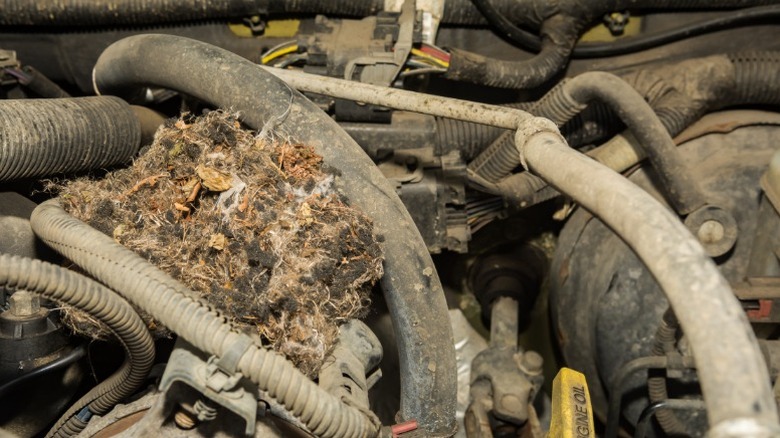
Rodents tend to have a nasty habit of setting up shop inside of cars and in engine compartments. That means you want to limit the ways they can enter. How do you do that? Stop up or cover the exhaust pipe, as well as the air and ventilation intakes. You can do this using old rags or steel wool. Seal any opening where pests can squeeze in, like around cables or the steering column.
This is another reason to put your car on jack stands. It isn't a surefire way to keep mice and rats out of your car, but why make it easy for them? Napa recommends spraying a little WD-40 on the sides of the jack stands to keep the rodents from climbing up, but we're not sure about that one. Getting WD-40 anywhere but on the sides may cause the stand to slip.
Another solution to the rodent problem is to attack their noses with odors that turn them off. They hate the smell of mint and peppermint. You can also try mothballs or gardening sulfur pellets. Many people use car covers when storing their vehicles, but the cover gives rodents and other pests a place to hide, as do closed glove compartments and visors. So, you'll want to keep that in mind.
Take care of your fluids
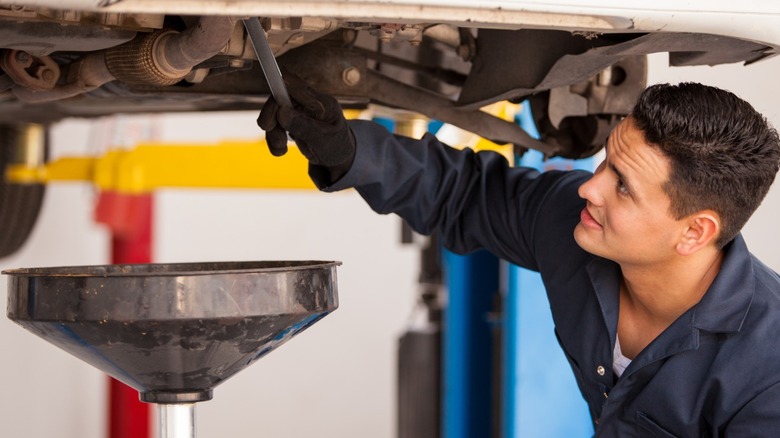
Some drivers may be inclined to drain their fluids before storing their cars. After all, fluids do break down over time, which isn't good for the engine and other components. But completely draining the gas tank or other fluid compartments will leave room for air and moisture, which can also damage an engine.
As far as gasoline goes, it's best to leave at least a few gallons in the tank (fill it completely if you have an older car with a metal gas tank), add some fuel stabilizer, then drive the car around a little bit to mix in the stabilizer. Regarding other fluids, it's good to change your oil right before you store the car. Also, top off your brake fluid and coolant. If you're going to store your car in a cold climate with freezing temperatures, either drain your windshield washer fluid or make sure it's formulated for winter so that it won't freeze.
As you can see, storing your car for a long period of time is a little more complex than just parking it in a garage somewhere and throwing a cover over it. Take the necessary steps to protect your battery, engine, tires, and other components. That way, you'll have a running vehicle available when you're able to reunite with it. For more information, check out our extensive guide on how to store your car.