

Cargo Freight Thieves Are Embracing AI To Target An Already-Struggling Supply Chain
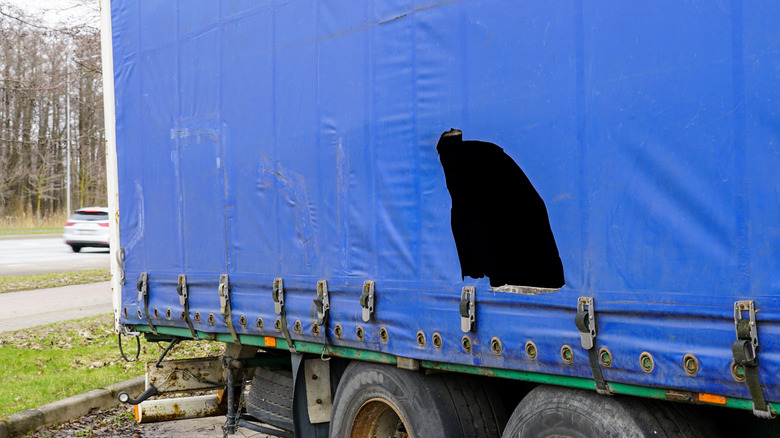
It's no secret that the logistics system is crumbling under a lot of stress right now. In fact, we might run out of cargo planes soon. It doesn't help that cargo theft is spreading like wildfire, and now there's a new wave of digitally-orchestrated fraud across global supply chains. There was a time when cargo theft meant hijacked trucks and late-night warehouse breaches. While this classical method continues even to this day (in Southern California, stealing from freight trains is a cakewalk apparently), it's not the gravest threat the industry is currently facing.
Industry data shows that criminals are now relying more and more on deception rather than violence to pull off thefts. Routine handoff processes that were meant to increase speed and efficiency are exploited using stolen or fabricated identities. Criminal groups pose as legitimate carriers and make off with the freight without breaking even a single lock. These are not run-of-the-mill robbers, either. They have quite a bit of knowledge about logistics workflows and are smart enough to identify gaps in the system they can exploit. To keep goods moving, freight networks have become increasingly reliant on digital platforms. This also makes them easy targets for criminal elements.
AI as a force multiplier for freight crime

To make matters worse, AI has made cargo theft even more efficient. Criminals are using AI-enabled tools to set the proverbial digital trap and divert freight. As emails and even voice-based interactions become easier to fake, the sloppy mistakes once used to unmask these scams are becoming harder to catchA growing share of losses in North America, Europe, and other countries is because of strategic theft.
Tricking shippers or facilities into handing over cargo of their own accord might sound like the plot of a heist movie, but AI has made it easier and more accessible than ever. High-volume phishing to gain access to accounts and the rapid generation of fake documents is all on the table. In the U.S. alone, hundreds of millions of dollars are lost annually to cargo theft. (As an example, $2,000,000 worth of just Nike shoes was stolen across California and Arizona in 2025.) And underreporting means this number might just be even higher.
Defending the supply chain without slowing it down

It's apparent that security needs to be pumped up to counter this new digital crime wave. But it needs to be done in a way that doesn't disrupt operations. Manual checks might not cut it anymore, but at the same time, adding extra layers of security at gates and terminals might come at the cost of throughput and service commitments. But by using a combination of automation and human oversight, the industry is seeking to beat the criminals at their own game.
Technology can do the redundant checks at a massive scale, freeing people to focus more on their instincts and judgment. Mike Grabovica, CEO of Birdseye Security Solutions, states that "AI-enabled gate management systems can help security staff detect these scams," per Supply Chain Xchange. These platforms can also be used to beef up carrier databases and geofencing tools. They watch for for any anomalies and notify security teams about them before cargo leaves the facility.
Digital audit trails support insurance claims and help organizations understand where their processes are most exposed. Insurers and logistics providers are already adjusting risk models to account for AI-enabled physical losses, particularly in moments where fraud precedes theft.