

BMW Keeps Pushing Subscriptions Even After Realizing Heated Seats Were 'Probably Not The Best Way'
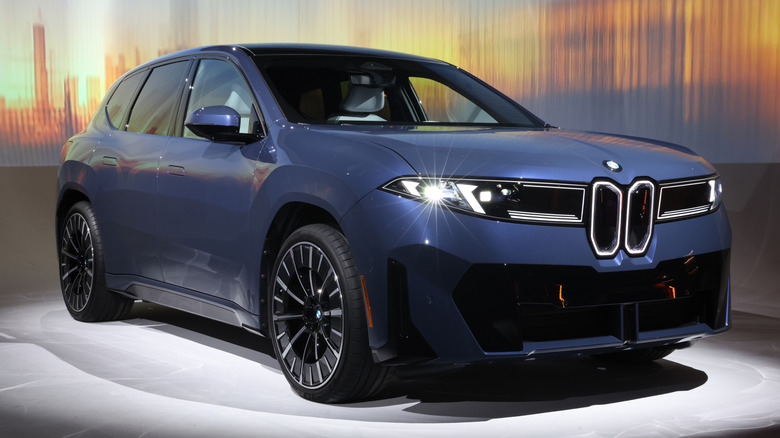
The vast majority of Americans don't want subscription-based features in their cars. However, despite admitting to Drive that the heated-seat subscription fiasco was a mistake, BMW is still pushing other subscriptions. The company is trying to justify driver aids as a subscription service to the owner, not just an addition to the company's income stream. Alexandra Landers, head of Product Communications at BMW Automotive, offered the following explanation:
"The criticism we got was from the seat heating, so this was probably not the best way to start with it," Landers told Australian media including Drive at the iX3's international media preview drive late last year.
"However, we decided for the technology, everything is on board, but for the additional other systems, we also have costs for running. You have cloud use, and that is cost.
"If you use it, we have to pay for it. It's not everything important [to every customer], but the technology is important [to have in all vehicles], and we still believe in the option offer structure that you do not have to decide from the start if you want this ADAS [safety] system.
"There are a lot of barriers for people who think they never need it, but they can decide even in a special case – for example, for the first time in a real traffic jam, they say, 'Oh, maybe I should have bought it two years ago.' And then they can, you know, add it online."
Hypothetically, you may have an easy commute when you buy the car, but two years later, you move or change jobs, and end up with a heinous commute. Now, you want a car that can do the hard parts of dealing with traffic — via systems like adaptive cruise control and lane-keep assist. Instead of selling your car without these features to buy one with semi-autonomous driving features, you can simply add them to the car you already have. If the hardware already exists in your car, and your car is already connected for over-the-air updates, it's just an update and a credit-card swipe away. But why shouldn't those already-installed features just work in the first place?
Something doesn't add up
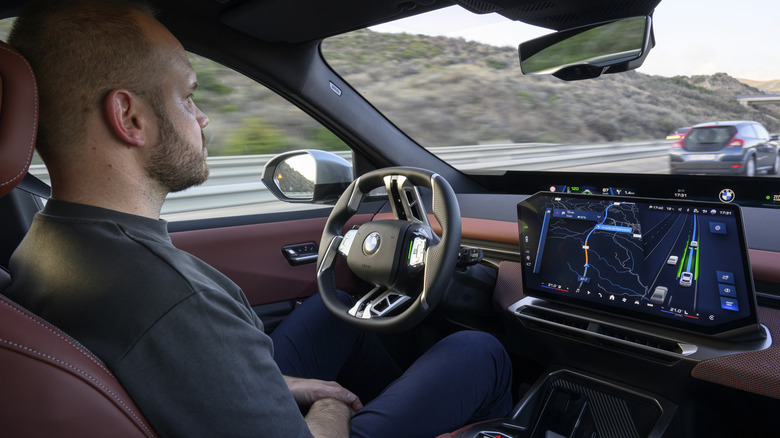
One justification for the implementation of subscription fees is the cost of a data connection. Most modern cars include a data connection of some sort, and that connection costs money. We pay a monthly bill so our smartphones can get online and let us read Jalopnik or watch cat videos, so why wouldn't we pay for that in our car? And after all, BMW sold 388,897 cars in North America in 2025. That's a lot of data connections. Cloud storage isn't free, either, so as BMW argues, it does make sense to pass these costs along to the owners who are using and benefiting from connected features.
Why, then, are features like the 360-degree camera option on the iX3 locked behind a subscription paywall? That's a feature already built into the car, and it doesn't require a data connection to operate, so BMW's argument falls apart almost immediately. The same is true with remote start, high-beam assist, and even Adaptive M Suspension, which Motor1 reports are also only available via subscription. I could maybe see remote start, using a tiny bit of data to send a signal to start the engine from your phone, but the other features are egregious inclusions. It's no wonder that people don't like the subscription model. New York is even trying to outlaw it.
I worked in the software industry at a time when many companies were switching from the traditional model with software ownership to a subscription model. The popular three-letter acronym for this concept was ARR, for "annual recurring revenue." Why sell something once when you can keep charging for it each month and guarantee a continuous stream of future income? It makes great sense from a profit perspective. But it's terrible for customers, who have to pay ongoing fees for existing hardware, and who no longer own what they pay for in advance, like in the case of Tesla's Autosteer, which was once standard, and eventually became a pricey add-on.