

BMW Has Patented A Way To Make DIY Car Repairs Much Harder

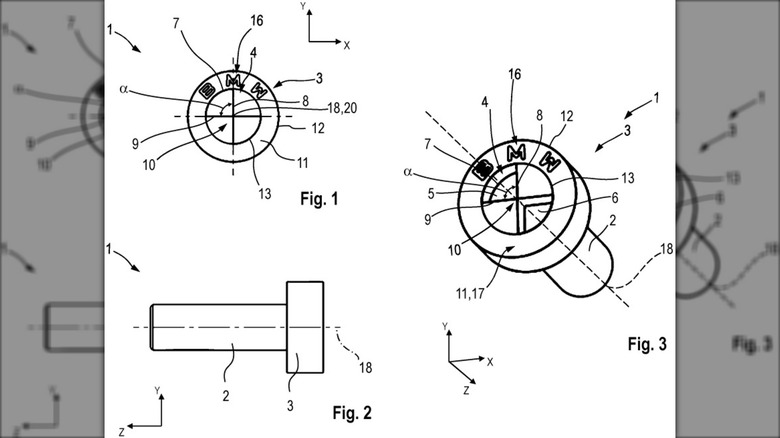
In late 2025, BMW patented a new screw or bolt design. Its head looks a lot like a BMW Roundel valve stem cap for your tires, except the blue or white wedge bits would be hollowed out, such that only a proprietary tool – presumably with prongs — could be used to fasten or unfasten the thing. Proprietary fasteners and tools have their uses, but they can also create problems and make things harder for people, particularly those who enjoy making DIY repairs.
Maybe thoughts here turn to niche, hardcore car geeks. The reality is, the DIY community is not an insignificant number of individuals. According to Haynes, which cites data from the Auto Care Association (ACA), 20% of all auto parts sold in the U.S. are bought by DIY folks. That jibes with The Wall Street Journal, which shared that 30% of drivers surveyed in early 2024 were inclined to repair their own rides. Are they all rolling in BMWs, or dropping suspensions? Of course not. But with every aspect of car ownership costs going up, teaching yourself to turn a screw can potentially save a lot of money. Assuming, of course, the screw is designed to be turned by you.
As a rough translation of BMW's patent in the World Intellectual Property Organization (WIPO) database reads, "there are applications for screw connections where only a limited group of people should be able to manipulate them." In other words: BMW owners, stay off my (your) lawn.
Short for 'Break My Will'
To be fair, there are circumstances where using fasteners specifically designed to deter people makes good sense — for example, to prevent stealing catalytic converters or when thieves want your radar sensors. BMW wheel locks come to mind as an everyday example of weird socket design use: hardly insurmountable to an enterprising thief, but enough to maybe make them think twice.
And who knows if or when BMW will actually put these new screws into production — or whether their design will render the threat of stripped nuts, bolts, and screws obsolete. If so, people will rejoice, and praise this little BMW invention.
In the patent, BMW calls out the center console and seats as examples of where these could appear, and that they could be "visible to the user." That sounds like bringing a neat bit of industrial design flair to things, but BMW goes on to say this is "so that protection against unauthorized loosening of the screw or manipulation of the screw with standard tool drives could be made more difficult."
There's a difference between requiring an unusual socket and building a walled garden of gizmos just to fix a cupholder. However high you're willing to climb, BMW seems determined to make things harder — as if complexity and "security" weren't already doing enough to make DIY repairs impossible. More bluntly, this reeks of a (clever) way to force people to pay for BMW to fix stuff.
It's not the patent, it's the principle

The Right to Repair Act upholds our freedom to mend our own stuff, but has loopholes that these BMW screws fit perfectly:
"Manufacturers DO NOT have to disclose trade secrets, or license any intellectual property, including copyrights or patents, or distribute a product's source code."
Fair play, Munich. This patent is for the screw. Perhaps another loophole will allow the aftermarket to devise legit alternatives to BMW's own, exclusive tool design. Annoying, but manageable. People who wrench can appreciate that, whether it's a weird set of bits, a brilliant plastic doodad for cam gears, or a sophisticated diagnostic rig, specialty tools can change your wrenching life. Certainly, we should respect our limits, wrench responsibly, and outsource critical work to a professional technician if we're at all unsure — for our safety, and that of others. But, tools rule.
You'll learn two things with hands cramped, crouched over a battered service manual for your E46, or whatever car you're into that year. First, you're dealing with a brilliant, rewarding, complicated LEGO set. Second, you're never alone. Blogs, forums, social media — it's incredible.
That there's been some healthy discussion in internet car circles — around a screw patent — is a testament to nothing if not the real sense of community that binds the tribe. It feels a bit like being tackled by your own team when an icon like BMW makes a move to potentially exclude future DIY enthusiasts. That brand new 2028 230i Coupe? Could be some kid's project car in 2048. It would be a shame if BMW itself discouraged something wonderful like that from happening.