

Toyota 2JZ-GTE Vs Nissan RB26DETT: How Do These 6-Cylinder Blocks Compare?
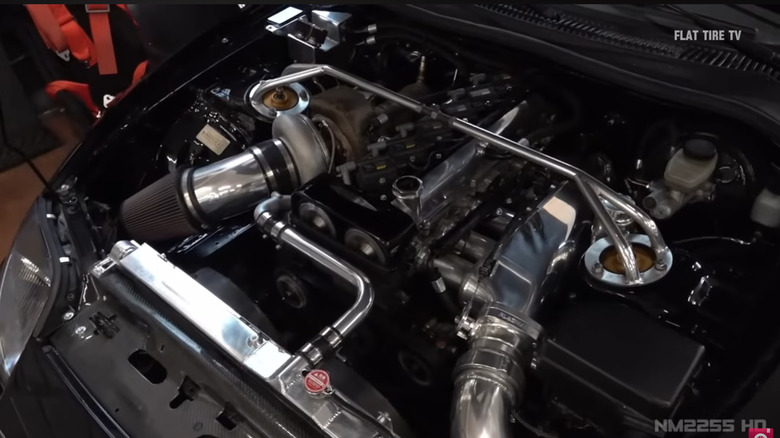
Japanese manufacturers were busy locking horns on both the track and in the showroom when the RB26DETT and 2JZ GTE debuted. Both are widely regarded as some of the most reliable turbocharged engines you can find today. The RB26DETT from Nissan debuted at the end of the 1980s in the R32 Skyline GT R, and quickly made a name for itself thanks to its motorsport dominance. Made with touring car homologation in mind, it was developed by NISMO, and was carried forward to the R33 and R34 GT Rs without many changes being made.
The 2JZ GTE was part of the JZ engine family, created to replace the older M-series inline sixes. Toyota went about designing its engine with a different approach from Nissan's, resulting in a heavier, larger-displacement engine. Concessions were made in terms of rev happiness to focus on strength and flexibility, with a lot more emphasis being put on durability and torque. While it made it big on the global stage inside the Mk IV Supra Turbo, it was first seen was actually in the Toyota Aristo, in a bid to meet racing regulations.
Block design, valvetrain, and character
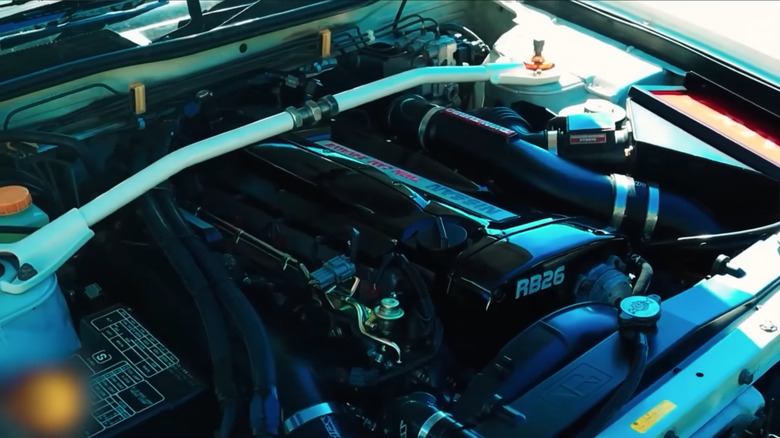
The RB26DETT and 2JZ GTE might seem like they have a lot in common. Apart from both being inline sixes, they also share many design elements. Coil-on-plug ignition, electronic fuel injection, twin turbochargers, four valves in each cylinder, dual overhead camshafts, cylinder heads made of aluminum, and cast iron blocks. Everything's the same. What's different is the execution and the proportions.
The RB26 displaces 2.6 liters using an oversquare layout with an 86mm bore and a short 73.7mm stroke. That geometry favors high engine speeds and top-end power, but limits low-rpm torque. Nissan reinforced the block with a closed deck design, piston oil squirters, and a crank girdle.
The 2JZ GTE, by contrast, stretches displacement to 3.0 liters with an 86mm bore and matching 86mm stroke. This square layout improves torque delivery and makes power more accessible at lower engine speeds. Toyota's block is famously overbuilt, with heavy reinforcement and internals capable of handling extreme output.
Power potential, weak points, and real-world use
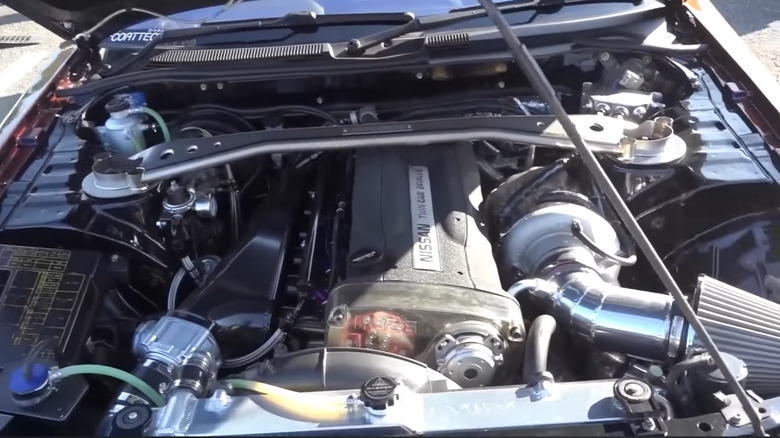
In stock form, neither engine tells the full story. Factory ratings were conservative, and both platforms quickly proved they had far more to give. With basic modifications and tuning, each can reach around 400 horsepower reliably. Beyond that, their differences become clearer.
The RB26 rewards high rpm operation and airflow improvements, but its smaller displacement means torque is harder to come by. Increasing capacity or adding variable valve timing is possible, yet expensive. Oil pump reliability is a known weak spot, though OEM and aftermarket solutions exist. Still, with the right parts, RB26 builds have pushed to 700-800 horsepower, and extreme examples have gone far higher. Availability and cost remain practical hurdles, especially outside Japan and Australia.
The 2JZ GTE, meanwhile, is famous for how much abuse it tolerates. Its block and internals can support enormous power with relatively few internal changes, and aftermarket stroker kits push displacement even further. But you should be careful when modifying either of these engines. There are some mods that you need to steer clear of, and some car modifications that should be banned ASAP.