

How Is A Racing Transmission Different From A Normal Gearbox?
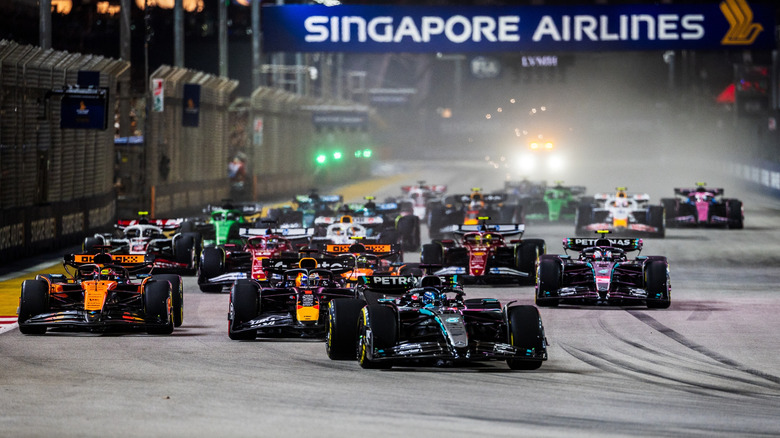
Depending on the application, a gearbox can feature a variety of designs, use different materials, and show preference for certain performance characteristics. Just look at motorsport vehicles versus your average passenger car. In general, race cars prioritize factors like speed, weight, and resilience against intense short bursts of power or running at extremely high rpm. A family sedan places a greater emphasis on fuel economy, lengthy part durability, and lower cost.
Among automotive transmission types, there's automatic, manual, automatic manual, and continuously variable (CVT). In terms of motorsports, many cars are fitted with a semi-automatic transmission (automatic manual) which still requires input from the driver, but replaces the clutch and shifter with paddles. Consumer vehicles often feature automatic transmissions and CVTs, though many drivers aren't too keen on either. (But before you rush to judgement, CVT hate is way overblown and bordering on irrational, our favorite engineer claims.) With that in mind, though, there are some more specific differences between racing transmission and normal gearboxes.
Shifting speed and gear engagement
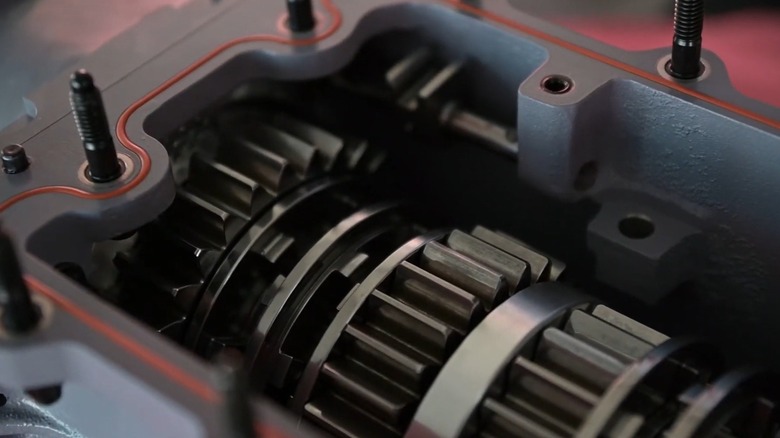
According to F1Briefing.com, your typical road vehicle takes between 100-500 milliseconds to change gears, but an F1 race car manages the feat within just four milliseconds. In some scenarios, an F1 car can shift around 125 times faster than your run-of-the-mill sedan. That's because the transmission in these race cars is semi-automatic with sequential shifting, with paddle shifters providing a faster option than a traditional manual gearbox. It also happens to be safer, as the driver can't accidentally put the race car in the wrong gear. A sequential transmission only functions in sequence, meaning you couldn't just jump from first to third gear, for example.
Also, motorsports aren't concerned with ride quality or noise, just speed. Instead of opting for a synchromesh method of connecting the teeth, a dog box gearbox with large, pointed teeth is used instead. While synchromesh designs help create smooth interlocking behavior by allowing both input and output to match before shifting, a dog box doesn't bother. With speed as the priority, the driver of a dog box system forcefully slams it into gear, with the teeth immediately engaging. This is just one factor that has contributed to how drastically Formula One lap times have evolved over the years.
Weight and cost
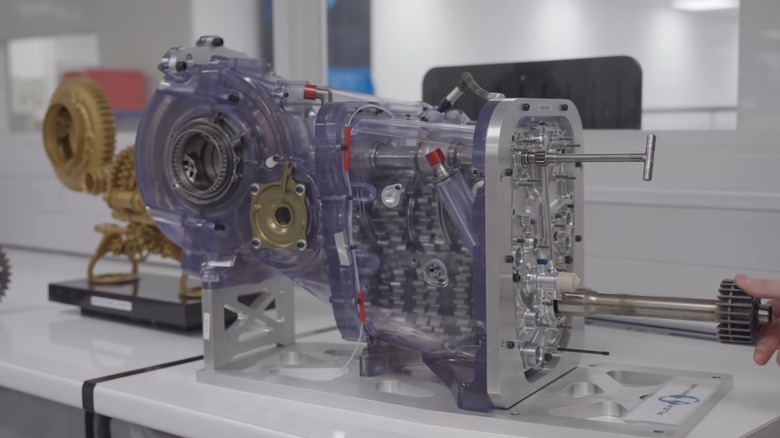
Another major difference between racing and consumer gearboxes comes from the materials that comprise each. In motorsports, material strength and weight are two of the most critical factors in the build. You'll find things like carbon fiber throughout most of an F1 race car because it weighs far less than steel but has five times the strength. In the gearbox specifically, metals like aluminum are incorporated, as the robust qualities of these materials don't come at the expense of extra pounds. In addition, aluminum alloy helps to manage thermal conditions within the gearbox, helping to draw away excess heat. F1 isn't the only place you'll see exotic materials used in these components, though, as some street-legal vehicles boast transmissions able to handle 1,000 horsepower or more.
In contrast, your typical passenger car will often utilize steel in the gearbox. Steel is a great balance of strength and affordability. A consumer vehicle isn't trying to shave off microseconds to improve lap times or being pushed to extreme lengths, so it's not as necessary to deal with weight and thermal management.
While race cars are looking for high strength-to-weight ratio, the materials they use push cost up considerably. For F1 gearboxes alone, a team may spend millions of dollars every year. This isn't the price of a single gearbox, because each team can use four over the course of a season, but that still makes each one more costly than the average new vehicle. A racer might shift 3,800 times or more for an event lasting a couple of hours, so replacements are necessary. Fortunately, your average passenger vehicle transmission is far less, ranging from $1,500 to over $6,000 for specialized models.