

A Leading Cause Of EV Battery Degradation Is Avoidable, But Is It Worth It?
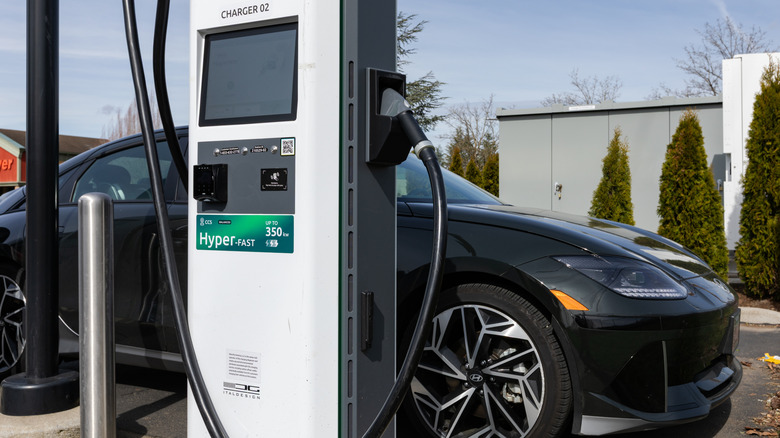
Research firm Geotab found that high-voltage fast charging is a leading contributor to battery aging and cell degradation. Apparently, battery packs degrade at a faster rate when frequently charged at stations capable of delivering over 100 kW of power, which covers certain Level 3 chargers. The study found that Level 2 and other less-powerful fast chargers had batteries degrade at half the rate, by comparison. Frequency of use plays a critical role here, as well. EVs that spent more than 12% of their total charging sessions using high-power (over 100 kW) chargers experienced a 2.5% annual battery degradation. Fast chargers used for less than 12% of the total charging sessions saw degradation rates only go as high as 1.5%. The sample size included over 22,700 EVs across 21 models.
This, however, doesn't mean you should avoid ultra-fast DC charging entirely and only charge at home in cluttered garages, especially when chargers are being installed at a record pace. After all, convenience matters, and it's not like batteries are immune to degradation. As per the study, the average EV battery degradation is 2.3% a year, regardless of charging method. Multi-purpose vehicles and vans average 2.7% yearly degradation, and light cars average 2%.
Geotab also found that many EV batteries settle at a 1.4% per-year average after sharp capacity drops in the first couple of years. You shouldn't have to worry about long-term battery degradation, but the more you rely on fast charging, the faster your EV's battery will lose its capacity. Other factors that might affect capacity include charging power, battery age, chemistry, and temperature.
Fast charging and battery degradation
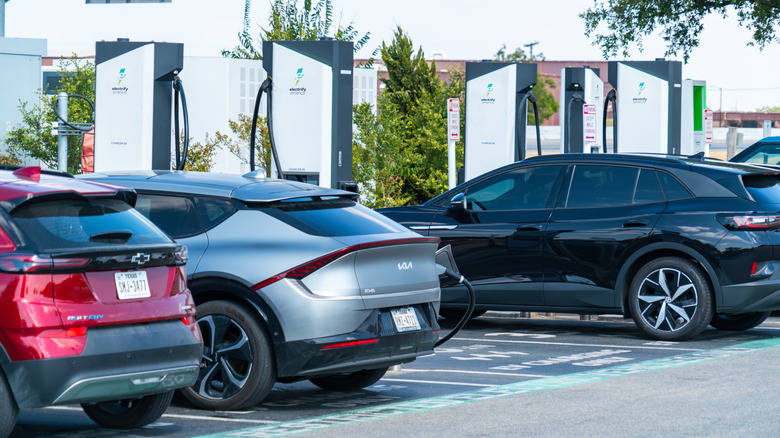
There's no denying that fast charging has an impact on battery life. Regardless of whether it's made using LFP (Lithium Iron Phosphate) or NMC (Nickel Manganese Cobalt) chemistry, the battery can still fall victim to something called lithium plating. If you charge too fast, the ions from the battery's positive electrode will build up instead of diffusing, reducing the available ions for discharge. This effectively means your battery has degraded. That being said, LFP batteries generally don't age as fast as NMC batteries when relying on high-power fast charging.
The aforementioned study also notes how EVs frequently operating in hotter climates (above 77 degrees Fahrenheit) degrade 0.4% faster. Lithium-ion batteries don't like extreme temperatures; permanent damage can occur when charging temperatures are below 32 degrees Fahrenheit. It's better to charge at a slower rate and use preconditioning when temperatures are below freezing.
Interestingly, the study notes that isn't entirely necessary to avoid completely draining or filling your battery. Only EVs that spent nearly all of their time below 20% and above 80% charge found themselves with noticeably higher battery degradation per year. Either way, you really don't need to overthink things or limit yourself too much. Modern EVs and their Battery Management Systems are smart enough to keep everything in check, and that one occasional fast-charge will not completely ruin your battery's lifespan. Just don't make Level 3 charging into a habit.