

Diesel Engines Need Air, Submarines Run Underwater, So How Do Diesel Submarines Work?
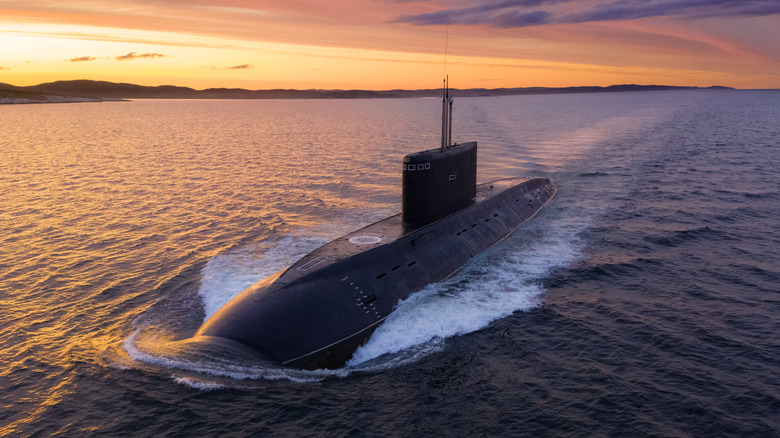
While diesel engines don't need spark plugs, they do need air ventilation for proper combustion. This is a problem for vessels traveling underwater, such as submarines. Yet diesel submarines exist and are used around the world. How is that even possible? Well, there is a difference in how power is generated inside a submarine and how that power is actually used.
Diesel submarines are equipped with one or more diesel engines, electric motors, and a large battery bank. The diesel engines are not used to propel the submarine when it is fully submerged. Instead, they operate only when the submarine stays on or just below the water's surface. The engines are basically just driving generators to charge the submarine's batteries, and provide propulsion while the vessel is surfaced.
Once the submarine dives, the diesel engines shut down entirely, and all movement depends on the electric motors powered by the stored electrical energy.
Surfacing, snorkeling, and air supply
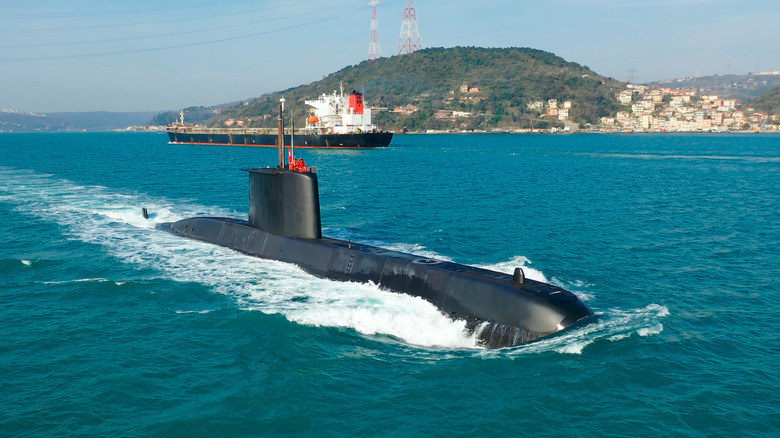
Air can enter a submarine in one of two ways: by surfacing above water, or by operating in shallow waters using a snorkel. This snorkel is a pipe that extends just above the surface, drawing air into the engine, which supports combustion. It's also used to expel exhaust gases that are pushed back into the atmosphere.
Now, snorkeling does allow the submarine to recharge its batteries while keeping its hull concealed, but it comes with a price. While snorkeling, the submarine needs to follow a set of rules and deal with increased vulnerability. For example, the submarine has to move at a slow pace. This is because snorkeling masts are fragile, and the act of snorkeling can blow the submarine's disguise. All of this limits how long the submarine can stay above the surface before being fully submerged.
Therefore, diesel engines perform their most important task during snorkeling, which is to replenish electrical energy. This is accomplished by using large generators to convert mechanical energy from the engine to electricity, recharging the batteries that were drained during submersion.
Batteries and electric propulsion
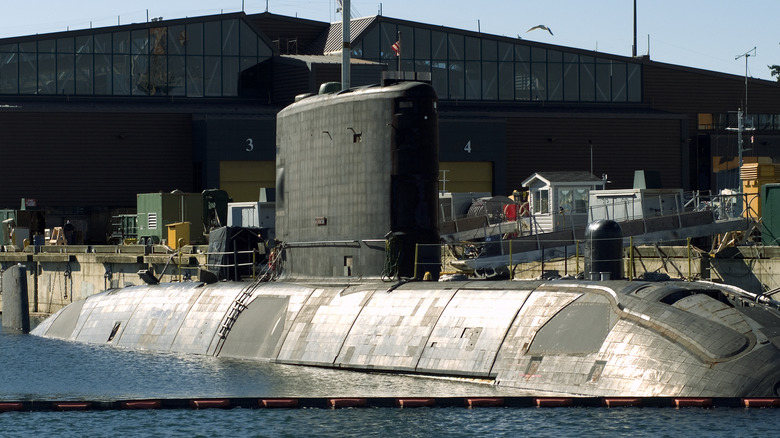
A diesel submarine essentially transforms into an electric vessel when it submerges. Propulsion is provided by propeller shafts, which are in turn powered by electric motors running on batteries. Both the motors and the engines are mechanically isolated. This design choice improves the reliability of both components because it eliminates vibration transfer from one to the other. It also allows the engines and propellers to run at speeds suited for their respective roles.
Since a battery can only store a limited amount of energy, underwater operations are a constant trade-off between time and speed. Movement speed determines how fast the batteries drain — a submarine that can last for days cruising at low speeds may also struggle to remain submerged for mere hours at high speeds.
Commanding officers need to keep these trade-offs in mind when planning missions. The distance to friendly bases is another important consideration, as are opportunities to surface or snorkel without attracting attention.
Air intake, scavenging, and exhaust
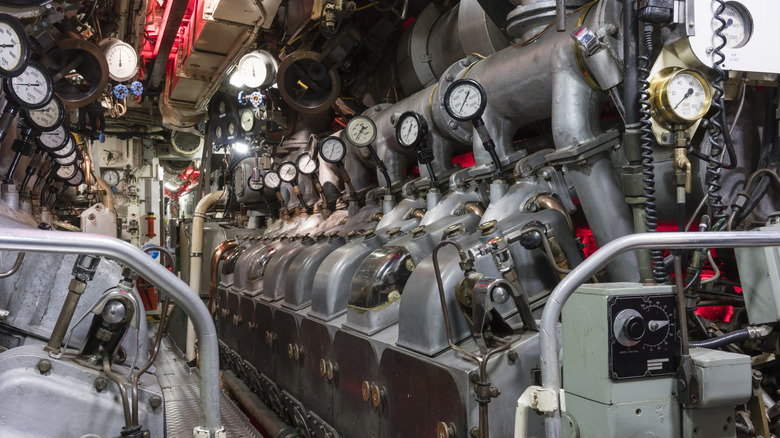
Diesel engines need a steady flow of air to run smoothly. This is because the two-stroke engine design (which GM plans to reintroduce in cars, by the way) relies on a process called scavenging to simultaneously refill the cylinders and push out exhaust gases.
Fresh air is forced into the cylinder using blowers, which pushes exhaust gases out through open ports or valves. It's a pretty cool concept, and can also help you increase the horsepower of your car without a full engine swap. This fresh air can also be taken from the submarine's interior spaces, then filtered, silenced, and finally pressurized before entering the engine. All excess air is used to ensure complete combustion and removal of exhaust gases. The burned gases are routed through valves, pipes, and mufflers before being completely discharged outside the hull. All of these systems are water-cooled and designed to run quietly.
When the submarines are operating underwater in snorkeling mode, they need to push the exhaust gases against the water pressure. This requires additional exhaust pressure to prevent the seawater from entering the system.
Why diesel submarines must resurface
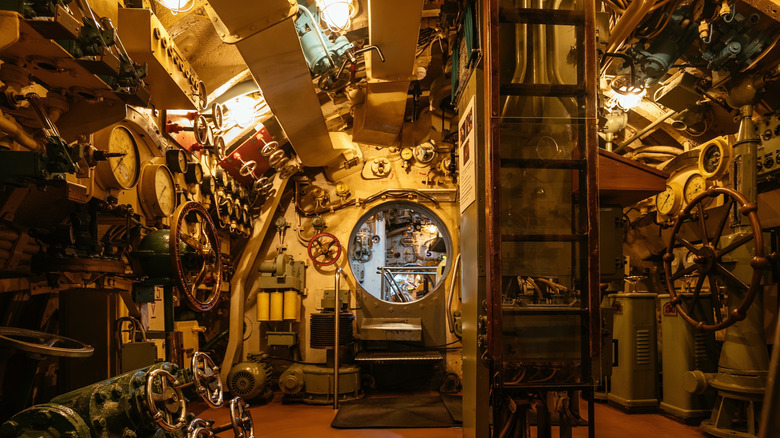
Beyond having to come up to recharge batteries, vent exhaust gases, and draw in oxygen, submarines also need to come up for communication since radio signals do not travel effectively through deep water — this is why even nuclear submarines surface for a short period of time.
Then there's the human element. Between food, medical care and crew rotations, the logistics add up fast — autonomous submarines can mitigate this problem, and Boeing has been quietly developing them. But apart from biological needs, maintenance support is also critical. This is because mechanical systems wear over time, and some cannot be repaired while submerged.
Regulations require that the crew be able to survive for at least six days if surfacing becomes impossible. In and of itself, this reinforces the need for regular resurfacing intervals. However, surfacing carries risks, which is why diesel submarines limit how often and how long they remain surfaced. This is why an all-hands-on-deck approach from support infrastructure is necessary when it comes to planning and coordination.
Modern diesel submarines
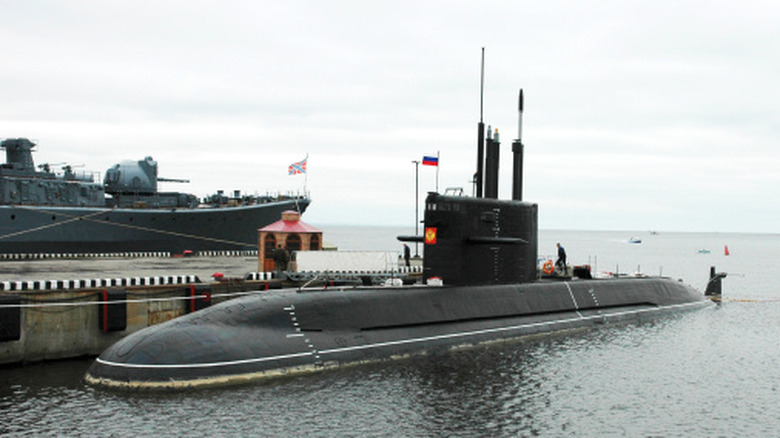
Thanks to significant advances in engine efficiency and air-independent propulsion systems, diesel submarines can now stay submerged for much longer than before, while producing far less noise.
In fact, modern-day diesel submarines make almost no noise when operating on their batteries, apart from the subtle sound of mechanical components and the whooshing of water around the hull. The quiet running is a major advantage in coastal operations and generally in areas located within close proximity to the coastline, where the submarine doesn't need to travel very far across open water to reach safety.
Diesel submarines work because they are designed around these inherent constraints. They trade unlimited endurance for cost control and stealth at low speeds. The result is a system that operates effectively by separating power generation from underwater movement, using air only when necessary and electricity when the success of the operation depends on maintaining silence.