

California's Love Of EVs Really Has Made Its Air Cleaner, Study Claims
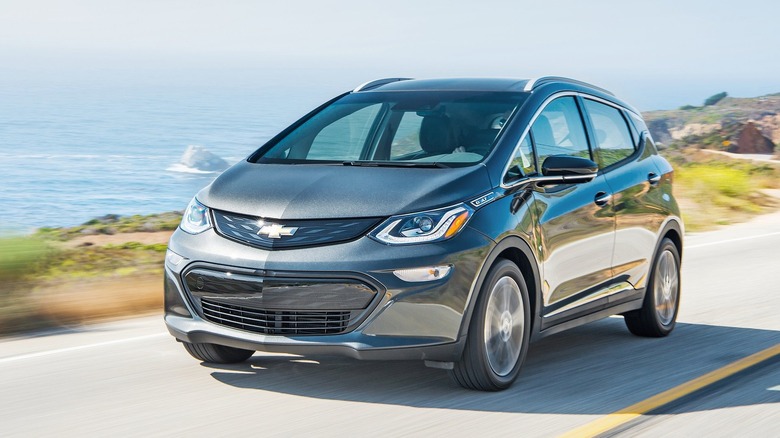
It's one thing for something to make sense intuitively, but it's another thing altogether to be able to prove it. So, while the tire and brake dust that electric vehicles generate can be a problem, without exhaust constantly spewing out of the back, it wouldn't be crazy to assume air quality would improve if more people drove EVs. Then again, since EVs only account for a small percentage of new car sales in the U.S., are they even popular enough to make a measurable difference? Well, our friends over at The Autopian just covered a new study claiming that's exactly what's happened in California.
That study was published in the Lancet Planetary Health scientific journal and was conducted by the University of Southern California's Keck School of Medicine and claims to be "the first real-world study showing statistically significant reductions in observed NO2 air pollution associated with the ongoing transition to light-duty electric vehicles over time." Using satellite data provided by NASA, researchers studied 1,687 different "ZIP code tabulation areas" spread across the state. And in the end, they found that EVs really did contribute to a noticeable drop in nitrogen dioxide levels.
What's perhaps more surprising, though, is just how few zero-emissions vehicles it took to cause a statistically significant reduction in NO2 pollution. If you want to cut NO2 levels by 1.1%, you don't need a few thousand EVs in your neighborhood. Apparently, on average, you only need 200. So while those Tesla drivers do still make world worse by propping up the CEO's fortune with their purchases, you should still thank them for making it a little easier to breathe.
No study is perfect
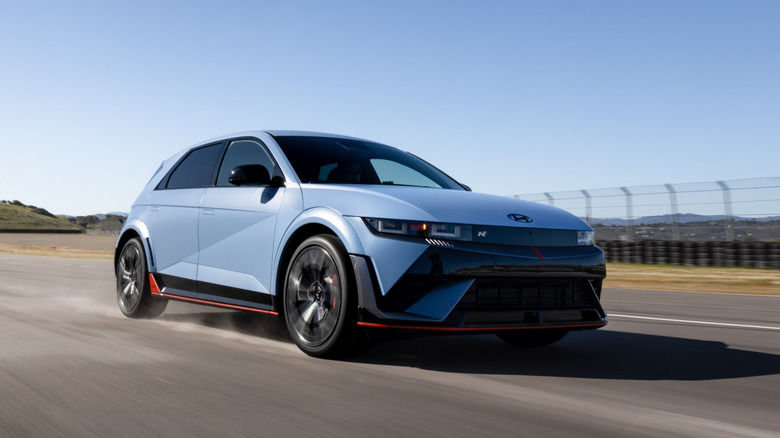
As with all studies, you have to account for other factors in your analysis, and while it's plausible there might be a few nits to pick with the researchers' methods, they at least tried to account for everything from the "non-linear effect of calendar year" to "time-varying population size, socioeconomic status, fuel price, and telecommuting patterns," as well as the "time-varying number of ICEVs." And since the pandemic really threw a wrench into pretty much everything, they excluded data from 2020 entirely.
There's also more to air pollution and vehicle emissions than just nitrogen dioxide, and it's plausible that future studies might not show as significant of a reduction in other greenhouse gasses. The authors also readily admit the study has its limitations, especially since the satellite data they used wasn't available until 2018, meaning they were only able to study the years 2019 through 2023. As for why they only focused on NO2, the authors wrote, "We focused on NO2 since this pollutant arises from the combustion of fossil fuels, primarily from vehicle emissions, and the only source of NO2 from local vehicle operation is exhaust emissions, which fully electric vehicles do not have. Effects on other air pollutants merit further study and might be complex."
Still, it's great to see evidence that EVs reduce NO2 because, as the authors put it, "traffic-related air pollution exposures, including NO2, negatively affect cardio-pulmonary health and contribute to premature death." After all, Volkswagen wasn't just forced to spend billions of dollars atoning for its sins because it broke the law. Its dirty diesels spewed a pollutant that actively made life worse for everyone else.