

How GM Made Everyone Angry When It Wanted People To Stop Calling Chevrolet 'Chevy'
Nothing transforms an internal memo from missive to mistake like than adding the word "leaked." It stokes curiosity from outsiders like intercepting a juicy note being passed in third grade. Oh no, the authors might say to themselves, you weren't supposed to know that Toby loves Sam. Oh, the readers will whisper, but now we do know ... and we have some thoughts on this development.
Such was the case in 2010 when The New York Times got hold of a General Motors internal memo about ditching "Chevy" for "Chevrolet," and asking employees to evangelize the change in personal and professional settings. This revelation stimulated 327 Times reader comments over a few days, and was picked up by outlets from NPR to Motor Trend — many of which served up some variation of the sentiment, "What are you thinking? You're Chevy." Also, GM had recently received a $49.5-billion bailout from Uncle Sam, and was still being called "Government Motors." The timing to nitpick a nickname seemed impeccably bad.
GM promptly pulled a U-turn, calling the memo "poorly worded." So the original "We'd ask that whether you're talking to a dealer, reviewing dealer advertising, or speaking with friends and family, that you communicate our brand as Chevrolet moving forward," became "We love Chevy. In no way are we discouraging customers or fans from using the name," as the Times later reported. In four months, GM would go from shunning the Chevy nickname people favored to plastering it on ads.
What's in a nickname?
A lot, actually. At best, nicknames can symbolize friendship — being seen for who you are in the tribe — or, at worst, be uttered in some mean way to tear you down. They can capture aspects of a personality better than a real name. And that extends to brands. As positive nicknames go, "Chevy" has a nice ring; it's the friendly, casual dinner to Chevrolet's black-tie fundraiser.
This dichotomy plays out in the brand's history long before the 2010 memo. By GM's own account, American William Durant got together with Swiss race car driver Louis Chevrolet to form the Chevrolet Motor Car Company in 1911 because of Louis' "fine French-sounding family name that rang in the financier's ears." Louis wanted to build fast, powerful machines. In 1914, he went on vacation and returned to find that Durant had reorganized Chevrolet (!) to compete directly with Ford, "as a synonym for good quality yet affordable automobiles."
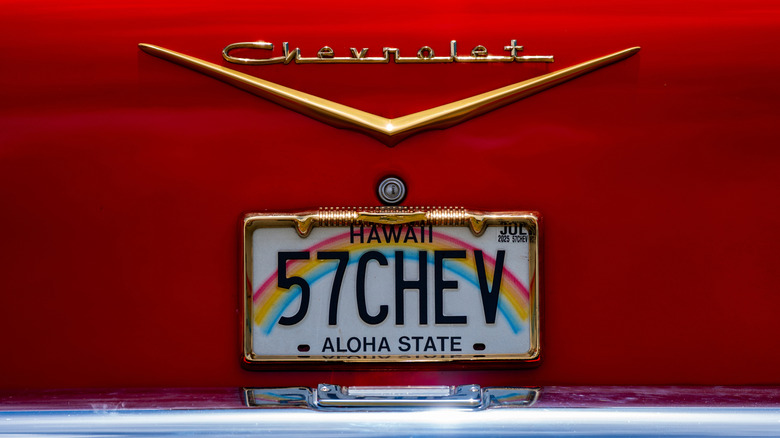
There's a direct path from Durant's vision to Chevy's marketing, which featured "Chevrolet" and "Chevy" in the same ads in the 1950s, demonstrating that "Chevy" was very much a part of the cultural lexicon.
"Chevy" was used for cars, too: In 1962 the Chevy II was introduced, and would later be known as the Nova. Meanwhile, ads continued to cast Camaros, Corvettes, and Monte Carlos against backdrops of everyday Americana with the "Heartbeat of America" slogan that pulsed through the 1980s and '90s. People dug it so much that GM still sells badass retro 'Heartbeat of America' gear. These "Heartbeat" ads are anchored with Chevrolet, but what you feel is Chevy.
From Chevy's dead to Chevy Runs Deep
Chevrolet is a storied brand with enough history for its nameplates to make comebacks, not some fly-by-night startup. Sure, AT&T is older, but people don't get inked with AT&T logos. People do get Chevy tattoos.
In October 2010, the "Chevy Runs Deep" campaign debuted, prominently showcasing the nickname and the emotional connection it evokes in the USA, shortly after the memo sought to spike Chevy from marketing. Then, in 2013, GM ditched that campaign for "Find New Roads," citing the need for a concept that worked globally.
Here's the thing. If the memo was a clumsy mess, the intent behind it — stronger brand consistency — was reasonably sound. As advertising legend David Ogilvy wrote, "golden rewards await the advertiser who has the brains to create a coherent image, and the stability to stick with it over a long period." That's what Alan Batey, vice president for Chevrolet sales and service, and Jim Campbell, GM division's vice president for marketing, were echoing in the memo they signed.
Regardless, brands don't get to tell us what to nickname them, or whether we can use these names. Such is the way of nicknames. But: Zhe Zhang, assistant professor of marketing at the Ivey Business School, published research in 2024, summarizing that people respond better to brand advertising that uses formal names instead of nicknames. Think "Caddy" for Cadillac, or "Tar-jay" for Target. It's cool when the public uses brand nicknames, but can backfire if brands use the language for their own communications. It could just be that hearts say Chevy, and wallets say Chevrolet.