

Spark Plugs Vs. Glow Plugs: What're The Differences & How Do They Work?
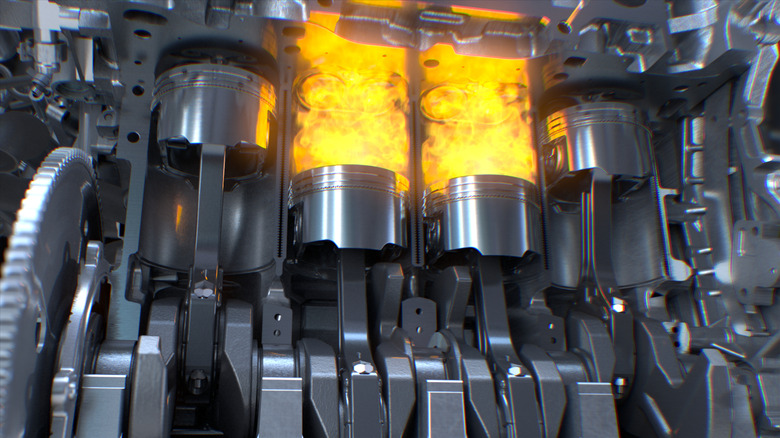
For most cars and trucks, gasoline and diesel engines follow the same four basic steps to make power: intake, to get a mixture of fuel and air into the cylinders; compression, to squeeze that mixture together; combustion, when the fuel is ignited and burns; and exhaust, when leftover waste gases are pushed out of the cylinders before the process starts again. The fuels themselves, however, have different chemical properties that require different paths to combustion. As a result, the starting point for combustion in gasoline engines is the spark plug, while diesel motors rely on pressure — but sometimes need the assistance of glow plugs.
The scientific reason here has to do with the two fuels' auto-ignition points, since that of gasoline (536 degrees Fahrenheit) is noticeably higher than that of diesel (410 degrees Fahrenheit). Now, according to Gay Lussac's law, pressure and heat are directly proportional when volume stays constant, so just squeezing the fuel/air mixture into the cylinder raises the temperature. In fact, when we focus specifically on the science of diesel engines, we find the temperature gets high enough to reach the ignition point to make diesel fuel combust.
But it isn't hot enough to get conditions in the cylinder hot enough to combust gasoline. For that, the extra jolt of a spark plug is necessary. Note that in both cases, temperatures in the cylinders rise well above the ignition point for more efficient burning and to help reduce carbon deposits.
What exactly do glow plugs do?
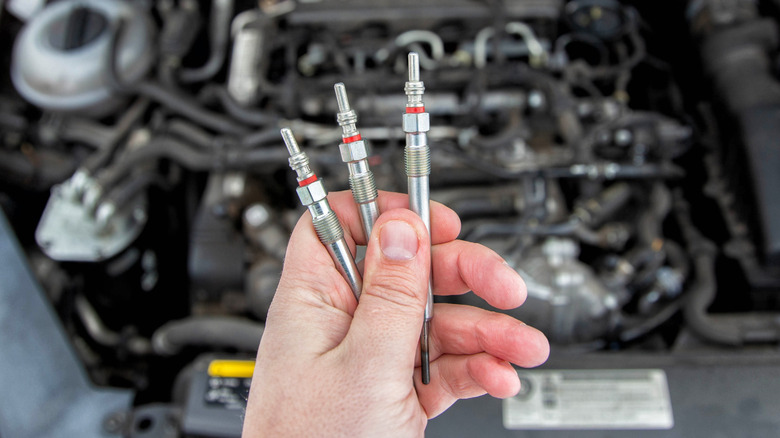
Glow plugs, like spark plugs, are basically electrical wires surrounded by protective casings. A glow plug, though, is typically longer and thinner, with the wire wrapped into the shape of a coil inside what's called the glow tube. As electricity passes through the wire, the coil acts like a heating element, while the length of the tube helps ensure the heat is spread out through the cylinder head for optimum warming. Glow plugs are therefore essentially heaters, and it can take a few seconds after you turn the key for the battery's electricity to generate enough glow-plug warmth for combustion.
In many modern diesel vehicles, the glow-plug system remains going for a few minutes after the engine begins running to help ensure the complete burning that reduces emissions. How long the afterglow period lasts is managed by a dedicated control module taking into account factors such as engine oil temperature and how long the system has been operating.
There are different types of glow plugs as well. Pressure-sensor glow plugs, for example, have integrated electronic sensors that can analyze each cylinder's combustion-chamber pressure to create the best heating pattern for the plug. As a bonus, pressure-sensor glow plugs can help lessen the amount of particulates released during combustion, which can — indirectly at least — help prevent your diesel particulate filter from getting clogged. Ceramic glow plugs are available for especially hot conditions, and specific plugs are offered for commercial applications.
What makes spark plugs work?
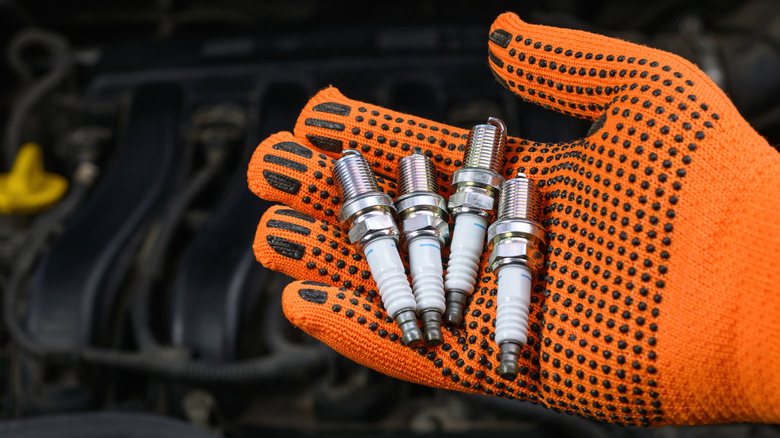
Spark plugs have an electrical wire — or central electrode — wrapped in insulating materials, much the same as a glow plug. But a spark plug's business end consists of the tip of that electrode and, a few millimeters away, a small piece of metal known as the ground electrode.
When you start your car, the battery provides a surge of high-voltage electricity that flows through the central electrode, then jumps the small gap between that and the ground electrode, creating a spark that lasts just a thousandth of a second but causes the gasoline to ignite. In sort of the same way glow-plug afterglow helps the fuel/air mixture burn more completely in diesel engines, the extra heat of the spark plug operates to prevent carbon buildup in a gas engine. Once the engine is started, the alternator provides juice for both the plugs and other features running on electricity.
As with glow plugs, there are multiple types of spark plugs. Most have a copper core, usually wrapped in nickel alloy to protect against heat and wear, but they can use other, even harder and more heat-resistant metals — like platinum or iridium — at their tips. Speaking of spark-plug tips, here's another: If you're having trouble starting your car, and/or seeing reduced performance or efficiency, those could be signs it's time for new plugs.