

Yes, You Can Paint Your Engine Block's Lifter Valley, It's Fine
We may receive a commission on purchases made from links.
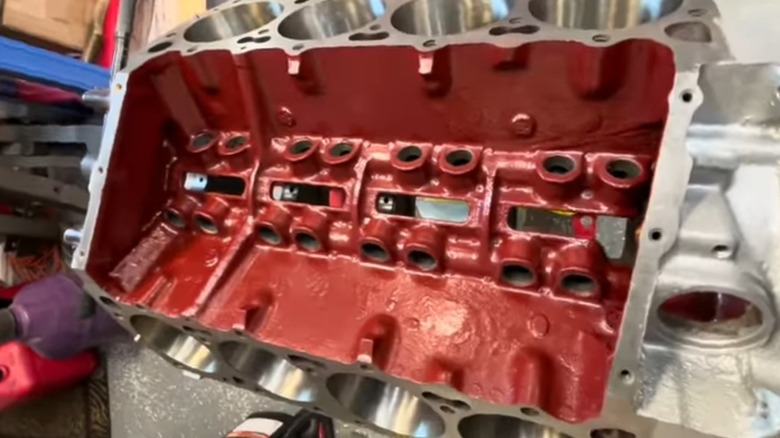
There are many V6 and V8 engines that use camshafts located within the engine block and pushrods to activate overhead valves. In those engines, the space between the cylinder heads beneath an intake manifold or valley cover is known as the lifter valley. It's an area dominated by high temperatures and splashing engine oil that, for the most part, goes unseen unless something goes wrong.
While a fresh coat of paint has always been a cheap way to dress up your engine bay, you might wonder if it's possible to apply paint to the inside of your engine. The next question that comes to mind is why you would paint your engine block's lifter valley in the first place. Finally, you'll need to know how to do it properly if the "why" convinces you that it's a good idea.
In the simplest terms, the answer to that first question is "yes." You can safely apply paint to the inside of your engine's lifter valley if you take some precautions and prepare the surface properly. The answers to "why" and "how" are a little more involved, though it can actually turn out to be beneficial in the long run.
Why would anyone paint their lifter valley?
Painting your engine's lifter valley is akin to wearing socks that match your boxers. No one except you will know about it unless you let them in on the secret. However, beyond the hidden fashion choice, there is a practical reason to apply paint to the inside of your engine. In fact, your cast iron engine's lifter valley may have come from the factory with an application of paint to prevent corrosion while the raw casting awaited machining and assembly on the production line.
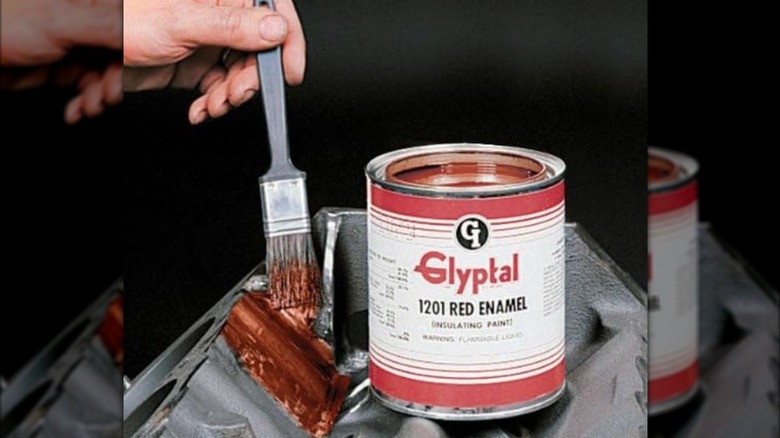
Race engine builders also use paint on lifter valleys to speed up the flow of oil returning to the oil pan. Minimizing the amount of oil collected in the lifter valley is important for a number of reasons. Even though modern engines use lighter weight oils than older versions, oil drain-back is slowed by the rough-textured surface present in many stock engine block castings. While one could spend hours sanding and polishing pores and pinholes inside the valley, it's quicker and easier to apply a product like Glyptal or another suitable high-heat engine paint.
How to paint your engine block's lifter valley
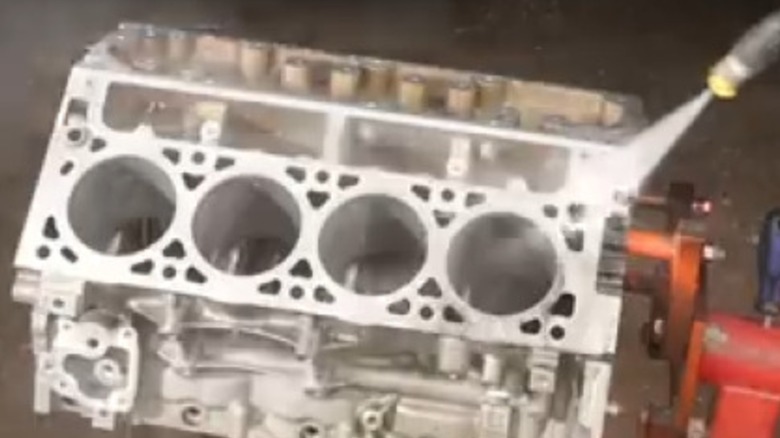
The first rule of painting your engine block's lifter valley is to make sure the surface you want to paint is clean. While there are a variety of engine degreasers that will work to clean your engine, it's important to follow the instructions listed on the products you plan to use.
Considering the need for a lifter valley surface that is as clean as possible, many engine builders apply paint to blocks returning from the machine shop or to new aftermarket engine blocks. Glyptal, for example, recommends removing all loose dirt, rust, and scale from the surface before cleaning it with mineral spirits to remove "all grease and oil."
Once the surface is clean and dry, mask off any areas you don't wish to paint. Ensure all surfaces and products are above 50 degrees Fahrenheit, then apply Glyptal via brushing, spraying, or dipping. Allow the paint to dry thoroughly before messing with the lifter valley from there. It should go without saying that any failure to properly prepare the surface or follow your product's instructions could end in disaster. Paint that becomes dislodged and flakes off the engine block internally can clog oil passages, enter the oil sump, and cause oil starvation.