

Older Drivers Are More Likely To Make These Dangerous Mistakes

According to a study published in Neuropsychology, a peer-reviewed journal of the American Psychological Association (APA), driving errors increase significantly with age. The research found that drivers in the oldest age group (between 85 and 89 years old) made critical driving errors at four times the rate of the youngest group studied (aged 70 to 74). These findings are underlined by statistics published by the Insurance Institute for Highway Safety (IIHS), which reports that older drivers are more likely to end up in a fatal crash compared to middle-aged drivers.
The question of how old is too old to drive is difficult to answer because there isn't a specific age at which someone should stop. However, research published in Accident Analysis & Prevention found that drivers aged 75 and older had a lower crash rate per mile driven once mileage was accounted for, suggesting that age alone doesn't make drivers more dangerous. Even though this isn't always the case and there are many more variables at play, there are certain mistakes older drivers tend to make more often.
Failure to check blind spots
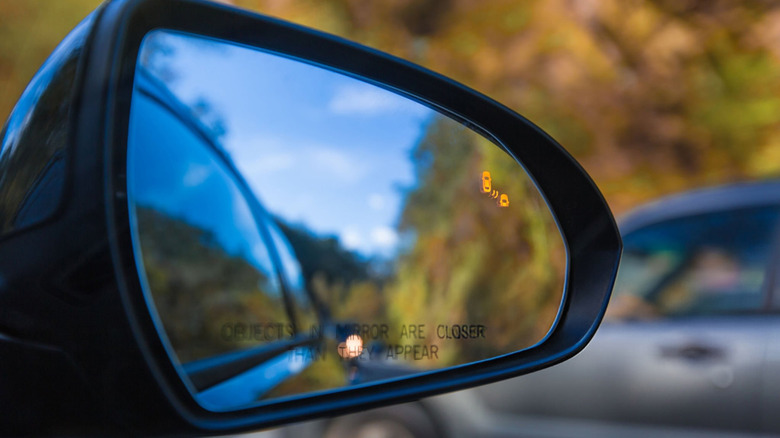
The most common senior driving mistake listed in the APA study was failure to check blind spots. Despite having their eyesight screened before the test, they frequently failed to scan adjacent lanes before changing or merging. Senior drivers have lower functional ranges of neck and trunk motion, which may explain why these numbers are significant. On the other hand, this is also where advanced driver assistance systems (ADAS) such as blind-spot monitoring help.
An analysis by the IIHS and the Highway Loss Data Institute (HLDI), published by the Intelligent Transportation Systems Joint Program Office (ITS JPO), found that blind spot monitoring systems reduce lane change crashes by 23%. This is especially important for modern-day driving because those pesky blind spots keep getting larger with more and more people choosing SUVs. Still, regardless of whether these systems are present or not, one should always check blind spots. Aging is also known to reduce reaction times and divide attention, and both of these can contribute to mistakes by making it more difficult to notice a vehicle.
However, according to a driving simulation study published by Dastrup et al. (2009), older drivers maintained longer following distances compared to younger drivers. This can work as a compensatory strategy to reduce risks since longer following distances allow for longer reaction times. Ultimately, although the APA study concludes that more research is needed in the eyesight department, the numbers presented do contribute to overall driving risk.
Veering across lanes
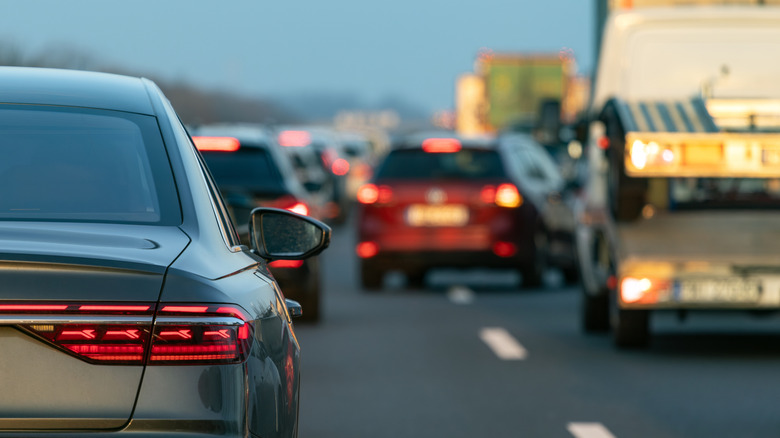
The second most common mistake attributed to senior drivers within the APA study was veering across lanes. According to the Federal Highway Administration (FHWA), as many as 17,818 fatalities in the United States were recorded in 2014 as a direct result of lane departures. A separate study on lane departure accidents carried out by The University of Maine has concluded that drivers aged 65 and older are three times more likely to be involved in lane departure crashes compared to younger drivers.
This is also an area where ADAS can help. Specifically, systems such as lane keep assist use cameras, sensors, and radar systems to read the lines and help you keep the car centered. Whenever the system senses the car is veering and is close to exiting its lane without using a turn signal, it can react by either vibrating the steering wheel, engaging the brakes, emitting a warning sound, or even tucking the car back into its lane.
Some people are not overly fond of ADAS due to how assertive they can be, but driver assist tech could prevent 27 million crashes by 2050. However, when weather conditions are adverse –especially when it's nighttime, rainy, foggy, or snowy — ADAS systems will struggle to maintain lane discipline. If we also take into account that senior drivers are more likely to suffer from vision impairments, the risks of accidents increases.
Failure to use turn signals
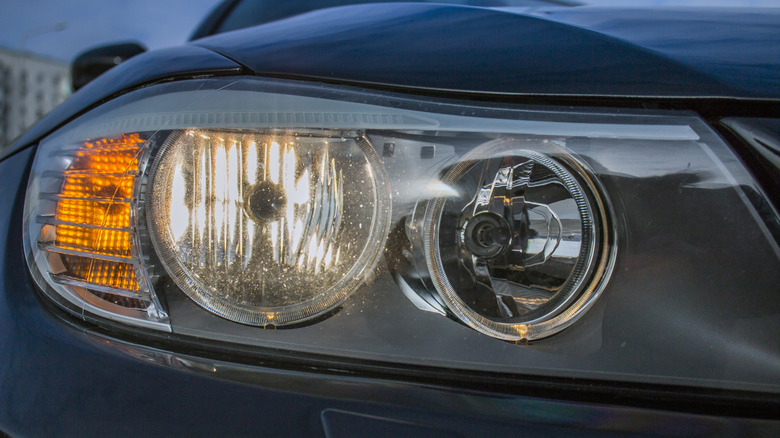
Failing to use turn signals was also noted by the APA study as the third most common mistake a senior driver is likely to make. Not using turn signals when changing lanes is not just a senior driver's problem — it's one of the rudest things you can do while driving, and it's universal. In fact, as FOX News reported, nearly half of all drivers in the U.S. don't use their turn signals, either at all or properly.
However, for senior drivers, this can be a more serious problem, especially when noting that veering across lanes, not using turn signals, and not checking blind spots are the three most common mistakes. A separate study published by Antin et al. (2020) also reported worrying numbers about how often senior citizens use turn signals.
Specifically, the study found that older drivers frequently failed to activate the turn signal — about 60% for right lane changes and 59% for left lane changes. One of the reasons why traffic functions in the first place is because rules make it predictable. Our brains are trained to associate lane changes with turn signals, and when someone fails to signal, it creates a disruption that can often lead to accidents.
Traffic judgment errors when turning left
A study published by Cicchino and McCartt (2015) scoured through U.S. crashes using the National Motor Vehicle Crash Causation Survey. The study found that the most common mistake by senior drivers aged 70 or older was inadequate surveillance (33% of participants). This suggests that older drivers were either not careful enough or did not correctly perceive the movement and positioning of cars, pedestrians, and traffic control devices.
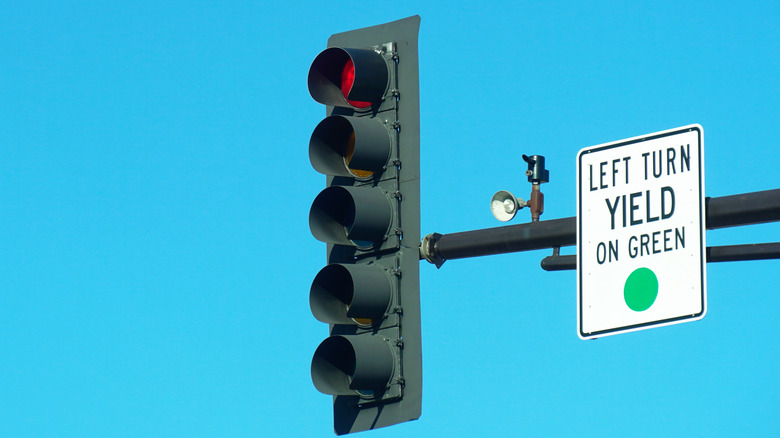
Many of these accidents happened during left turns at an intersection. According to a September 2010 report by the National Highway Traffic Safety Administration (NHTSA), left turns at intersections account for 22.2% of all police‑reported crashes, compared to just 1.2% for right turns. This makes left turns 18.5 times more dangerous, meaning that judgment errors while turning left carry a significantly higher risk — even Uber drivers will make fewer left turns to make drivers and passengers safer.
Moreover, The Washington Post reported that a UPS official estimated that about 90% of all turns made by UPS delivery trucks are to the right, as part of a deliberate strategy to avoid left turns for safety. When all of this is considered, it becomes clear that these driving errors represent significant hazards — risks to which senior drivers appear disproportionately susceptible.
Driving too slowly
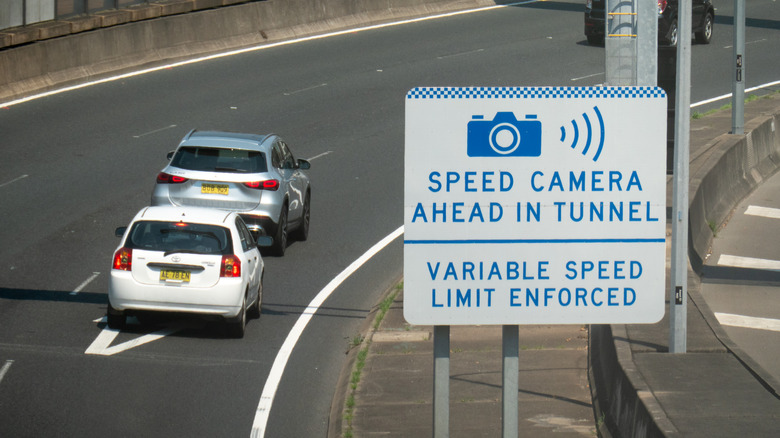
NHTSA reported that older drivers are less likely to drive aggressively or exceed speed limits. However, driving slower than the prevailing traffic or failing to accurately judge the speed of oncoming vehicles is a mistake they are more likely to make. A separate study published by Traffic Injury Prevention, comparing young drivers and senior drivers, also concluded that older drivers drive more slowly.
Although driving slower may seem safer, that's not always the case, especially if the general flow of traffic is faster. The National Transportation Safety Board (NTSB) reported that in 2012 alone "more than 1.7 million rear-end crashes occurred on our nation's highways, resulting in more than 1,700 fatalities and 500,000 injured people."
This is often known as the "U‑Curve" theory — a traffic safety concept introduced by Solomon (1964) in the U.S. Federal Highway Administration report, where both speeding and overly-slow drivers experience higher crash rates. As previously mentioned, fluid traffic depends on anticipation and predictability, and one driver moving slower than the rest can lead to dangerous situations.