

Why 5-Cylinder Engines Are So Rare
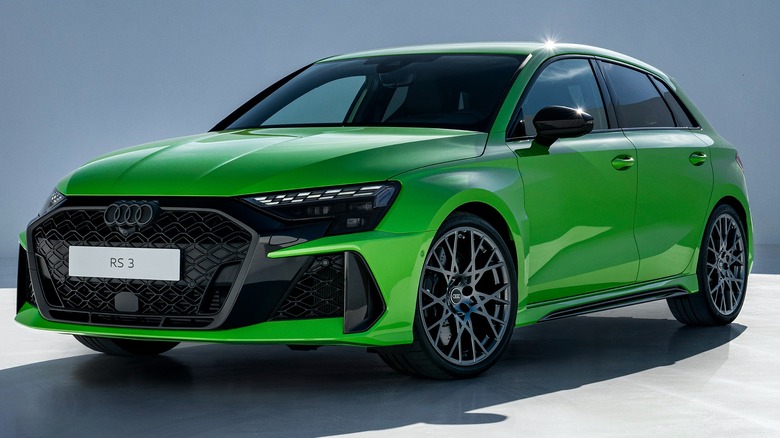
One fascinating aspect of the automobile world is how many different engine sizes and configurations are available. From the large 16-cylinder 8.0L under the hood of Bugatti Veyron to the compact 1.6L three-cylinder powering the GR Corolla, many of these powerplants can surprise drivers — especially three-cylinder engines that make more power than you'd expect from a V6. In fact, although most vehicles are powered with four, six, or eight cylinders, there are a select few, though which have featured five cylinders over the years. Audi's 2026 RS 3, packed with a 2.5L five-cylinder engine, is one of the few current examples on the market with this unique setup.
In 1974, automakers like Mercedes were trying to squeeze out more power from their four-cylinder engines. While opting for a six-cylinder would certainly provide extra horses, it also added a significant amount of weight to the car. So, the decision was made to add one cylinder to the smaller engine, utilizing many of the same parts as before while finding a middle ground between output and weight. It worked, but it came with some drawbacks that led to few models adopting this configuration. One of the factors that didn't help the five-cylinder, especially early on, was that it wasn't very compatible with a carburetor setup. Advancements in forced air induction also negated many of the five-cylinder's advantages.
Carburetors and five-cylinder engines require complex engineering
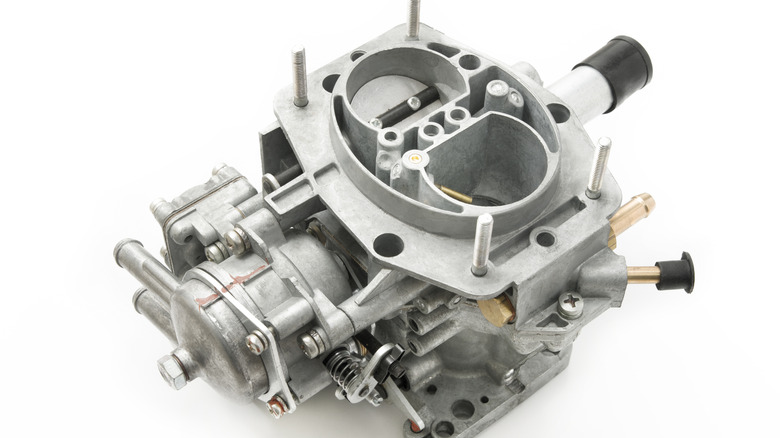
To facilitate combustion, an engine needs a mixture of both air and fuel. Modern fuel injectors are run by the engine control unit using a variety of cutting-edge sensors, determining and controlling how much fuel is delivered with precision. In systems with multi-point fuel injection, each cylinder has one injector, and this helps balance power evenly across each cylinder.
However, prior to the '90s – which was when fuel injection became more common — carburetors were used for the job. Instead of an electronically controlled setup, it was a purely mechanical one. Put simply, carburetors use pressure changes and valves to control the air and fuel mixture going into the cylinders. (For a much deeper dive into this component still popular with classic car enthusiasts, check out how a carburetor works.)
The problem with a carburetor and a five-cylinder engine is placement. Whether you try a single configuration or multiple carburetors, the uneven number of cylinders means there's no way to make sure that each one gets an equal amount of attention. It won't do wonders for performance if, for example, you have one carb providing for three cylinders while the other supplies the remaining two. Of course, there are complex ways around this problem, but the amount of fiddling it would require outweighs the potential benefits.
Turbochargers have made five-cylinder engines unnecessary
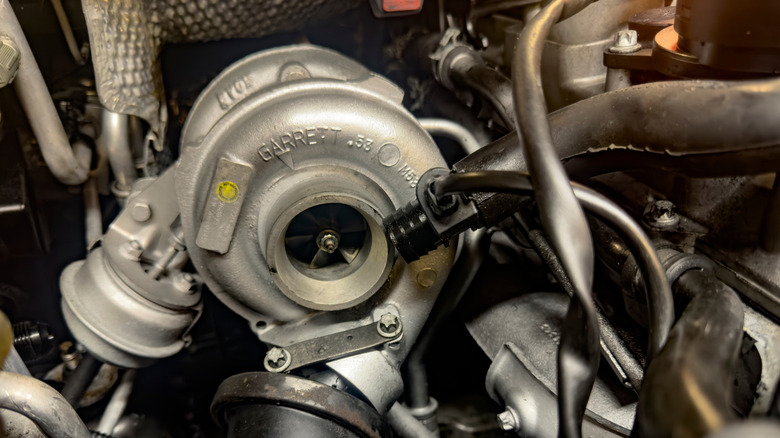
While turbocharging has been around for more than a century, it wasn't utilized effectively in the context of a passenger car until the late '70's. A turbocharger forces compressed air into an engine, increasing its combustion potential for greater output. The '70s saw greater turbocharging adoption in the automotive industry for both consumer and motorsport cars. Over the last few decades, many advancements were made to turbochargers, too, such as better thermal resistance, twin scroll technology, and sequential turbo configurations.
Essentially, these updates to forced induction made the system more durable, efficient, and potent. In fact, there are several reliable turbocharged engines you can get today, which includes some impressive inline-four configurations. Turbochargers caused a shift in engine design which essentially replaced the original need for five-cylinder engines. Take a four-cylinder engine and add a turbocharger, and you can potentially crank out a 40% boost in its output. This makes the proposition of five-cylinders less attractive, as forced induction is already pulling efficient power from a smaller and lighter engine.