

Why Your Brake Caliper Might Be Sticking And What To Do About It
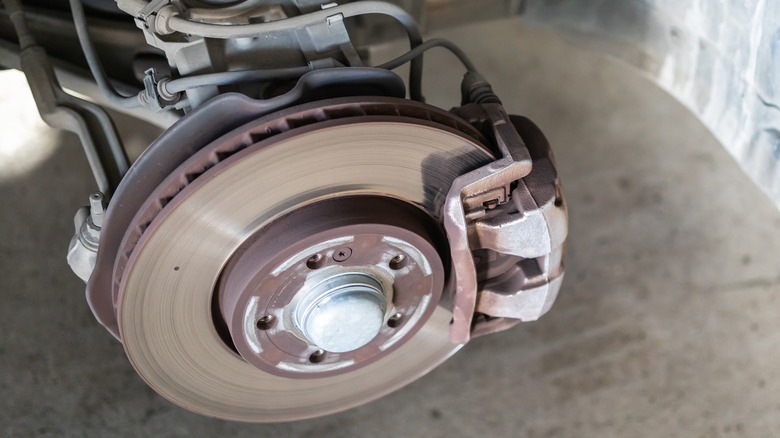
If you notice a burning smell and your car is pulling to one side, the chances are your brake calipers are stuck. A sticky brake caliper is never a good sign, as it can lead to handling issues and reduced fuel economy. Not only that, but it can warp the rotor and overheat the brakes, resulting in noticeably reduced braking performance.
Factors like corrosion and lack of use can often result in sticky brake calipers, along with brake hose issues and brake master cylinder leaks. Additionally, faulty piston and caliper boots can lead to dust and water ingress, which compromises the caliper's sliding function, causing it to remain engaged even after the brake pedal is released. Sometimes, improperly bled brakes and overfilled brake fluid can also cause your brake calipers to seize by forcing the pads to remain in contact with the rotor.
Understand that brake calipers are like a clamp that sits on the rotor. When the brake pedal is depressed, fluid travels from the reservoir to the piston, which pushes the brake pads inside the caliper against the rotor. Depending on the design (single- versus multi-piston or fixed- versus floating-caliper), the hardware might change, but the overall principle remains the same.
Fixing sticky brake calipers
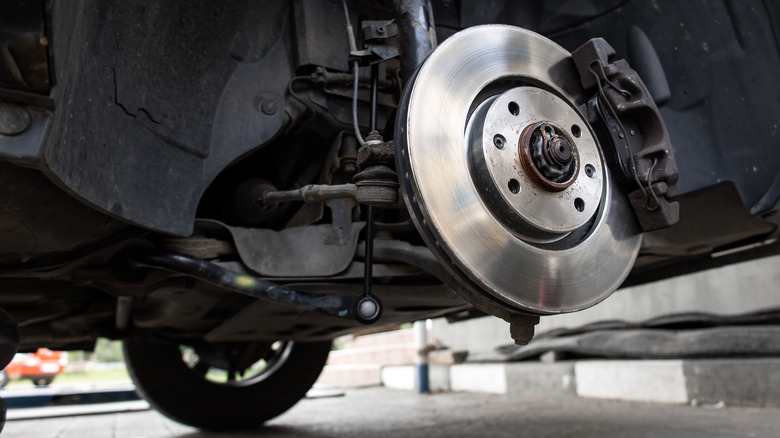
In addition to the aforementioned symptoms, if you hear a grinding sound or the car comes to a stop more quickly as you ease off the gas pedal, sticky brakes could be the culprit. Freeing your brake caliper from its stuck position requires getting your hands dirty, so if you aren't mechanically inclined, take it to a shop and let the technician figure things out. Stay on top of maintenance once everything is sorted.
Those who don't mind working on their cars can start with the easy stuff. Check for leaks near the brake reservoir, booster, or calipers. Make sure the fluid levels are correct, too. Sometimes, owners who aren't fully aware might top up once they notice brake fluid has gone down. As pads and discs wear out, the caliper uses more fluid to compensate for the added travel. However, when you replace the pads and rotors, the caliper no longer has to travel as far. Since the reservoir now has more fluid than it needs, it increases the pressure, making it difficult for the caliper to send fluid back to the reservoir.
If that's the case, jack up the car and try rotating the wheel hub freely after firmly depressing and releasing the brake pedal a few times. Undo the bleed screw and let the excess fluid drip out. If fluid levels are fine and there are no visible leaks, then it's probably the caliper. Inspect the caliper assembly for corrosion or rust. If it's not too corroded, clean it up, use some brake lubricant/grease, and replace the boots — you should be sorted. A brake caliper rebuild kit is worth considering. If things look really bad, get a new caliper. Bleed the brakes if it's been a while, but don't let air enter the system.