

What Happened To International Harvester?
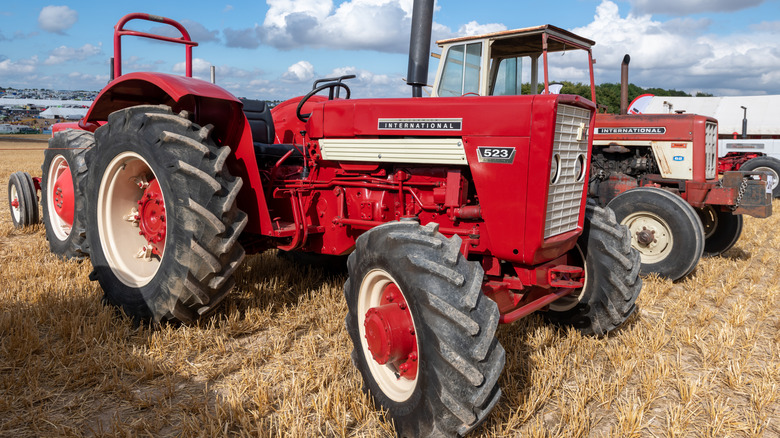
As one of the biggest icons in the agriculture industry for over 80 years, International Harvester (IH) faced dramatic successes and devastating losses. First formed after a 1902 merger created a new business combining notable operations like the Deering Harvester Company and McCormick Harvesting Machine Company, International Harvester entered the market as a major player in the industry.
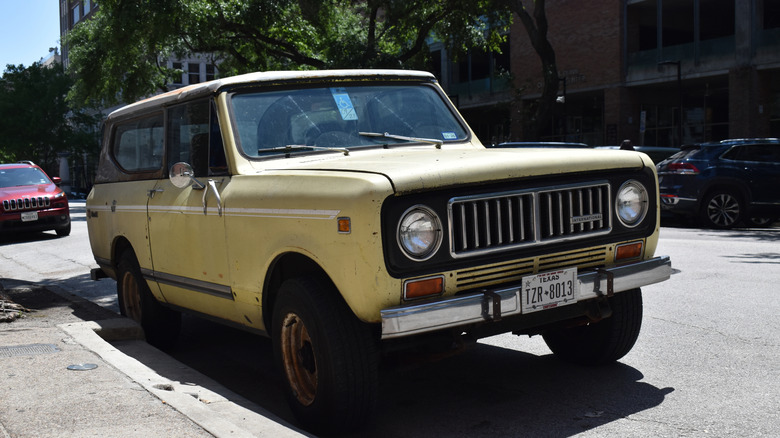
Some of the most notable contributions from IH included the inaugural Farmall, a commercially successful row-crop tractor. And there was plenty of competition, especially with automakers like Ford making tractors for decades. Later on, the Farmall H became one of the best-selling crop tractor models ever when it moved more than 390,000 units between the late '30s and mid '50s. The McCormick Super WD-9 offered a boost to '50s era farmers looking for additional power as productivity increased due to more effective fertilizers and pesticides, and it was during this era that the company introduced the 1961 International Scout, a popular Jeep alternative and long time restoration project favorite for enthusiasts. Towards the end of its run, IH also produced the 1586 tractor, which offered a turbocharged six-cylinder diesel for heavy-duty fieldwork that was produced from the mid-'70s to early '80s.
However, the cracks in International Harvester were beginning to show by then. Due to financial instability and fierce competition from new arrivals to the market, IH's agricultural equipment division was ultimately purchased by Tenneco in 1984 to be combined with its existing J.I. Case manufacturing company and create Case IH. Here's how the company went from one of the biggest names in the industry to striking a deal with a rival.
An inability to adapt to emerging market changes and over diversifying product offerings
One of the biggest challenges a manufacturer of agricultural equipment faces is the inherent instability of the farming market itself. Crop yields can be impacted significantly by ever-changing weather and shifting demand, among other challenges. When farmers are forced to be especially frugal with their finances during more challenging years, equipment manufacturers need to pivot and adapt, which IH was unable to do.
Technology is always evolving, and companies capable of incorporating new advancements into their products have an advantage over their competitors. While IH had made several memorable and successful tractors over the years, other manufacturers like Case and John Deere were pushing ahead with state-of-the-art designs and features. John Deere, especially, had upped the ante in 1960 when it introduced its New Generation of Power series, with four new tractors sporting innovative designs. Meanwhile IH tractors, while still known for their power and durability, were quickly looking and feeling like they belonged in the past.
IH wasn't new to expanding beyond agriculture. Less than a decade into its run, it had started making trucks. It later went on to manufacture revered contributions to automobile history such as the 1961 International Scout 80. This capable off-road vehicle was an early precursor to the SUV boom that was a couple of decades away, and over time it would be made available in a variety of styles beyond those most applicable for agricultural tasks, including options to order it with a removable top. However, despite the relative success of the Scout, the end of IH was approaching, as it had over-expanded its reach into other markets.
International Harvester under Case ownership
While diversifying its products beyond agriculture, International Harvester's rapid growth had spread the company thin. A lengthy labor strike that occured over six months during 1979 and 1980 also brought about further complications, straining industrial relations within the company. Due to how much money it was hemorrhaging, IH was forced to strike a deal with Tenneco, the company that owned one of its largest competitors.
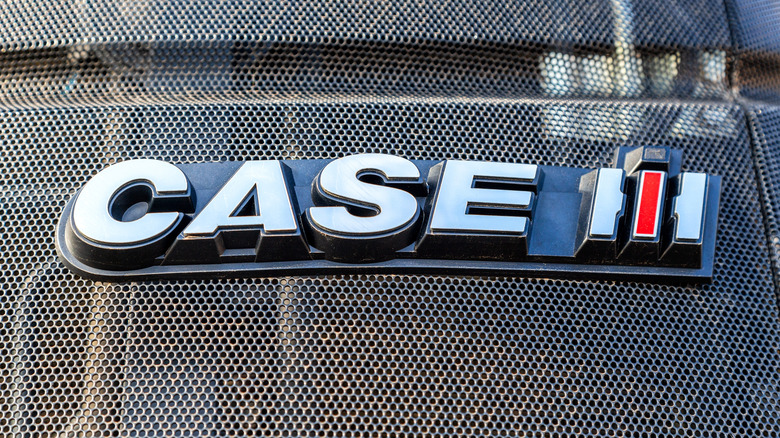
As a result, International Harvester as it was previously known ceased to exist in 1984 and the Tenneco subsidiary Case IH was soon formed, combining two agricultural giants into one of the largest manufacturers of farm equipment. Case IH used aspects of both companies to create the Magnum series of tractors a few years later, which are still being produced today. As reported by Top Crop Manager, Case IH Marketing Manager, Dan Klein, mentioned that the Magnum series "introduced the red paint that has become the signature of the Case IH brand. Their cab-forward design and fully integrated mechanical front-wheel drive (MFD) were examples of International Harvester's reputation of innovative leadership."
At the start of the 21st century, Case IH reintroduced the memorable Farmall name from IH's past. While passionate fans of IH may not recognize the brand as it exists today, it still made a tremendous mark on agricultural history, with classic models continuing to plow fields to this day. That wasn't the only revival of an old brand name from International Harvester's past — in 2022, Volkswagen Group announced that they were reviving the Scout name as an independent brand that would produce EVs. The new marque is called Scout Motors and will launch with the Traveler SUV and the Terra pickup truck in 2027.