

Parasitic Battery Drain: What It Is And Why It Happens
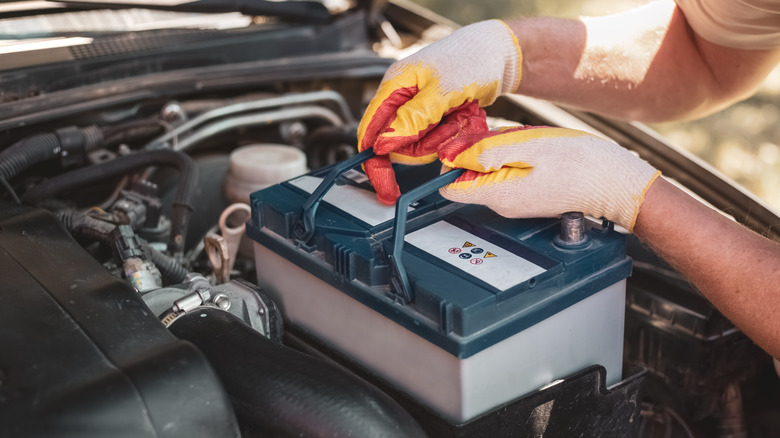
When you leave your car parked for a while, it enters "sleep" mode, but it isn't fully off. Certain systems, like alarms, keyless entry receivers, and onboard computers remain active. Modern vehicles, such as Teslas, have additional always-on features, like connectivity for apps or the Sentry Mode. While these systems use some power (typically 20 to 50 milliamperes), they shouldn't drain too much of your battery, so leaving your car parked for a few days is generally safe.
However, if your car dies after just a few days, then you have a problem, and it might be a parasitic battery drain. "Parasitic battery drain occurs when power continues to be discharged even after the engine is shut off," according to the Universal Technical Institute. This means that some systems are drawing power even when they should not. When the car is running, the alternator provides most of the power, which is why certain features only receive power when the ignition is on.
The common causes of parasitic battery drain include faulty electrical components, electronics left on, stuck relays, or issues with computers or sensors. Aftermarket accessories that were not switched off or were improperly installed can also cause it. That is why switching off accessories when not in use is an important tip to extend your car battery's lifespan. Here is everything you need to know about parasitic drain, how to diagnose it, and how to get rid of it.
Diagnosing parasitic battery drain
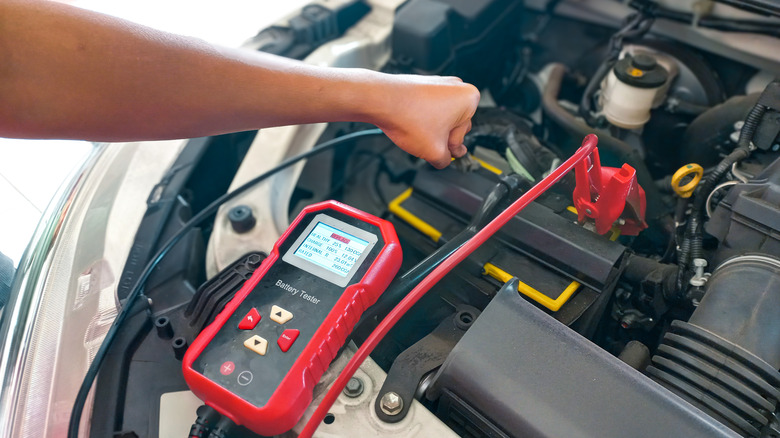
Cars are designed so their always-on systems do not draw significant power when the battery is not being actively charged by the alternator. Similar to how phone displays or motion-sensor lights use minimal energy when idle, most modern vehicles have a normal parasitic draw of 20 to 85 mA (maximum). If the draw exceeds this range, it may indicate a problem worth checking with a simple tool like a multimeter.
To do so, park your car in a ventilated area and turn it off. Wait around 30 minutes so the car has enough time to enter sleep mode. Since you will be working with an active car battery, it's important to use gloves, goggles, and to remove all jewelry that could contact the battery. Switch the multimeter to DC amps and milliamperes (mA) and disconnect the negative terminal. Connect the black lead to the negative battery cable and the red lead to the negative battery terminal, essentially placing the multimeter in series between them.
Now it's time to measure. If the draw is higher than 85 mA, check whether something in your car is still turned on or connected. For example, the dome lights, anything in the cigarette socket, or the stereo. If you made sure to disconnect everything and the draw is still higher than normal, you have officially entered parasitic battery drain territory.
Solving parasitic battery drain
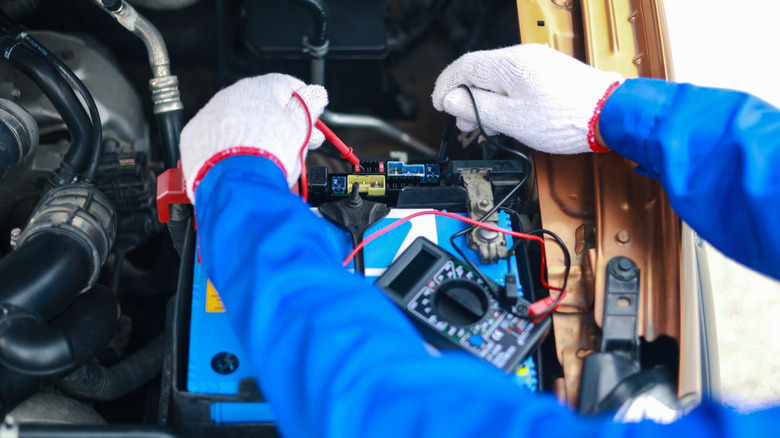
After you've concluded that something is drawing power, it's time to find the source. A good starting point would be to locate the car's fuse boxes and remove them one by one while checking with a multimeter. Once a fuse is taken out, if the draw drops, chances are that it's the source of the drain. If you need help determining what the specific fuse does, it's best to check the owner's manual or online fuse diagrams for your specific vehicle and model year.
Cars have four ignition switch positions: Off, Accessories, Run, and Start. In each of these positions, different systems activate. If some of the systems malfunction, they might refuse to deactivate or might even turn on once you switch the car off. To fix this, you need to identify the culprit and solve whatever is causing the problem. It might be a wiring problem, a fried circuit, a faulty connector, a faulty relay, a bad aftermarket accessory, or even an ECU that refuses to go to sleep.
It's not always necessary to disconnect your car battery if you're away for a few weeks, as long as you make sure to condition it. However, if you suspect a parasitic draw and you cannot start fixing it right away, it's better to disconnect the battery to prevent it from going flat. And if you want to make sure your battery is always topped-up, no matter how long you might leave your car, consider investing in a battery trickle charger.