

The Clutch Pedal Mistake Even Experienced Stick Drivers Might Be Making
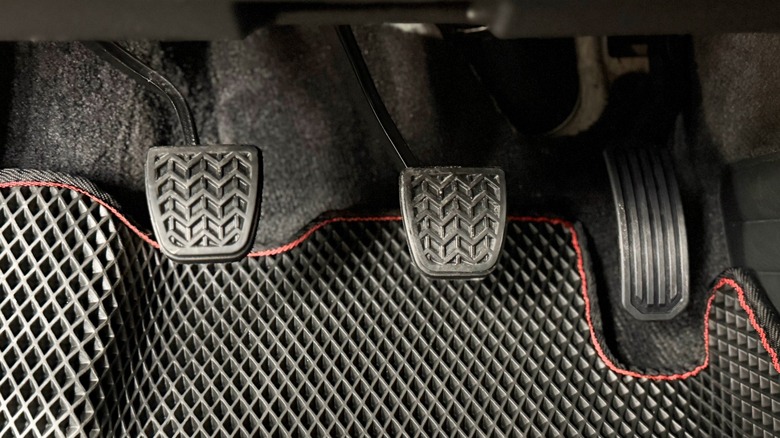
While automatic transmissions have become increasingly popular, it's still entirely possible to get a car with a manual transmission. Drivers who are new to driving a stick shift have a lot to learn. The balanced motor skill required to apply throttle pressure with the right foot while smoothly engaging exactly the right amount of clutch with the left is just the beginning. Add in shifting through the gearbox while accelerating and decelerating, as well as sensing when to disengage the clutch when coming to a stop, and it's rapidly apparent there are more pedals than feet to operate them.
Multitasking is just one of the things driving a stick teaches you that an automatic never will. While the synchronized movements of your feet and shifting hand become second nature with time and experience driving a manual transmission automobile, even experienced stick drivers can make the mistake of resting their foot on the clutch pedal in anticipation of the next shift. Instead of keeping your foot on the clutch pedal, it's best to keep your clutch-pedal foot on the floor or the footrest if the car has one.
Why this common clutch pedal mistake is bad for your vehicle
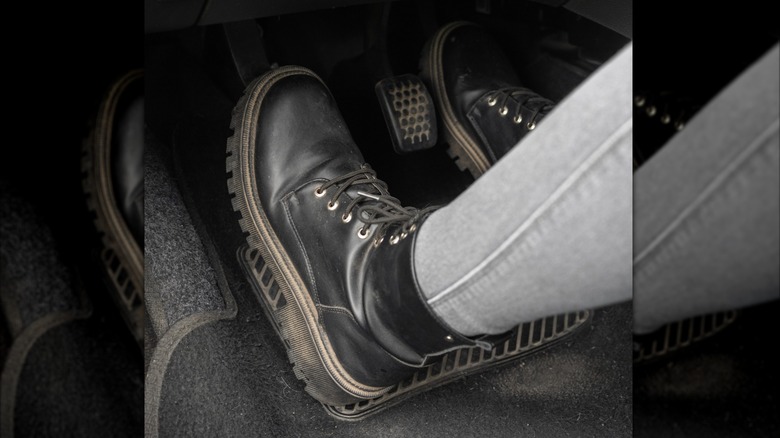
If you're lucky enough to learn to drive a manual transmission at Mini's Stick-Shift School, you'll learn to do so the correct way and hopefully avoid picking up any bad habits from the start. Resting your foot on the clutch pedal is one of the bad habits stick-shift drivers should avoid to prolong the life of the car's clutch components.
A common component that gets damaged from resting your foot on the clutch is the throw-out bearing. This bearing transfers pressure from stationary clutch linkage to the spinning pressure plate. With the clutch disengaged, the throw-out bearing rides on the pressure plate springs with the inner and outer parts of the bearing spinning freely. The slightest pressure on the clutch pedal stops one half of the bearing while the other half continues spinning. Prolonged pressure can generate heat, degrade the grease within, and damage the bearing.
Even worse than resting your foot on the clutch is pressing it partway in while driving to control speed, which is known as riding the clutch. Partial continuous pressure applied to the clutch pedal can damage the drivetrain in a couple of ways. A car's clutch relies on spring pressure to clamp the clutch disc between the flywheel and pressure plate. When the clutch is depressed, even slightly, pressure is reduced and the clutch disc can slip between the clamping components. This leads to premature clutch disc wear and overheating of the surrounding components, including springs that could weaken from the excess heat.
Regardless of which clutch component fails, repairs often involve removing the engine, transmission, or both. Clutch failure could also leave you stranded on the side of the road with a disabled vehicle awaiting a wrecker.