

Why Tires Can Wear Out Faster On EVs Than On Gas Cars
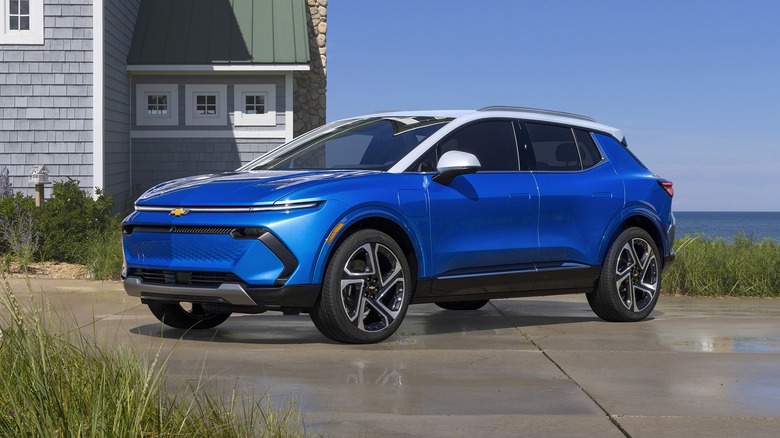
While electric vehicles offer some advantages over internal combustion vehicles, they also pose unique challenges for some critical components. For instance, Florida drivers discovered the hard truth about EVs: they eat tires. In fact, as reported by YouTube channel Engineering Explained, an EV can wear through the same tire 20% quicker than its gasoline powered counterpart.
One reason for this is weight, as EVs are typically much heavier. For instance, a Chevy Equinox with a four-cylinder engine has a base curb weight of 3,428 pounds, but the electric version tips the scales at 4,923 pounds. More weight adds additional stress to the tires, and leads to greater pressure under a heavier EV compared to a lighter internal combustion vehicle.
Another issue comes from one of the advantages of EVs: instant and robust torque. The previously-mentioned Equinox EV model packs a total of 236 pound-feet of torque. Comparatively, the gasoline version only offers 184 pound-feet, and that's only at 2,000 rpm. Torque is the twisting force that gets the wheels moving, so of course higher torque will test their durability more. But EVs also have all of this torque immediately available rather than kicking in at a specific amount of rpm. Essentially, the aggressive acceleration capabilities of an EV can cause additional wear by twisting the tires faster than they're usually prepared to go.
Some EV tires are designed to address these issues
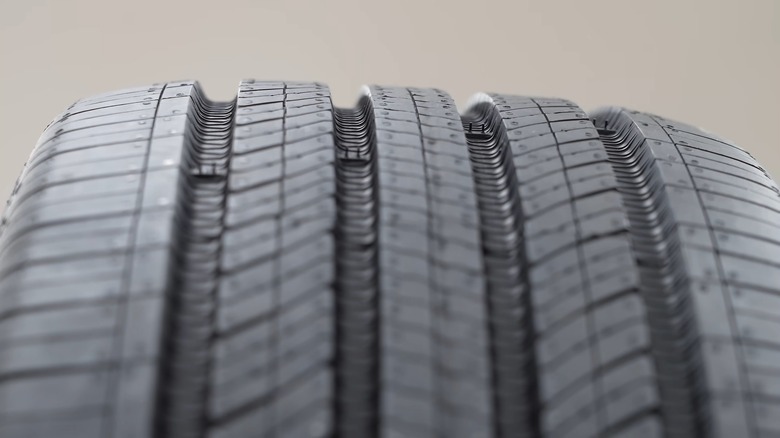
Unless you're an enthusiast, it's easy to walk into a tire shop and conclude that all these round pieces of rubber compound are pretty much identical. However, there are many different types of tires designed for various applications or terrain, including ones made specifically for electric vehicles. This is important for EV drivers, because these products seek to reduce the accelerated wear a normal tire would experience.
To address the issue of added weight, EV tires are generally more stiff. This counteracts the tendency for the tires to flex under load, which is partially responsible for generating accelerated wear through extra heat. Some EV tires accomplish this by altering the shape of the sidewalls, further bolstering their response to lateral forces during cornering. Additionally, the rubber compound itself is made to be more rigid, helping to further combat the more substantial curb weight.
In terms of price, because of the additional engineering involved, EV tires will usually cost more than regular ones. Regular tires might cost around $115 for each, but a specialized set made for EVs could be as much as $300 per tire. That being said, considering less expensive regular tires won't last as long on your EV, you'll likely spend less overall by opting for higher-quality EV designed options. Fortunately, there are resources available to help, like Tire Rack's comparison tests that take the guesswork out of tire shopping – which includes guidance on EV tires specifically.