

Here's How Often You Should Grease Wheel Bearings
We may receive a commission on purchases made from links.
Before we dive into the frequency with which you should grease wheel bearings, we should note that not all wheel bearings need to be greased. Wheel bearing guidance published in a November 1980 Hot Rod article pointed out that some wheel bearings are lubricated for life and sealed at the factory.
Most modern automobiles use sealed wheel bearings that never need to be regreased. That's an advantage. However, by the time it sounds like the wheel bearing is going bad, you'll have to replace it, and you may even have to replace more parts, including the hub assembly. That said, if you have a classic car, boat, utility trailer, or tow-behind camper, you'll most likely still need to grease your wheel bearings periodically.
Oddly enough, the 45-year-old Hot Rod article's recommendation for repacking the serviceable front wheel bearings of automobiles with new grease "every 12,000 miles or 12 months" is still accurate. Lippert, a leading manufacturer of trailers used for campers, boats, livestock, and more, recommends repacking bearings with grease annually at a minimum and more often if you use the trailer frequently or in harsh conditions. Amsoil, a supplier of lubricants, agrees with greasing wheel bearings annually as a part of routine maintenance.
The best way to grease wheel bearings
There are different ways to apply grease to wheel bearings. Each method has a list of pros and cons surrounding the processes and efficacy. For example, the best method is labor intensive, while the easiest way can lead to more problems. Unlike rubber bushings that need grease applied to the outer surface, wheel bearings are best served by grease packed into their internals.
The easiest method, for some wheel bearings, is to pump additional grease into the hub through the hollow spindle or an attachment fitted with a grease zerk. Zerk fittings that apply grease directly to wheel bearings are common on some boat and RV trailers, either directly from the factory or as aftermarket add-ons. It's a system commonly known as a Bearing Buddy (brand name) or wet-bolt design that doesn't even require removing the tire. The downsides to this type of application are that new grease may not reach the inner bearing, or it may over pressurize the seals and leak grease into the brake assembly.
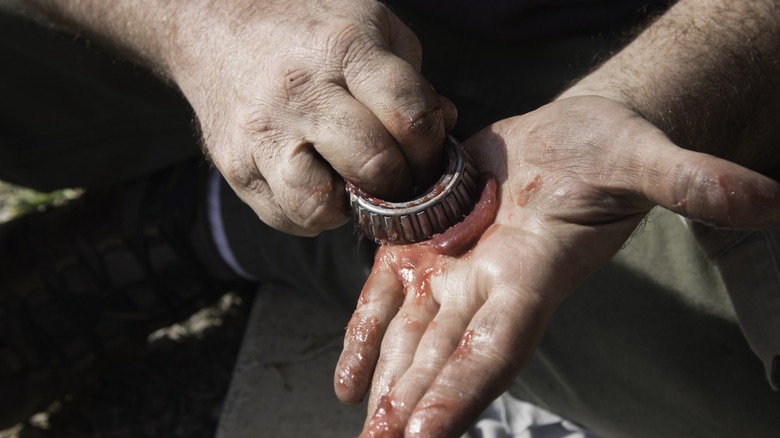
The best way to grease wheel bearings is to repack them by hand. However, it requires removing the tire, disassembling the hub, and thoroughly cleaning the bearings, races, and hub assembly. Upsides to this process include removing all the old grease and any contaminates and providing an opportunity to inspect the bearings and races for damage or wear before reassembly.
Traditional hand repacking involves pressing grease from your palm into the bearing as shown above. However, products such as the Lisle Handy Packer, highly-rated on Amazon for $24.95, make the process easier and less messy.