

People Still Can't Agree On How Best To Use The Parking Brake On Hills
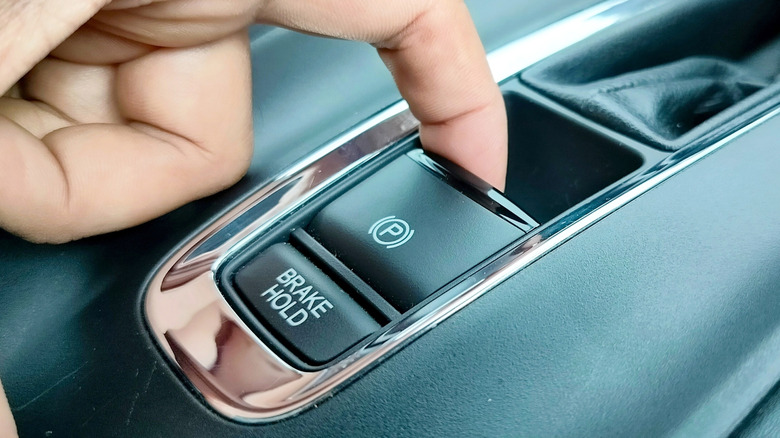
When parking a car on an incline, we all know to use the parking brake (or hand brake, emergency brake, e-brake, or whatever you want to call it). It's also good to turn the wheels toward the curb to keep it from rolling away, just in case every single parking system on it fails. It's also a good idea to use your e-brake on level surfaces, because keeping those cables and levers moving prevents them from seizing up, which is also something that can happen if you leave it on too long.
Car enthusiasts know we use the parking brake to take pressure off of an automatic transmission's parking pawl or a manual transmission's clutch and innards. If you park on a hill without using the parking brake, the car will roll a few inches, signifying that the weight of the car is on small transmission parts rather than the bits actually designed to hold the car in place.
So, what's the correct order of operations to ensure the car is parked with zero pressure on the transmission? There's the obviously wrong way, which is to put the car in park or in gear, letting it roll, then applying the parking brake. At that point, the e-brake is simply there to catch the car once the tender transmission internals snap. But what are the other methods? (For the sake of keeping this discussion simple, let's say we're engaging "park" for automatic transmission cars and putting the car "in gear" for manual transmission cars.)
Park first then neutral, or neutral then park, or stay in gear then neutral...
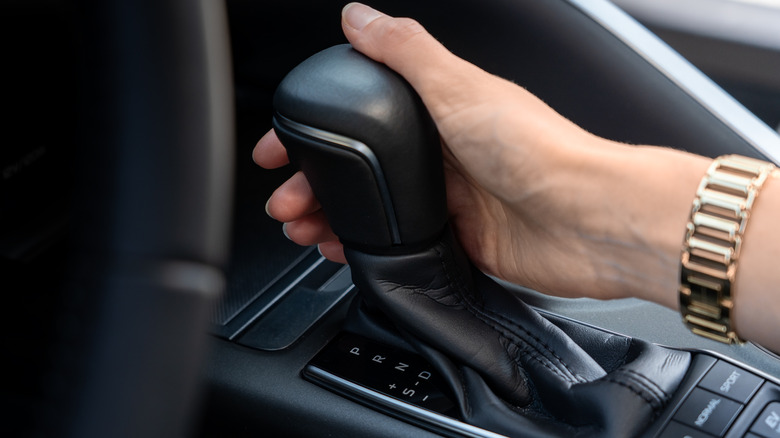
Your first option is to push the brake pedal, engage the parking brake (whether it's electronic or a manual lever), then shift the car straight into park or put it in gear. That should give no pressure on the parking pawl or gear teeth, right? Except, according to RyYourCarGuy, the preferred way is apparently to first push the brake pedal and shift the car into neutral. Then you engage the emergency brake, release the brake pedal, push the pedal back down, and finally shift from neutral to park before taking your foot off the pedal.
It seems a little excessive, but let's see how it compares to other techniques. In a video from Helping U online, the first method taught is to push the brake pedal while in drive, engage the e-brake, shift to neutral, bring foot off of the brake pedal, push the pedal back in again, shift to park, then turn the car off, and bring the foot off the pedal for good. Man, that sounds just as complicated.
But that second video has another method right after the first one: pull the hand brake while in drive and then shift right to park — which is what we said in the beginning of this section. But then another video on the subject from Around The Home also recommends shifting to neutral first, then to park. What gives?
Chaotic neutral or lawful good?
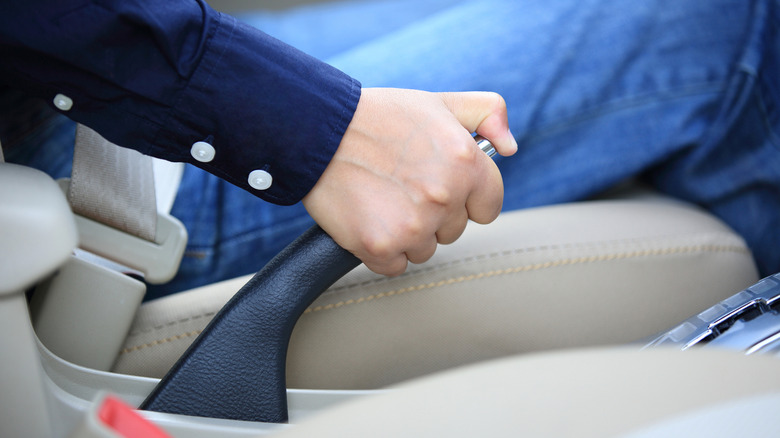
Shifting to neutral first is apparently done to reduce strain on the transmission. Granted, that's also what engaging the e-brake before letting the car roll is for. Plus, common recommendations say not to shift from drive to neutral frequently. In Engineering Explained's video centered around things not to do with an automatic transmission, one of the sections states that there's "No reason to put your car in neutral."
Speaking of Engineering Explained, the channel also has video about parking brakes. In it, Jason Fenske (the owner of the channel) discusses whether you should press the button on the hand brake before pulling it up. Apparently, viewers complained that when he engaged his handbrake, he was causing unnecessary wear by not pressing the button. But Fenske (who's, well, a mechanical engineer) knows what he's doing, and he explains that there's no harm in just pulling the parking brake right up in all its ratcheting glory. After all, it's the same basic mechanism found in socket wrenches, and those have no issues with such noises.
What really matters here is making sure that your e-brake is what's holding your car still on a hill, rather than the weight being all on the pawl. If you want to shift to neutral first, that's fine, but there's not really a reason to, and some owner's manuals say to shift right to park anyway. Just don't forget to disengage your parking brake before you drive off.