

Which Corvette Had The LS3 V8?
The Chevrolet Corvette is an American institution. As one of the nation's favorite sports cars, it's been on the scene since the early 1950s. There have been some great Corvettes, and some that are best left unvisited — like the shameful California-only Corvette with its 305-ci V8 engine that barely kicked out 180 horses.
Throughout those decades, we've seen the muscle car genre explode in popularity. We've also witnessed the creation of the Environmental Protection Agency (EPA), the implementation of the Corporate Average Fuel Economy (CAFE) standard, and ever-stricter emission regulations. Plus, we've seen the rapid expansion of turbocharging and electrification tech. So needless to say, the method of motivation for the Corvette has changed dramatically over those years.
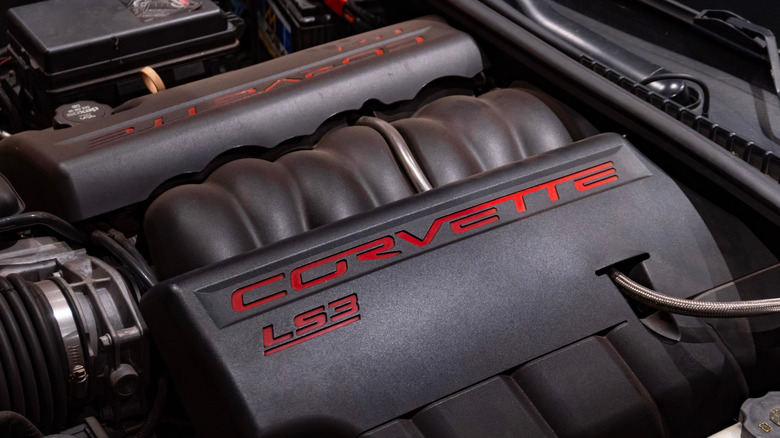
Some of the engines featured under the 'Vette's hood have gone down in history as legends, such as the Blue Flame inline-six that powered very early examples and the L88 V8, which impressed during the height of the muscle car era. Another V8 which did the rounds, albeit much later, was the LS3. This particular V8 is a member of the modern LS family of GM V8 engines, as the name would suggest. LS engines are modern small-block engines, and the first — the LS1 — arrived in 1997 under the C5 Corvette's hood.
Numerous iterations followed before the LS3's arrival in 2008. And just like the LS1, it debuted in a Corvette — the C6 Corvette, to be specific, although the C6 had been around for a few years prior to its marriage with the LS3. The engine itself is a small-block V8 with a 6.2-liter capacity. It's naturally aspirated, and although it first appeared in the C6, it found its way under the hood of many other GM products too.
A closer look at the LS3-powered C6 Corvette
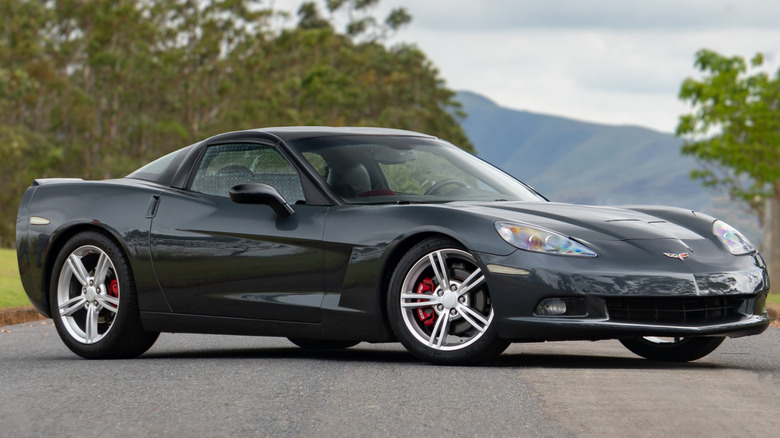
Just to clarify, the C6 Corvette arrived as a 2005 model year, powered by a then-new 6.0-liter LS2 engine. The LS2 produced a clean 400 hp and it was the Corvette's base engine until '08, when the LS3 replaced it. The benefits were clear: a 30-hp boost, an extra 24 lb-ft of torque, and a 0.2-liter jump up in capacity — it was just an all-round better performer. At its peak, with a factory-fitted Z51 performance package, the LS3 could churn out a maximum of 436 hp, which was more than enough. Any more and it would start stepping on the Z06's toes, which kicked out a more meaningful 505 horses.
Chevrolet continued with the LS3 in the C6 Corvette as its base engine of choice until the end of its production in 2013. The C7 then took its place the following year, powered by a 6.2-liter LT1 engine. Back to the C6, though. Buyers were provided with two transmission options when spec'ing their 2008-onward Corvette: either a six-speed manual Tremec TR6060 unit or a six-speed paddle-shift automatic, dubbed the Hydra-matic 6L80. For those wanting to really wring the neck of their C6, the six-speed manual was surely the unit of choice. The automatic would have made a more comfortable option for those who wished to commute, tour, or just cruise in their LS3-equipped C6.
Since its discontinuation over 10 years ago now, this generation of Corvette has aged beautifully — some even consider the C6 to be peak Corvette – thanks to the sleek lines, powerful but not overbearing engine, and accessible price point. However, there are other ways to enjoy the LS3 today, if Corvette ownership isn't for you.
Here's where else you'll find an LS3 engine
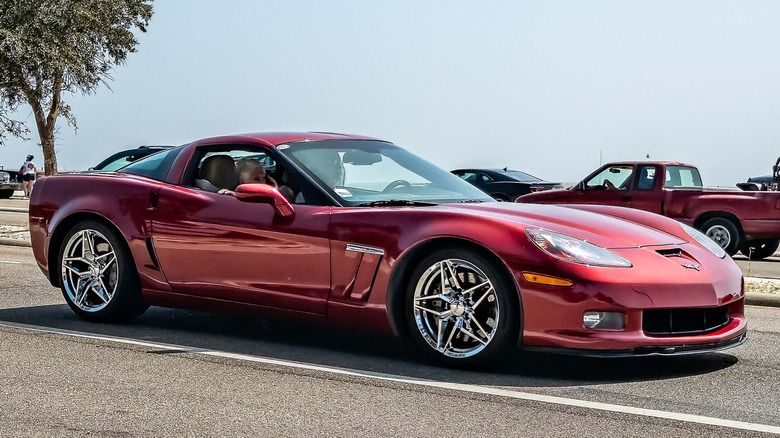
A Corvette isn't the best choice for everyone, but the allure of an LS3 is hard to resist. Fortunately, GM squeezed the motor into numerous models. Factory-fitted applications include the Chevrolet Corvette (2008-2013, Base and Z51), Pontiac G8 GXP (2009), Chevrolet Corvette Grand Sport (2010-2013), Camaro SS (2010-2015, manual only), Chevrolet SS (2014-2017), Holden HSV (2009-2015), and the Holden Commodore VF (2015-2017).
It's worth noting that the LS3 fitted to the Corvette Grand Sport was quite special indeed, as it featured a dry sump and a modified crankshaft. The Holdens were also only available outside of the United States, and if you purchased an automatic Camaro SS, you'd find an L99 under the hood, not an LS3.
Despite being a high-performance engine, GM still decided to equip it in a number of family-friendly models, such as the four-door SS and G8 GXP, which opened up the audience size for LS3 customers. These do-it-all muscle cars took the fight to contemporary rivals from Dodge and Ford, although the Corvette C6 still sat as GM's flagship LS3-powered sports offering.