

Is There A Reliable Ferrari? That Depends On Who You Ask
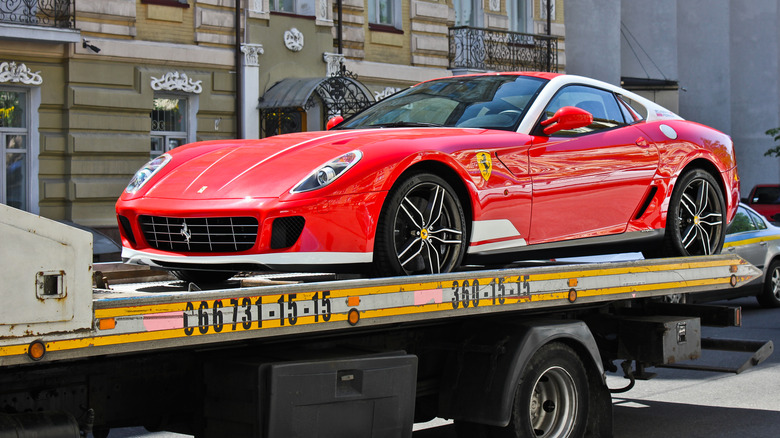
It might seem like a silly question, asking if a reliable Ferrari exists. In the auto industry, reputations are earned, not given, and this is especially true when it comes to reputations surrounding reliability. For instance, Toyota is unstoppable in Consumer Reports' reliability rankings. The Japanese automaker has spent decades producing hardy workhorses that can see odometers roll over the magical million-mile marker.
So when you hear that Italian sports cars are unreliable, that's because, generally speaking, Italian sports cars are unreliable. The "Top Gear" boys once purchased three Italian sports cars for under 10,000 pounds (back when this was a possibility) and attempted to cover a relatively short commute from one town to another. Electrical gremlins, oil leaks, and overheating were themes of the day, and these probably are events that owners of classic Italian sports cars are quite familiar with.
Such unfortunate events are not reserved solely for classic Italian models either; remember when Ferrari's 458 Italias kept catching fire? The truth is, all cars have their common problems, but a highly strung sports model like a Ferrari is likely to have more. They simply aren't built for covering huge distances and daily commutes — they're specialist machines that require meticulous maintenance, and an extra level of care and attention.
And yet, there are numerous Ferrari owners who have actually experienced the opposite. They've been able to use their Prancing Horses for thousand-mile-plus road trips without hiccup, and in some cases, maintenance has proven fairly swallowable — albeit the bills are still far from what you'd find on a Camry.
The search for a reliable Ferrari
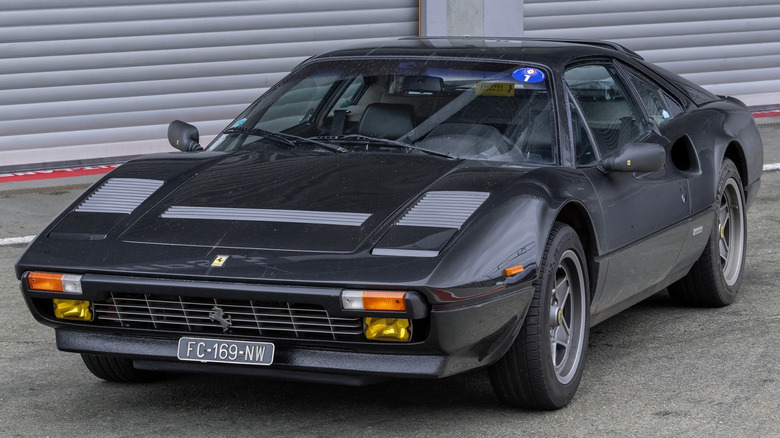
The first step of any used-car search probably starts with a quick question in your choice of search engine. Typing in "which Ferrari models are reliable" will usually churn out responses like the 308, or more modern examples, like the aforementioned flammable 458 Italia, and earlier F430. But is there any truth to this? And if so, why are these models more likely to be reliable?
Let's kick off in chronological order, with the 308. This mid-engine V8-powered 'Rari represented a key change in how the Italian brand operated. It was designed as an entry-level model, and while this concept had existed prior, with the Dino models, the 308 was also produced in comparably huge numbers — 12,149 were churned out in total. Being entry-level, performance was less of a focus — power ranged from 205 to 255 horsepower, and less power means less stress on mechanical components. Less stress means less wear, and less wear means less breakdowns.
Plus, with over 12,000 made, production would have been a lot more uniform than the previous hand-made, one-of-just-a-few models that came before, which would make maintenance and repairs a lot easier. Spare parts would be easier to find, too. Picking a 308, then, is a good place to start, but classics always have their issues, which is why modern models like the F430 and 458 Italia also make sense.
The key difference with these is that they were chain-driven, which meant the expensive and often engine-out belt changes were a thing of the past. This simplified maintenance, reduced running costs, and improved reliability, as a metal chain is more durable than a rubber belt. For a more modern ownership experience, then, considering something F430-onward is wise.
Don't just take our word for it
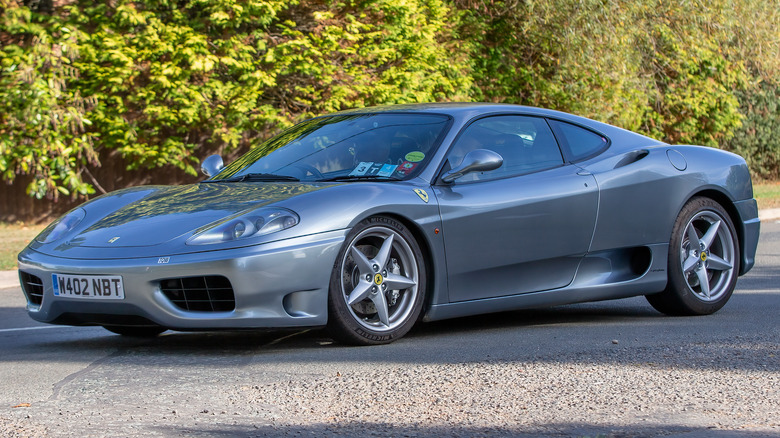
It's one thing to say that Ferraris can be reliable, especially those built in higher numbers, and those with chain-driven engines that don't chase the very limits of what's possible from a performance car. But is anyone actually living the reliable supercar dream?
Yes, they are. Jalopnik's own Doug DeMuro is on record saying that his 360 Modena was the most reliable car he'd ever owned, although that was a decade ago, so perhaps he's found something else to top the list. Either way, that's a bold claim to make about an aging Italian supercar. Then there's YouTuber Sam Fane, perhaps better known as Seen Through Glass, who took a 360 Modena and later a 360 CS on many European adventures, racking up thousands of miles in the process.
We've also seen multiple examples of the chain-driven 458 Italia with close to or even north of 100,000 miles, and there's no better evidence than a six-figure odometer to prove the naysayers wrong. Then there's folk like Kevin Enderby, who really put the work in to prove how reliable these cars can be. He owns a smattering of prancing horses, including an F430, F355, and 308, all with mileages that could put them on our short list of cars that exceed 200,000 miles. His 241,000-plus 308 is largely considered the highest-mileage Ferrari in existence.
The truth is, any car can probably be reliable if you keep up with maintenance, jump on repairs as soon as they crop up, and make improvements to known weak areas. Yes, you'll need a deeper wallet to get a Ferrari up to six-figure mileage, but that's just part of supercar ownership, and fussy maintenance doesn't necessarily equate to poor reliability.