

European Drivers Love Chinese EVs
Happy New Years' Eve! It's December 31, 2025, and this is The Morning Shift — your daily roundup of the top automotive headlines from around the world, in one place. This is where you'll find the most important stories that are shaping the way Americans drive and get around.
In this morning's edition, we're looking at Chinese EV sales in Europe, as well as a new regulatory change that could hurt those same automakers on their home turf. We'll also look at Florida's new plans for an EV-charging highway, and Michigan's new charges at the pump
1st Gear: Despite tariffs, Chinese EVs keep gaining market share in Europe

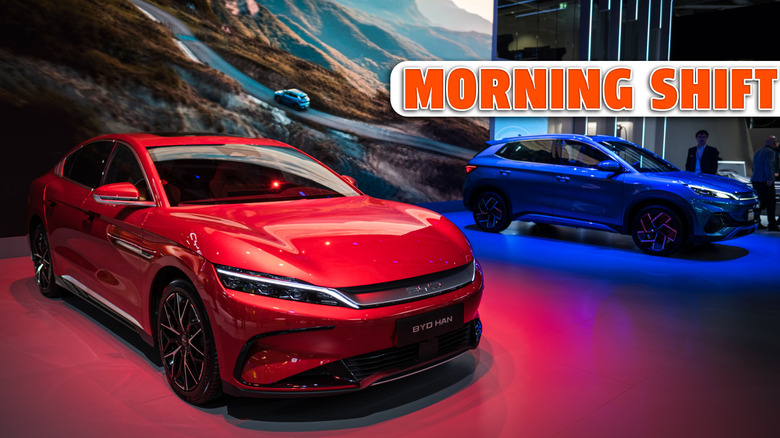
2025 has been the Year Of Tariffs, and not just in the United States — the European Union has gotten in on the trend too, taxing Chinese cars to protect European automakers. There's just one issue with the EU's plan there: It's not working. European drivers seem to love Chinese EVs, because sales just keep climbing. From Bloomberg:
Chinese carmakers captured a record 12.8% of Europe's electric-vehicle market in November, building on gains made this year despite the cost of European Union tariffs.
In the fast-growing hybrid-car categories, Chinese brands resumed their rise, surpassing 13% across the EU, EFTA countries and the UK, according to researcher Dataforce.
Brands led by BYD Co. and SAIC Motor Corp., along with newer entrants such as Chery Automobile Co. and Zhejiang Leapmotor Technology Co., have redoubled efforts to crack the European market this year. Overcapacity in China has fed the export push, as manufacturers seek a release from relentless price wars in their domestic market.
For years, the Chinese automotive market was dismissed as cheap rip-offs of cars from the U.S. and Europe. I remember being a kid and seeing all the mocking photos, comparing Chinese vehicles to similar cars from elsewhere in the world. Well, turns out, building bad cars is just the first step towards building really good cars — cars that those buyers in the U.S. and Europe are picking over local competition.
2nd Gear: But Chinese automakers are being hit by ending subsidies
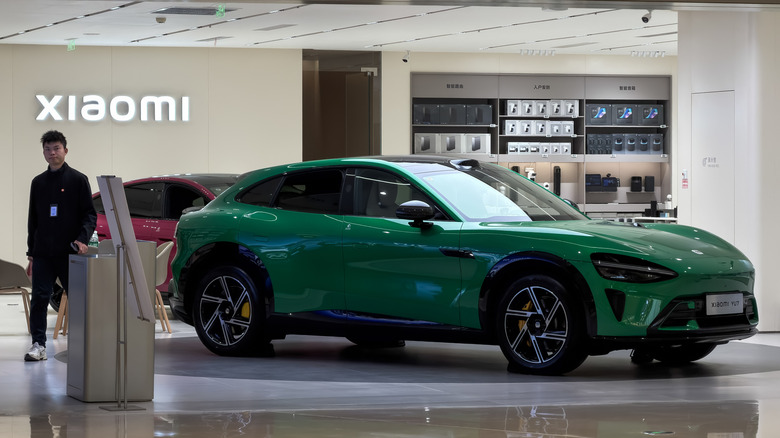
All is not sunshine and rainbows for those Chinese OEMs, though. The Chinese government subsidizes trade-ins towards modern EVs, putting some cash into the deal when buyers swap out a gas car or older EV for something newer and greener, but it's changing the structure of those benefits. Now that the market has matured, and buyers need less of an incentive to go electric, the Chinese government is trying to get buyers into higher-end models. From Bloomberg:
China has adjusted its cash-for-clunkers program that could impact lower-priced brands such as BYD Co., potentially reducing the boost to new car sales next year.
Customers buying a qualifying new energy vehicle, which includes electric cars and hybrids, can receive a 12% rebate — up to a maximum 20,000 yuan ($2,850) — if they scrap an older gasoline vehicle or EV registered before 2019 at a government-approved junkyard, agencies including the nation's top economic planner said late Tuesday.
People trading-in an older car for a more fuel-efficient gasoline vehicle or upgrading to a newer EV would get a rebate of between 6%-10%, up to a maximum of 15,000 yuan, according to a document issued by the Ministry of Commerce.
To receive the maximum 20,000 yuan subsidy, a new car would need to cost at least 166,700 yuan ($23,870). That could encourage consumers to buy more expensive models but negatively impact mass-market manufacturers such as BYD, Zhejiang Leapmotor Technology Ltd. and Geely Automobile Holdings Ltd. BYD had an average sale price of 107,000 yuan in November, according to data provider China Auto Market.
On its face, subsidizing only purchases of more expensive vehicles (and, necessarily, subsidizing purchases by people who can afford to look at those pricier cars) goes against the whole communism thing that the Chinese Communist Party still sort of pretends to support. On the other hand, though, it stands to make those pricier purchases a bit more accessible to those who otherwise wouldn't have the means to look at $24,000 cars. If this change leads to people buying more expensive cars than they otherwise would, it seems like a win-win for both consumers and automakers — so long as those automakers have higher-tier trims and models that can take advantage of the altered benefits.
3rd Gear: Florida wants to build a highway that can charge EVs, but it's less helpful than it sounds
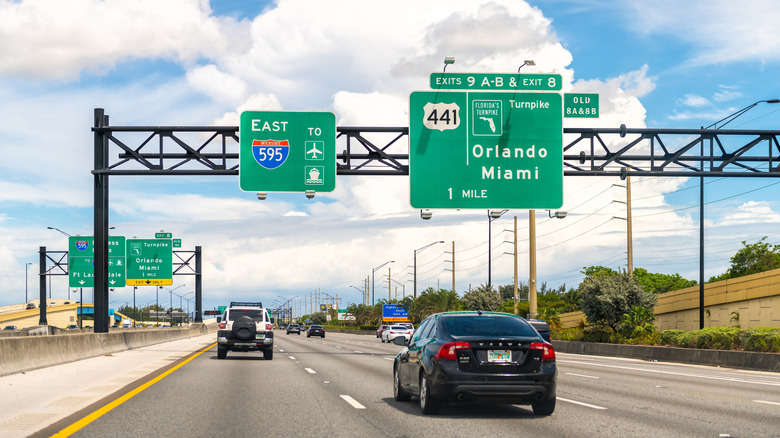
Engineers have long tried to figure out ways to wirelessly charge electric cars as they drive down the road. Streets with embedded wireless charging have long been a concept towards that end, but they tend to run into a very simple issue: Roads don't tend to stay in great shape through freeze-thaw cycles, snowplows, even just the weight of cars passing over them. Maybe that's why we shouldn't be surprised that sunny Florida, of all states, is taking up the challenge and building a wireless charging road. From PC Magazine:
In 2026, Florida will break ground on a highway that can wirelessly charge EVs at speed in a small-scale test that could have big implications for the future of mobility.
The highway is actually just a 3/4-mile portion of a larger construction project, the 4.4-mile State Road 516 (SR 516) Lake/Orange Expressway.
The Central Florida Expressway Authority (CFX) is building SR 516 in three segments. The first one, as shown on the map below, will feature wireless charging technology. The highway will be open to the public when it's finished in 2029, but the charging system will only work on "specially equipped vehicles...for initial testing of the charging lane," CFX says.
A quarter mile of road, taken at highway speeds, is probably not going to do much in terms of charging a car. If you're traveling at 60 miles per hour — already unthinkably slow for Florida — you'll cover a quarter mile in 15 seconds. Try putting your phone on a wireless charging pad for 15 seconds, and see how much juice you get. It's almost like the best vehicles to charge in transit aren't consumer cars at all, but trains on rails.
4th Gear: Michigan gas prices will jump tomorrow
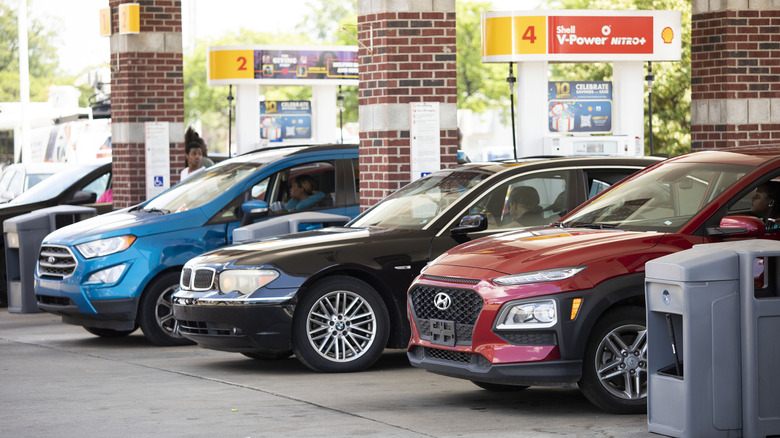
Michigan Governor Gretchen Whitmer wants to fix the state's roads. Unfortunately, doing so costs money, and that money has to come from somewhere — naturally, it makes the most sense to collect it from the people who use the roads the most. Thus, drivers will see some additional costs at the pump starting tomorrow, as the state's gas tax increases. From Click On Detroit:
Drivers in Michigan are set to pay more at the pump in the New Year as changes to the state's fuel tax system take effect.
Beginning Jan. 1, 2026, Michigan will eliminate its 6% sales tax on gasoline and replace it with a higher cents-per-gallon fuel tax. The change will raise the state fuel tax to about 52.4 cents per gallon, up from the current 31 cents.
Unlike the sales tax, which flowed into the state's general fund, all of the money collected under the new fuel tax structure will be dedicated to transportation funding. State officials say the shift is designed to create a more reliable, long-term source of revenue for repairing and maintaining Michigan's roads and bridges.
There's a saying that goes around online, almost certainly apocryphal, about the fall of the Roman Empire. It says that, for people in the outer reaches of Rome's control, the decline of the empire wasn't all political turmoil and wars. It was that one day, a bridge collapsed, and no one came to fix it. American infrastructure is certainly entering its "no one came to fix it" phase, but it sounds like Whitmer wants to forestall that as long as possible.
Reverse: Maybe the TU-144 was better than we all think
We all know the TU-144 crashed at the Paris Air Show in a horrifying display, but it sounds like it may not have been entirely the fault of Soviet design and piloting:
Soviet and French investigators ruled that pilot error was the cause of the accident. However, in recent years, several of the Soviet investigators have disclosed that a French Mirage intelligence aircraft was photographing the TU-144 from above during the flight. A French investigator confirmed that the Soviet pilot was not told that the Mirage was there, a breach of air regulations. After beginning his ascent, the pilot may have abruptly leveled off the TU-144 for fear of crashing into this aircraft. In the sudden evasive maneuver, the thrust probably failed, and the pilot then tried to restart the engines by entering a dive. He was too close to the ground, however, and tried to pull up too soon, thus overstressing the aircraft.
On The Radio: 100 gecs - '800db cloud'
It's getting tough to find tracks from 100 gecs that I haven't used as an On The Radio yet, but I persevere