

Why Car Batteries Fail When It's Freezing (And How To Prevent It From Happening)

We may receive a commission on purchases made from links.
The concept of a battery is not a new one, and it may in fact date back more than a couple thousand years. However, it was a French physicist named Gaston Planté, who in the mid-19th century was the first to incorporate the ingredients still used today in many batteries: sulfuric acid and lead. Standard 12-volt car batteries are composed of six cells, with each responsible for converting chemical reactions into usable electricity. Put simply, when lead plates inside the cells are combined with sulfuric acid, ions are released, producing the power you use to start your vehicle. However, just because many batteries use the same technology doesn't mean they're all equal, as Consumer Reports says these are the best car batteries.
While generally a very reliable source of energy, the chemical processes inside a car battery don't work as well in frigid temperatures. This is because cold weather inhibits those reactions inside the cells that are necessary to generate electricity. Those ions, which must move to create electricity, are suddenly struggling to navigate a thick chemical sludge within the cells. This causes both a reduction in capacity and power, potentially leaving you stranded. Fortunately, there are ways to mitigate this problem, reducing the chances you'll go to start your car and hear that dreaded clicking sound from a starter starved for energy.
Battery insulation and engine heating products
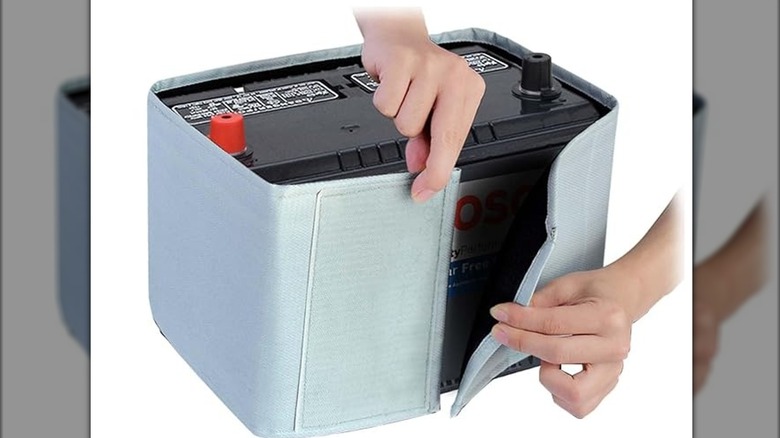
If you live in a part of the U.S. that experiences exceptionally low temperatures in the winter (especially if freezing conditions don't lift for lengthy periods of time), you may want to consider a few accessories for your vehicle. For the battery specifically, you can try an insulation kit, which you can find for around $18 from online retailers. This is essentially a blanket that wraps around the sides of the battery, helping to protect against frigid weather by retaining some heat.
Another way to counteract the cold under the hood, and one of your favorite cold-weather car mods, is an engine block heater. There are a variety of different options, from blankets and magnetic heating pads, to dipstick elements and more sophisticated inline coolant heaters, depending on your vehicle and budget. Raising the temperature of the engine is helpful, even though it doesn't directly affect the battery itself, as a warm engine requires less energy from the battery to get started.
A few tips to help ensure your battery is healthy enough to function in the cold
First off, being familiar with cold cranking amps on a car battery (the battery's ability to perform in the cold) and choosing one appropriate for your area is a great start. A battery that works fine under the hood in Florida may struggle in Minnesota, so picking the right unit from the get-go will minimize problems.
Another way to help maintain the performance of your battery during the winter, is to drive it frequently (especially if you can't park it in a garage). If you sometimes go days without driving your car, the cold can discharge your battery over time. The exact amount is dependent on many factors, but eventually, without having the opportunity to recharge via a lengthy drive, there won't be enough energy to turn the engine over on those frozen mornings.
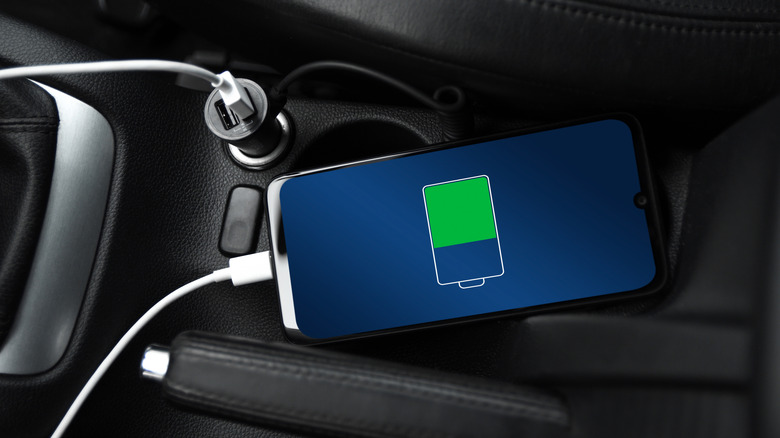
Another thing to keep an eye on is accessory use, such as devices plugged into your car's power sockets or aftermarket stereos. These can be handy when charging a smartphone or tablet for instance, but they should only be plugged in while driving. In some cases, energy from the battery continues flowing to these accessories after the engine is shut off. While it won't immediately amount to a significant drain on your battery, over time, it can take a toll, leaving your battery unable to provide enough juice for a winter start.