

Should You Replace Brake Calipers When You Replace Rotors?
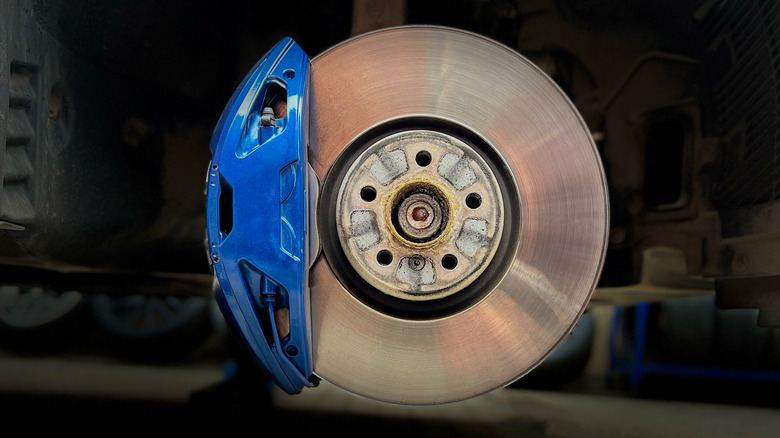
The brake caliper is an important component of a disc brake system, along with the brake pads and rotors, but it is often overlooked when it comes to brake maintenance. While replacing rotors and pads is part of routine brake maintenance, what about calipers? Should you replace them when changing the rotors to ensure that they operate safely and efficiently? Brake rotors can last up to the 60,000-mile mark, but it isn't necessary to replace the calipers if they are in good condition, according to various experts.
The calipers' job in the braking system is to use hydraulic pressure from the brake lines to push the caliper pistons, which then press the brake pads against the rotors to slow the vehicle. Brake calipers usually last a long time, much longer than pads and rotors, with some experts stating that they can last between 75,000 and 100,000 miles or roughly 7 to 10 years. You will likely go through three or four sets of brake pads before having to change the calipers on your car. Of course, how long calipers last is influenced by the driving environment and how well they're maintained. It's recommended that you clean and lubricate the calipers regularly and replace the brake pads when they are worn, as worn pads can cause overheating and damage the calipers.
What are the signs that the brake caliper needs replacing?
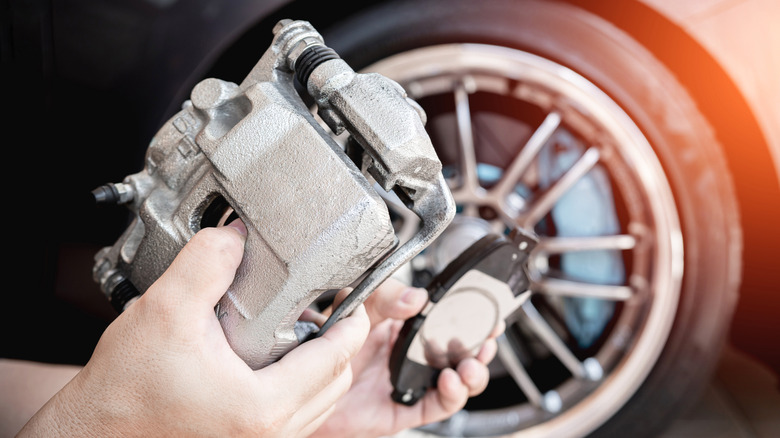
There are a few visual signs that can indicate that a brake caliper is failing and needs to be replaced. If you notice brake fluid leaking near the caliper or see corrosion on the caliper piston, it's important to fix the issue quickly. Another visual sign of a failing caliper is uneven wear on the brake pads, which may indicate that the caliper is not applying equal force. From the driver's seat, if you notice the vehicle pulling to one side while braking, it could mean that the caliper on one side isn't applying pressure properly. Other signs include strange noises when braking and a feeling that the brakes are dragging. Over time, a caliper piston can become stuck and fail to move freely, often due to age, corrosion, or environmental conditions.
While brake calipers can be restored and even given a fresh new look with a respray, most experts recommend replacing them, as restorations can be time consuming, and replacements are often reasonably priced. When changing calipers, it's important to replace them in pairs — for example, if the front-left caliper is failing, you should replace the front-right caliper at the same time. This ensures even braking, as a new caliper has more stopping power than an old one. Furthermore, since both calipers would have experienced similar wear, the older caliper will likely fail soon. Replacing brake calipers isn't something you need to do often, but keeping an eye on their condition ensures better braking and a safer journey.