

4 Telltale Signs Your Suspension Might Be Failing
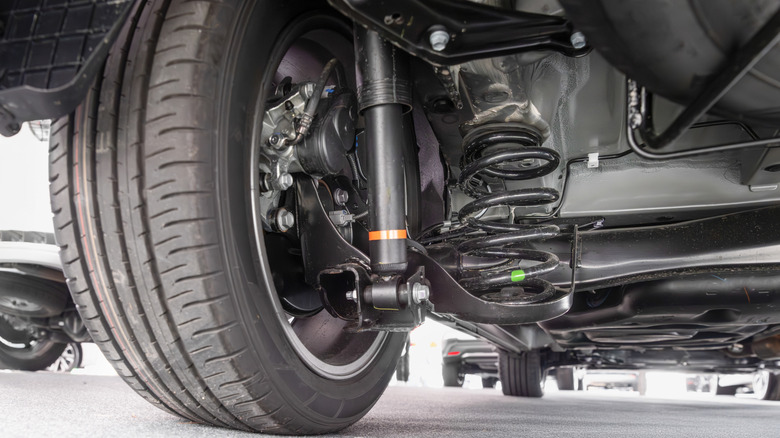
Picture yourself sitting on a chair with one leg shorter than the others. Every bit of movement makes it wobble, creak, or sway to one side. It is anything but comfortable to sit in. That's kind of what a failing suspension feels like. In essence, both the chair and the car's suspension are designed to provide stability and comfort. A properly functioning suspension system is a major part of why these are the most comfortable cars ever built.
However, if the system fails, the car becomes borderline unusable and, at times, very unsafe. That's why knowing how a failing suspension system feels is one of the best ways to avoid these problems before they occur. There are many different types of systems on the market, all of which have their own pros and cons. However, the problems they all face typically manifest in comfort, stability, safety, and handling issues.
According to GSP North America, a major manufacturer and distributor of suspension components for the North American market, the suspension system comprises various key parts. These include the springs, shocks, struts, control arms, sway bar links, sway bars, ball joints, and bushings. Each of these can wear out, often showing up as one or more of the telltale signs your suspension may be failing. Here's what they are.
Excessive bouncing or diving

A car's suspension is designed to keep the vehicle stable and control its motion. This means that, in normal circumstances, the car should stay level and should not bounce, squat, dive, or lean inordinately under braking, acceleration, or turning. A bit of weight transfer is normal. However, if the vehicle continues to bounce or dive excessively, it is a sign that your suspension may be failing, as its damping system is no longer able to control motion.
Problems such as these typically indicate weakened coil springs or struts, but they can also signify strut fluid leaks and weakened shocks. The easiest way to test whether your vehicle is bouncing uncontrollably is to firmly press the front or rear bumpers and check how the car reacts. If the vehicle bounces a bit but quickly stabilizes, it's usually fine. However, if it bounces like it's on a trampoline, it's time to have your suspension checked.
If your car has an independent rear suspension (IRS), bouncing or squatting may be localized to one corner. This is because the rear wheels on an IRS move independently and, thus, the motion isn't as likely to translate to both corners. Regardless, if it keeps on bouncing, it usually means that one of the previously mentioned components is to blame. Another way to test this is to simply drive over a speed bump and see how long it takes for your car to stabilize.
The car is pulling or drifting to one side

A car's suspension "suspends" the vehicle on all four corners. When everything is functioning normally, all four corners are level and the vehicle stays flat. While cornering, most cars will naturally lean to one side or the other — that's normal physics. However, if the car is leaning or pulling to one side while driving, even when the steering wheel is held straight at the 12 o'clock position, it often signals worn or failing suspension components.
To check whether your suspension or steering is the cause of the problem, be sure to inspect your tie rods, bushings, and control arms, as they may be unevenly worn, collapsed, or bent. These issues can also be due to wheel alignment, uneven tire wear, or problems with individual steering components, namely, the steering knuckle. If you sense your car drifting to one side while braking, however, this is typically a sign of problems with the brake system, as opposed to a suspension issue.
Inspect your car's camber, caster, and toe measurements by getting an alignment check, as these are known to shift over time, especially if the car experiences impacts associated with potholes or curbs. The question of whether you can align your car's tires yourself typically boils down to whether you value convenience over time, effort, and tolerance for trial-and-error — even then, performing a DIY alignment isn't necessarily convenient either. That said, if you don't have the necessary tools and experience, it's best to leave it to a professional.
Weird noises while driving

Rattling sounds may indicate timing chain problems, whistling can suggest an intake or vacuum issue, and grinding noises are often associated with worn brake pads. The key to identifying whether a noise is suspension related is context — when it occurs, where it comes from, and what it sounds like. In the case of suspension problems, it is often due to damaged or worn suspension components that are no longer firmly held in place.
So, if you hear heavy clunking sounds while going over bumps, or if you hear them from one or multiple corners of the car, it typically means worn or damaged sway bar links, failing control arm bushings, or worn-out ball joints. Besides these, clunking and knocking sounds coming from the suspension area can also be attributed to worn-out shock absorbers, problems with the struts, and worn-out or damaged leaf spring shackles.
Additionally, if you hear any squeaking noises, it can be due to worn-out rubber components, such as deteriorated bushings. It's important to get these systems checked as soon as possible, since driving with worn-out parts can put additional stress on the rest of the car's suspension. Ultimately, some car sounds are worse than others. This is why you should pay attention to when and where the noises occur and how they affect the vehicle.
Sagging or uneven ride height
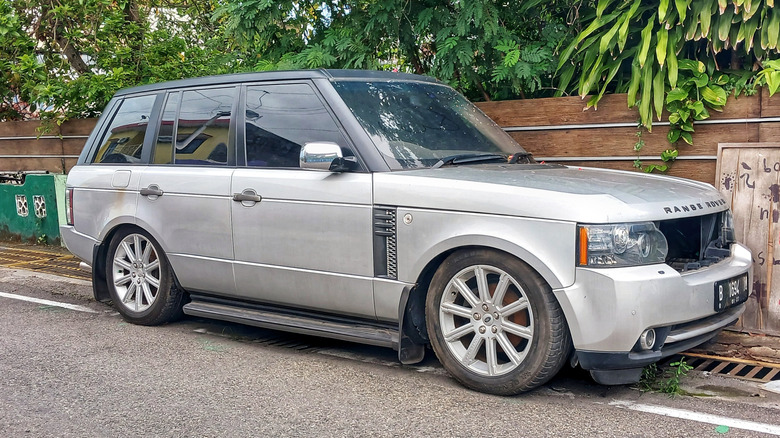
While the car is parked, and especially if it has been sitting for a while, checking the wheel gaps across all four corners can also help you identify suspension problems. For instance, if the vehicle sits lower on one side and is showing a tighter wheel gap, the coil spring may be fatigued. These problems can also point to failing springs or struts that aren't able to support the weight of the vehicle evenly at all four corners.
Driving with such a compromised suspension system is never a good idea, especially since uneven weight distribution can even lead to bottoming out and damaging the underside of the car. Air suspension has many pros and cons, but one of the biggest drawbacks of an air suspension system is a worn-out air bag that causes the car to sag. That's typically what causes those old luxury cars to sink on one side or even collapse.
Besides the air bags themselves, air suspension sagging can also be due to a weak or faulty air compressor that cannot maintain air pressure, damaged solenoid valves, issues with the ECU, leaking air lines, or failed height sensors. At the same time, if your lines, sensors, or air bags are faulty, they can very easily cause the compressor to fail, since it will be forced to run continuously or work harder than intended to maintain ride height.