

11 Factory Cars That Can Hit 60 MPH In 3 Seconds Or Less
It's a sad fact that we still don't have flying cars. But we have the next best thing — the democratization of sub-three-second factory cars. And, yeah, the fact that it's mainly because of electric motors and batteries is a hard pill to swallow for some. But, come on. You don't even need to spend six figures to have a sub-three-second car today and obliterate past hypercars in a straight line.
Um, yeah, straight line speed isn't everything. We at Jalopnik couldn't agree more. Luckily, most cars that hit the 60-mph mark in the two-second range are amazing to drive. These speed machines don't only break acceleration records, but also Nürburgring lap times. They offer drivers an experience that seemed unattainable just a decade ago. Race-car-like performance. Luxury-car comfort. And some have the audacity to say this is not the automotive golden era.
So we made a list to celebrate the frankly ridiculous speed today's performance vehicles offer — with a twist. We could've just put all the hypercars in one article and called it a day, but that would've been too easy. So, no Aspark, Rimac, Koenigsegg, or Bugatti. Instead, we'll give you cars you can (mostly) acquire through dealerships. Most of them are still out of reach for most people, but you'll definitely see them on the street — many times! And here's a spoiler: some don't even get help from electricity.
2026 Tesla Model 3 Performance (2.9 seconds)
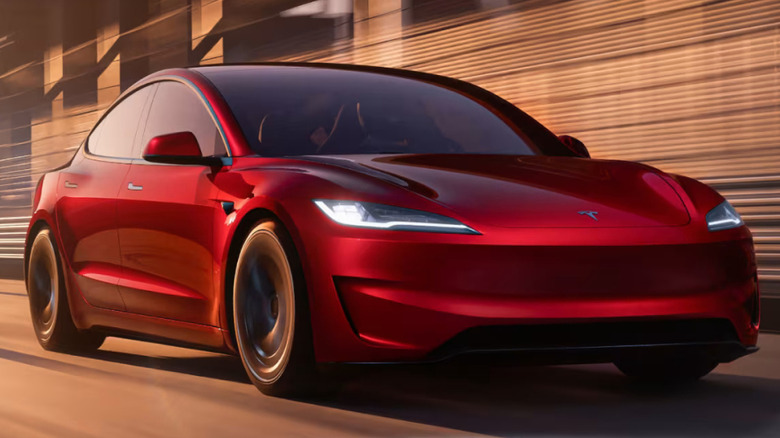
If winning at the traffic light is your idea of fun, the dual-motor, 510-hp Tesla Model 3 Performance is the cheapest car to get you there. It starts at just $56,630, significantly less than a BMW M3 ($79,575) or even a Cadillac CT4-V Blackwing ($65,395). And it beats both these performance sedans to 60 with a time of 2.9 seconds. Car and Driver clocked an even quicker time of 2.8 seconds, which is nonsensically quick for a sub-$60,000 car. You also get your money's worth at the top end; the Model 3 Performance has a top speed of 163 mph.
So is there a catch? Well, it's not the range — the Model 3 Performance can travel 309 miles on one charge, despite having a relatively small 79.7-kWh battery (usable capacity). Once the battery depletes, it can charge at 250 kW on Tesla's ubiquitous Supercharger network. The Model 3 Performance is also decently comfortable inside, though anyone who has sat in the rear will detest the knee pain — the floor is simply too high. Yes, the lack of physical buttons inside is distracting, even if Tesla's infotainment software is excellent.
But that's not the catch. See, after the 2024 update, the Model 3 Performance is vastly improved in the corners. Still not a surgical tool, but also not the sloppy mess it was. Unfortunately, the brakes still suck, making the Model 3 Performance unsuited for track duty or prolonged aggressive driving.
2026 Porsche 911 Carrera GTS T-Hybrid with Sport Chrono Package (2.9 seconds)
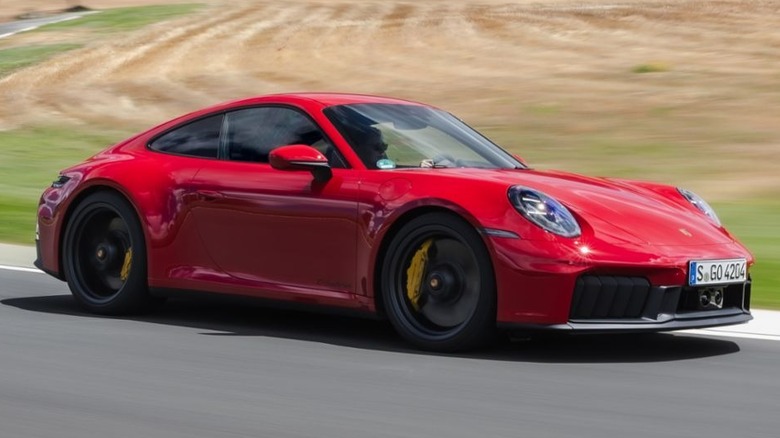
The latest Porsche 911 Carrera GTS is the perfect response for anyone doubting that hybridization will save internal-combustion performance cars. High-boost turbo power. Responsiveness of a naturally aspirated engine. Stupendous performance. What was once science fiction is available through Porsche's dealers for $178,250.
It's all thanks to the brand-new 3.6-liter turbocharged flat-six in hybrid configuration. Like most high-performance hybrid powertrains, Porsche's T-hybrid has an electric motor connected to the eight-speed PDK transmission. Powered by a 1.9-kWh battery that sits under the front hood, the small electric motor boosts the output from 478 hp to 532 hp.
Yes, other automakers have already done this. But the 911 Carrera GTS has another ace up its sleeve — an electric turbocharger. Propelled by a 14.7-hp electric motor, the turbocharger can spool up almost instantly, greatly reducing turbo lag. Porsche's implementation is smart, too — the turbocharger can also act as a generator to feed the battery, ensuring no energy goes to waste.
It's thanks to this innovation that the Porsche 911 Carrera GTS T-Hybrid is so good to drive. The power train reacts almost instantly to throttle input, almost like in a high-capacity naturally aspirated engine. As a result, when equipped with the Sport Chrono Package, the GTS sprints to 60 in just 2.9 seconds, according to Porsche. Car and Driver clocked it at just 2.5 seconds, which is just obscene for a rear-wheel-drive (RWD) car (though an all-wheel-drive model is available). The 194-mph top speed is equally impressive, and, like any Porsche, the GTS feels sharp and stable in the twisty sections.
2026 Ferrari 296 GTB Speciale (2.8 seconds)
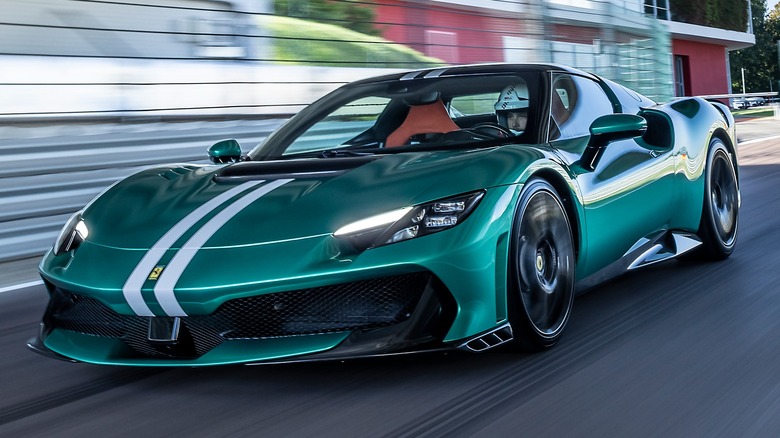
The 296 GTB might be Ferrari's best hybrid implementation to date. It's a mid-engine RWD car, so it keeps Ferrari's traditional handling finesse, but it also has 819 hp to compete with hypercars in a straight line. The 296 GTB Speciale, launched this year, improves on both ends with even more power, significant weight reduction, and more aggressive aero. Oh, and an absurd $475,364 starting price.
The good part — Ferrari raced the regular 296 GTB to improve on almost every aspect in the Speciale. The 3.0-liter twin-turbo V6 engine was boosted to 691 hp and 557 lb-ft of torque, with the axial flux motor, which sits between the engine and eight-speed dual-clutch transmission, producing 13 more horsepower (totaling 178 hp). Overall, the hybrid system now produces 869 hp, 50 more than the 296 GTB. The Speciale is 132 pounds lighter, too.
As a result, Ferrari estimates a 0-62 mph time of 2.8 seconds, a tenth quicker than the regular model. Still, the Speciale should be quicker in the real world. MotorTrend clocked a 2.3-second sprint to 60 with the regular model, so expect a similar figure for the Speciale.
However, the 205 mph will stay unchanged, and it's mainly because of the high-downforce configuration. The Speciale has active rear flap, new winglets on the hips, and a larger rear diffuser, resulting in 959 pounds of downforce at 155 mph — 310 pounds more than the 296 GTB.
2026 McLaren 750S (2.7 seconds)

The McLaren 750S reaches 60 a tenth of a second faster than the 296 GTB Speciale, without involving electricity. It has a higher 206-mph top speed, too. It's all thanks to the 4.0-liter twin-turbo powerhouse, which produces 740 hp and 590 lb-ft of torque.
Yes, that means it's down on power compared to its fierce rival, but since it has no batteries or electric motors, it's also significantly lighter. McLaren says the 750S has a dry weight of 2,815 pounds, while Speciale weighs 3,109 pounds dry. Since lightness equals speed, in testing by Car and Driver the 750S reached 60 in an unbelievable 2.3 seconds. Did we tell you it's an RWD-only machine?
Those ridiculous figures were enough to break Andy Kalmowitz's brain when he drove the Mclaren 750S in 2024. It gets even crazier: The sweet-sounding V8 can spin the rear tires even in fifth gear in wet conditions. Oh, and the 750S handles better than almost any supercar out there, with agility that few supercars can match. Think of a V8-powered go-kart — that's how the 750S feels. It's incredibly communicative, too, being one of the last supercars with hydraulic steering.
Another major standout is fuel economy — Andy even averaged 24 mpg on a highway trip, which puts a question mark on hybrid-powered supercars. Sadly, like with any Mclaren, you need to settle for subpar build quality in some areas and buggy tech. Oh, and exorbitant prices — the 750S Coupe starts at $365,100, while the Spider costs $386,700. Sheesh.
2026 Mercedes-AMG GT 63 S E Performance (2.7 seconds)
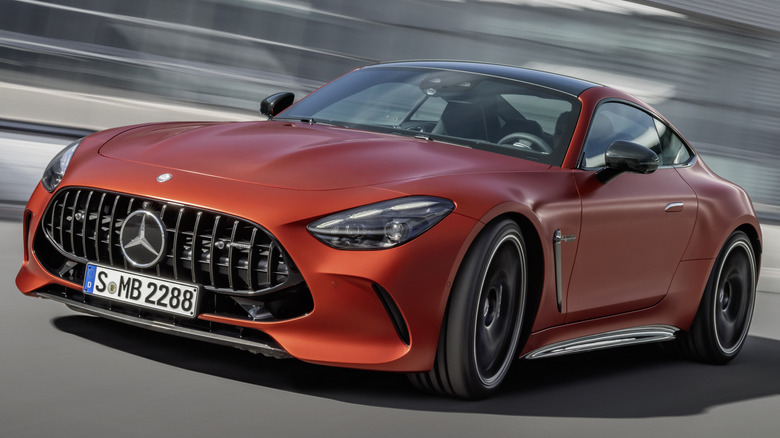
The Mercedes-AMG GT 63 S Performance. Yes, that sentence-long name makes us scratch our heads, too. Here's another head-scratcher — it weighs 4,784 pounds, more than most versions of the Ford Ranger pickup truck. Sit behind the wheel, throw some cargo inside, and you'll be lugging over 5,000 pounds. Read. That. Again.
But there's a reason why the GT63SEPC weighs that much. It carries significant hybrid hardware, alongside Merc's brawny 4.0-liter twin-turbo V8. The engine itself produces 603 hp and 627 lb-ft of torque, enough to make most enthusiasts happy. Not enough to compete with the 911 Turbo, however, so Mercedes-Benz did some complicated engineering stuff to reach 805 hp and — wait for it — 1,047 lb-ft of torque.
How complicated? Well, you might want to write it down. There's a nine-speed automatic connected to the engine, connected to the rear limited-slip differential via a long driveshaft. Yup, that means no transaxle setup for better weight distribution like in the predecessor.
So far so good? Here comes the tricky part — there's a 201-hp, 236 lb-ft electric motor connected to the differential with its own two-speed gearbox and a 4.8-kWh battery. Ah, yes, we almost forgot — the GT63SEPC is AWD, both in hybrid and EV mode, because the electric motor can send torque to the front wheels via the driveshaft. At least it works; according to Mercedes-Benz, the GT63SEPC sprints to 60 in 2.7 seconds, with Car and Driver clocking it at 2.4 seconds. The price? $202,200.
Chevrolet Corvette C8 Z06 (2.6 seconds)
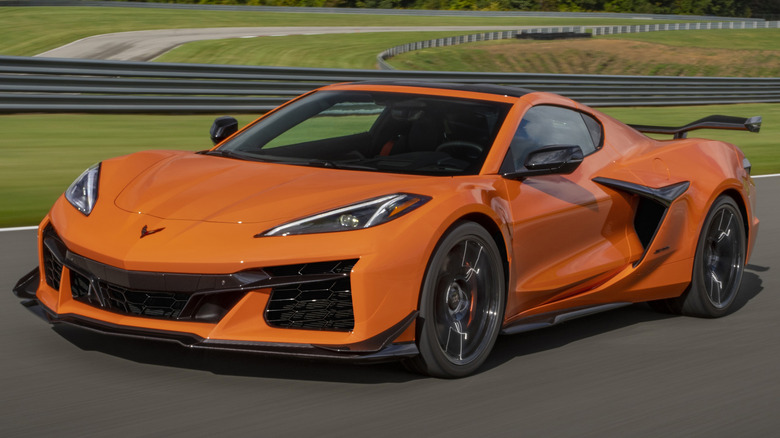
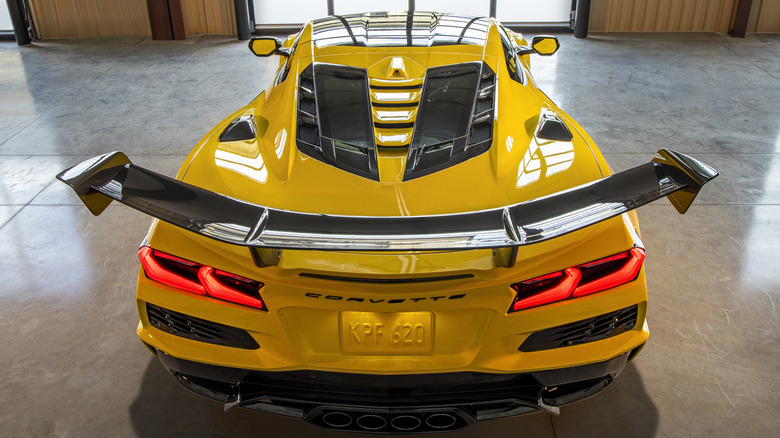
The fact that the powerful Corvette C8 Z06 is on this list is a serious win for the engineering team. Chevy's high-strung mid-engine V8 sports car starts at a crazy affordable $120,300. It has no turbochargers. No hybrid system. No AWD to help it with traction. Just a good old (actually, brand-new) flat-plane crank, naturally aspirated V8 that sends its power through a violently rapid dual-clutch eight-speed gearbox.
The Ferrari-like 5.5-liter unit engine produces an astonishing 670 hp and 460 lb-ft of torque. According to Chevy, this is enough for a 0-60 sprint of 2.6 seconds and a quarter-mile time of 10.6 seconds. Car and Driver matched the official 0-60 figure and cut a tenth from the quarter-mile time. Oh, and the Corvette Z06 doesn't come out of puff at the top end, reaching a top speed of 195 mph, or 189 mph with the aggressive Z07 aero package.
But the numbers are just a teeny tiny part of the story. The naturally aspirated motor produces an aural bonanza that puts most modern supercars to shame. It's a visceral experience that never gets old, and crucially, one that sets the Z06 apart from any other car on this list. And it gets better. Thanks to its mid-engine configuration and adaptive magnetic dampers, the Z06 dances through corners like no Corvette ever could. It's a driver-focused machine that gives you everything you'd want in a sports car. Speed. Engagement. Sense of occasion. Win for GM, for sure.
2026 Porsche 911 Turbo S (2.4 seconds)
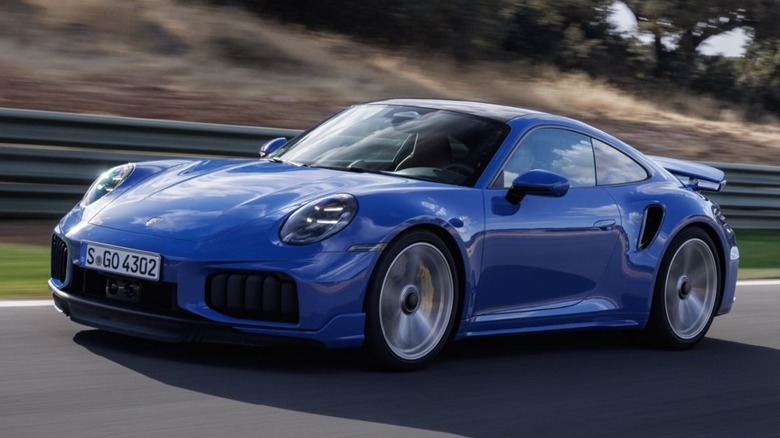
At its core, the 2026 911 Turbo S is rocking the same T-Hybrid bones as the GTS, but with improvements in almost every area. Both have the same 3.6-liter flat-six, though the Turbo S has a lower compression ratio of 9.2:1 to account for the higher boost. It also has two electric turbochargers, which are smaller than GTS' single unit. As a result, they can spin up to 145,000 rpm (GTS: 120,000 rpm), creating a significantly higher boost of 26.1 pounds per square inch, compared to 18.9 psi in the GTS.
The electric bits were also upgraded. The Turbo S rocks the same 1.9-kWh battery as the GTS, but the electric motor in the transmission housing now generates 80 hp and 139 lb-ft of torque. As a result, the 911 Turbo S produces 701 hp and 590 lb-ft of torque. That's 60 hp more than its predecessor, though the torque remains the same because the eight-speed dual-clutch transmission couldn't handle more.
Not that it matters much; the $270,300 911 Turbo S catapults to 60 in just 2.4 seconds, which, knowing Porsche is always conservative with these figures, might end up being very close to 2 seconds. Of course, the 911 Turbo S again comes standard with AWD, so it should launch hard in rainy conditions, too. Top speed is also impressive at 200 mph. The latest 911 Turbo S is better in the corners, too, beating its predecessor by 14 seconds at the Nürburgring Nordschleife (7:03.92).
2026 Chevrolet Corvette C8 ZR1 (2.3 seconds)
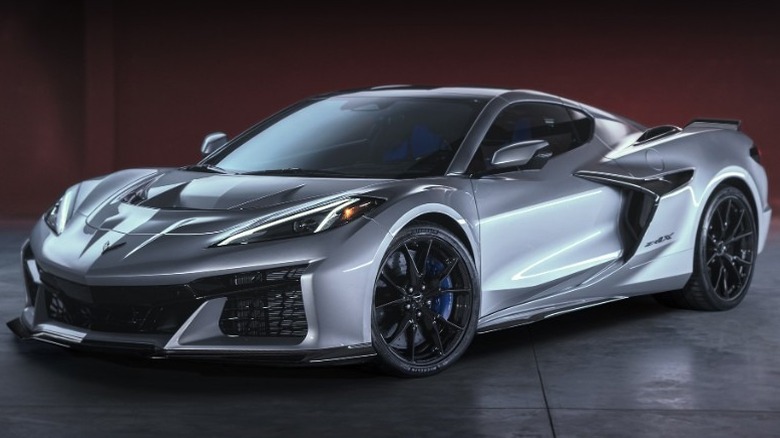
The quickest rear-wheel-drive car in the world is not a Ferrari. Not a Pagani. And it doesn't even have a hybrid component. Instead, the Corvette C8 ZR1 achieves its 2.3-second sprint to 60 using the same 5.5-liter V8 as the Z06, albeit with two turbochargers that produce 26.1 psi of boost.
The result is, well, total lunacy. 1,064 hp at 7,000 rpm. Brutal 828 lb-ft of torque at 6,000 rpm. Remember, all that energy goes straight to the rear wheels via an eight-speed dual-clutch automatic. Yup, not scary at all. Even so, with the super-sticky Michelin Pilot Sport Cup 2R tires, in tests by Car and Driver, the ZR1 beat Chevy's 0-60 estimate by 0.1 second. The publication's quarter-mile time is also a tenth quicker at 9.5 seconds.
Oh, and unlike some hybrids and EVs, it will continue to pull until it reaches 233 mph. Sweet. Mother. Of. Speed. No heavy batteries also mean the ZR1 is relatively lightweight at 3,670 pounds dry, which aids driving dynamics. As a testament, the Corvette C8 ZR1 beat the Mustang GTS as America's fastest car at the Nürburgring Nordschleife with a time of 6:49.275.
But the ZR1's already insane speed benchmarks are about to be left in the dust by the electrified ZR1X. 1,250 hp. 0-60 in less than 2 seconds. Sub-9-second quarter mile. Base price: $209,700. Detroit is out for blood, guys! Until the ZR1X arrives, at $182,395, the $185,000 ZR1 remains an incredible ultra-high-performance bargain.
2026 Porsche Taycan Turbo GT Weissach (2.1 seconds)
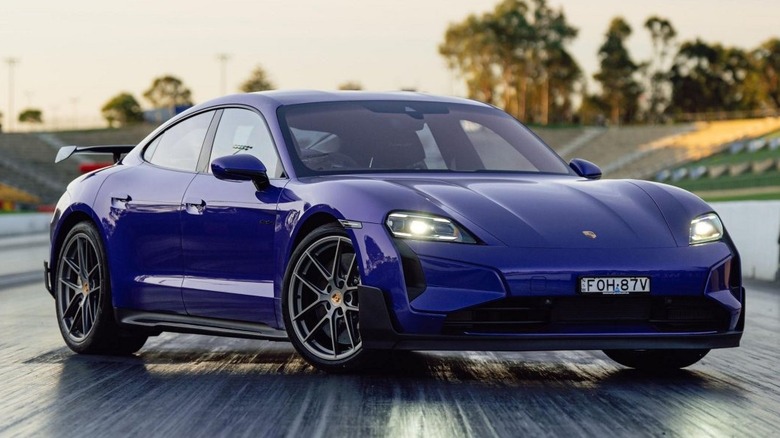
Porsche's quickest car today is an electric sedan. The times we live in, right? Unlike a Tesla EV, though, the 2025 Porsche Taycan Turbo GT Weissach is a track-day machine, not just a straight-line sensation. One with Porsche's advanced Active Ride, that is. This system all but eliminates body roll, while providing exceptionally smooth ride on bumpy roads.
Like the regular Taycan Turbo GT, it packs a dual-motor powertrain with 1,019 hp and 914 lb-ft of torque. When equipped with the Weissach package, according to Porsche, the Taycan Turbo GT reaches 60 in a crazy-fast 2.1 seconds with launch control enabled. In testing by MotorTrend, the Taycan Turbo GT Weissach reached 60 in an even quicker 1.89 seconds, rivaling some hypercars. Find a long enough road, and Porsche's EV will reach 190 mph, an impressive feat considering it has more aggressive aero. The Weissach package also sheds 199 pounds from the car, mainly because it's strictly a two-seater. In other words, this Taycan is more like an electric 911 than a Panamera. Starting price: $239,400.
There is a catch, however — you only get the full beans when launch control is activated. As standard, the Taycan Turbo GT produces 777 hp and 855 lb-ft of torque, with a paddle behind the steering wheel giving you 937 hp for short stints, nitrous-style.
2026 Tesla Model S Plaid (1.99 seconds)
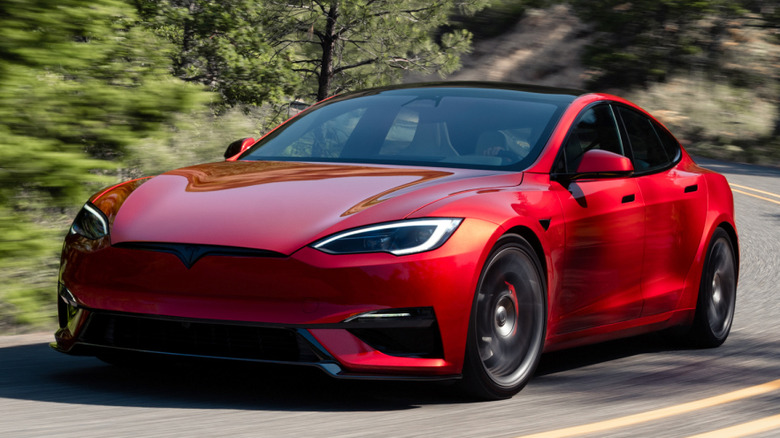
To say that the Model S Plaid took the world by storm when it arrived in 2021 would be an understatement. Tesla's quickest dual-motor sedan packed 1,020 hp, sprinted to 60 in less than 2 seconds, and cost just $131,440. Top speed: 200 mph. This fundamentally altered the trajectory of high-performance cars, with most automakers chasing ever quicker 0-60 times.
Yes, it's a bit slower in the real world; Car and Driver measured a 2.1-second 0-60 sprint. But even then, the Model S Plaid is a rocket. Oh, and it's way cheaper today — it starts at just $101,630. Crazy value? It depends on how you look at it. The Model S Plaid is fast in a straight line, yes, but also a car that can't handle its insane speed potential. Because of insufficient downforce, it lacks stability at higher speeds. Also, like the Model 3 Performance, its brakes can't handle the speed and weight (4,827 pounds).
Drive it like you would any normal EV, and the Model S Plaid starts to make sense. It can travel 368 miles on one charge and offers good interior comfort. The no-button, screen-only approach is questionable, yes, but at least Tesla's software is among the best around.
2026 Lucid Air Sapphire (1.89 seconds)
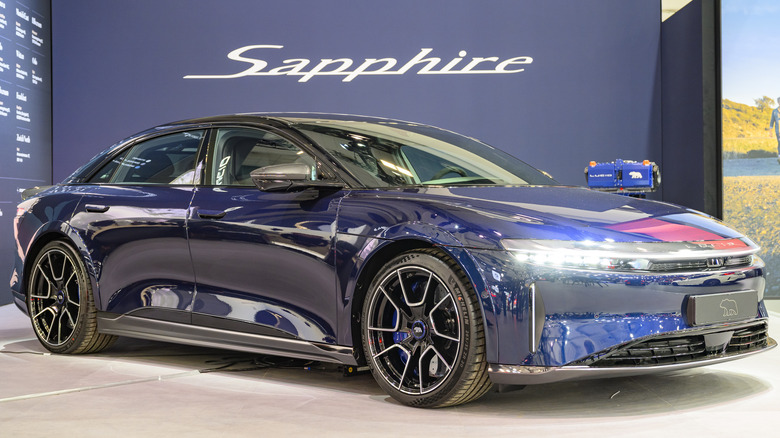
Luxury sedan levels of comfort. Quicker to 60 than any Ferrari to date. Useful 427-mile range. Enter the Lucid Air Sapphire — one of the most impressive modern automobiles. Yes, it's an EV, but even then, it's a record breaker in a straight line. The 1,234-hp Lucid Air Sapphire rules the quarter mile with a time of 8.95 seconds (on a prepped surface).
Let that marinate for a second. Now, get ready for the 1.89-second 0-60 time and an astonishing top speed of 205 mph. Car and Driver confirmed Lucid's claims, clocking the Air Sapphire to 60 mph at 1.9 seconds, with a quarter-mile time of 9.1 seconds. Perhaps most impressively, this sleek sedan sprints to 200 mph in unbelievable 17.9 seconds. If these figures don't tingle your spine, do re-check your thirst for speed.
Oh, and it's not like Lucid copied Tesla's approach and only made the Air Sapphire good in a straight line. This is a genuinely good performance car, with outstanding handling and agility. The tri-motor layout, with two electric motors on the rear axle, allows true torque vectoring, which effectively steers this 5,335-pound sedan into corners. The Air Sapphire has exceptional carbon-ceramic brakes, too, which perform successfully even when being used extensively on the track.
Admittedly, at $249,000, the Air Sapphire is expensive. But it's an amazing daily driver for those with extra cash, because it also does luxury-car things. The cabin is massive and well-appointed, and the Air Sapphire remains calm and comfortable on long journeys. Few cars could match its dual-sidedness, that's for sure.