

Why Did Whitewall Tires Disappear?
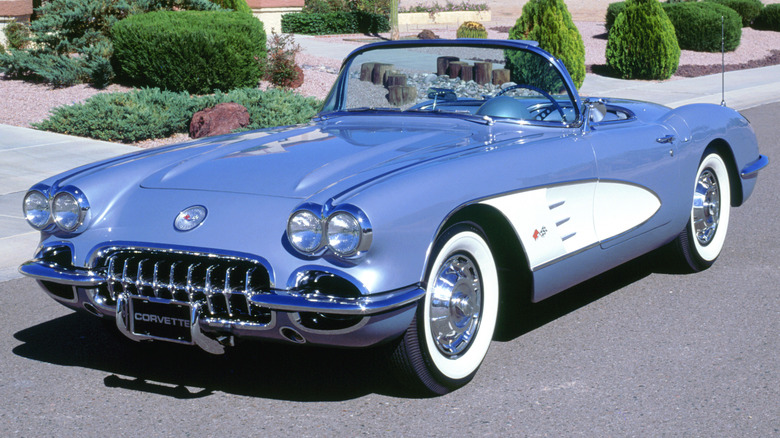
Folks familiar with automobile history know that tires weren't always black in color. The gaudy styling of yesteryear was a perfect setting for something as flashy as whitewall tires, like those found on the Oldsmobile that may have been America's first muscle car. While this trend — which first originated in the 1910s and lasted into the early 1960s — was very popular, it didn't offer much apart from visual appeal, as modern whitewall tires have no strength or performance advantage over regular black tires. No wonder they disappeared, along with the 18-foot land yachts that once ruled American roads.
That wasn't always the case, however, as the whitewall construction itself wasn't always an intentional styling exercise. At the dawn of the automotive age, tires were actually fully white and had questionable service life, tire companies found that longevity could be improved by adding something called carbon black — using it for the tread surface while leaving the sidewalls white.
Mind you, the whole process was not cheap. Even today, aftermarket whitewall tires are manufactured using a very similar labor-intensive process. Beyond that, factors such as changing tire technology, consumer preferences, and manufacturing complexity are also attributed to accelerating their decline.
The whitewall's fall from grace was inevitable
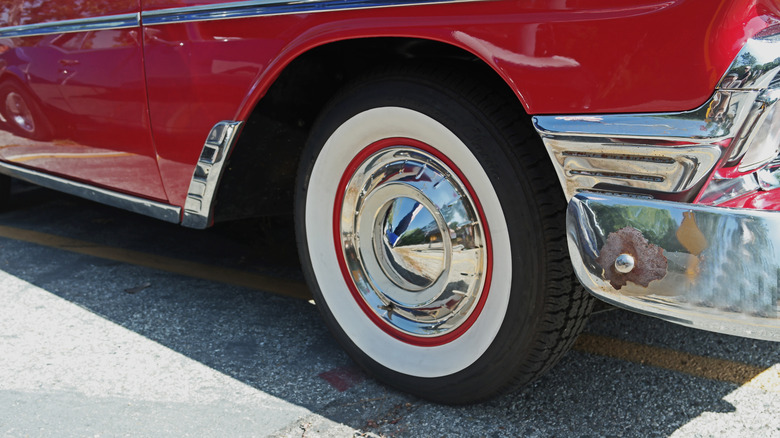
As cars became faster and more powerful, tire companies started switching from traditional bias-ply construction — which was the process used to construct older white wall tires — to radial-ply designs, as these offered better handling characteristics and improved longevity. By 1975, American cars bias-ply tires made up a much smaller percentage of the market, and radial-ply construction (for the time, at least) had limitations incorporating the whitewall design.
Since bias-ply whitewall construction is labor-intensive, companies found it easier to justify automated production lines for radial-ply tires, especially since demand for whitewalls started falling. Consumer sentiment also shifted to less-shouty, modern, and more fuel-efficient vehicle designs, which meant the bias-ply construction was growing less popular, as its increased rolling resistance proved inferior to the more fuel-efficient radial-ply designs.
Add to that the relative maintenance-free nature of all-black tires (since you don't have to keep cleaning the sidewalls), and the demise of whitewalls was all but inevitable. These days, whitewalls are mostly relegated to niche applications that cater to enthusiasts. While whitewalls may not have any functional benefit, their aesthetic and historical significance are hard to ignore, especially when you're restoring a vintage classic to its period-correct look.