

Why Car Windows Shatter Into Glass Pebbles – But Windshields Don't
Ever since the birth of the motor vehicle, engineers have looked for new ways to make cars safer. The modern three-point seat belt design dates back to 1959. The Federal Motor Vehicle Safety Standard (FMVSS) 208, which took effect on January 1, 1968, requires all new U.S. cars to be equipped with seat belts for the front seats. Nearly six decades after its introduction, this same piece of regulation was responsible for Volkswagen having to recall the ID Buzz.
The evolution of car-glass safety standards, ultimately codified in FMVSS 205, took place over time and established the glass performance requirements we know today. The main reason front windshields never really shatter is that they are made of laminated glass, while other car windows are typically tempered glass panels.
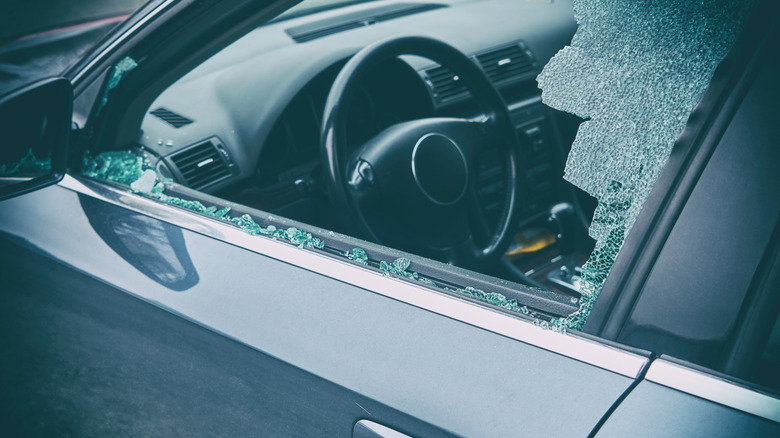
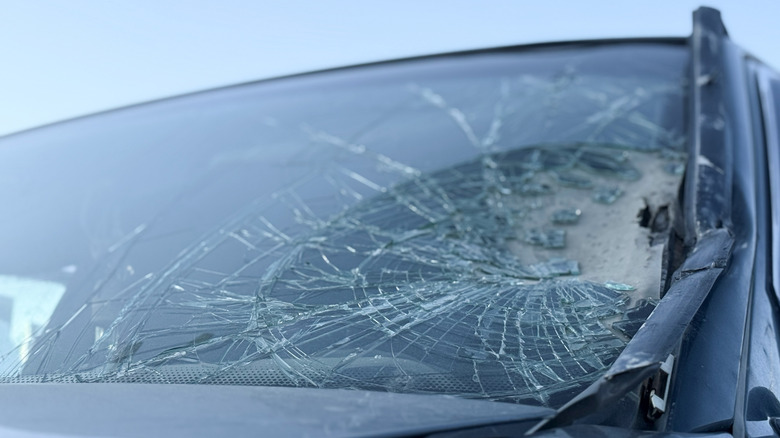
The plastic layer between the two sheets of glass helps windshields stay in one piece after impact. This minimizes the possibility of glass shards flying into the cabin. In contrast, other (tempered) car windows are designed to shatter into glass pebbles for emergency egress and to reduce the chances of serious lacerations.
The science behind car glass
When annealed (regular) glass breaks, it can cause injuries because it shatters into large sharp pieces. As cars became more common, accident rates increased accordingly. The concept of laminated glass came to be in 1906, when French chemist Edouard Benedictus found that glass coated with cellulose nitrate did not shatter into pieces. A decade or so later, laminated glass found its way onto early automobiles, and the revolution began.
A laminated piece of windshield glass consists of three layers: an outer glass layer, a middle polyvinyl butyral (PVB) plastic layer, and an inner glass layer. When an object hits the windshield and breaks it, this plastic enables the glass pieces to stay attached. Other car windows are usually tempered, not laminated, and thus do not have a specific adhesive to hold glass pieces together — this is partly why your tiny quarter window can cost more to replace than a windshield.
However, tempered glass is still many times stronger than normal glass. The reason why it breaks into small pieces has to do with how it is made. During production, tempered glass is heated up to temperatures exceeding 1,100 degrees, and then rapidly cooled. In practice, this increases the compressive strength of the glass.
Practical benefits of laminated and tempered glass
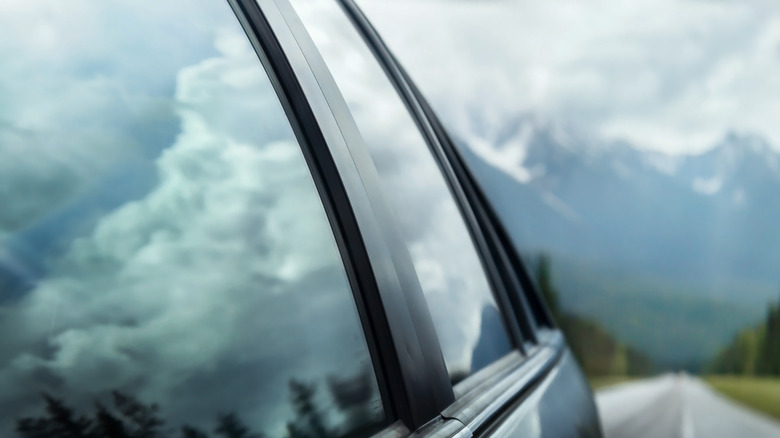
After understanding how these glass sheets are made, it becomes easier to see their practical benefits. Besides shielding you from sharp glass shards, laminated windshields serve other purposes. For instance, laminated glass stops objects from penetrating the windshield while also serving as a structural element to support the roof in the event of a rollover.
Laminated glass keeps occupants from flying through the windshield in a crash, an outcome once so prevalent that it was commonly described as "wearing a glass necklace." According to a 1985 evaluation by the National Highway Traffic Safety Administration (DOT HS‑806 693): "About 700 persons would be ejected through the windshield and killed each year if adhesive bonding had not been implemented."
Tempered glass can leave weird spots on your rear car window, but it has its benefits. Tempered glass is more resistant to temperature changes. This means it is less likely to crack from heat exposure or rapid temperature drops. Tempered glass is also very versatile, meaning that it can be used in a variety of applications, such as stovetops, shower doors, screen protectors, and car windows. Modern-day smartphones also use tempered glass for shatter-resistance and to minimize scratches.