

These Supercars Save Money Using Parts From Boring Everyday Cars
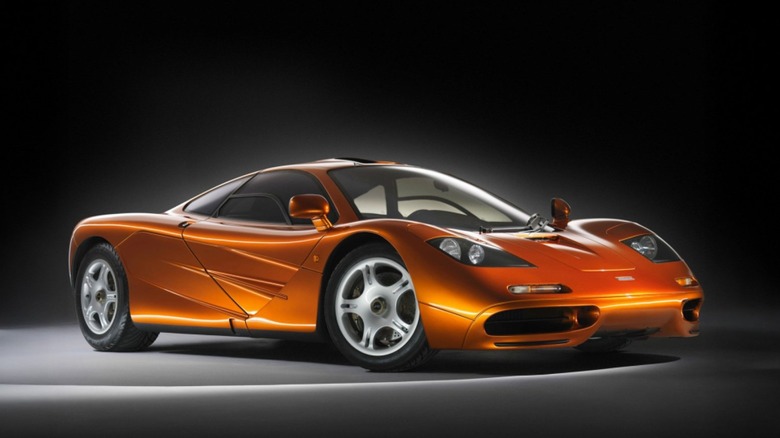
Defining a supercar can be tricky and subjective, but as a general rule, supercars are meant to push the boundaries of what a car can be. Performance is a key aspect. Many don't consider a car to become a supercar until it can go past 200 mph, and that often means 500 horsepower or more, and engines that sport eight, 10, or even 12 cylinders, or at the very least a highly strung and boosted V6, perhaps even with hybrid assistance.
A supercar should also look wild. Think back to the Lamborghini Countach; a wedge-shaped bullet of a car, adorned with vents and wings on almost every surface, plus flamboyant scissor doors and a rear window that was more for decoration than actually seeing out of. Features and powertrains like these are wonderful, and they really help gearheads indulge themselves in cars that have been created almost without compromise. The problem is, creating a supercar with such features is an expensive game.
Huge, powerful engines don't come cheap, as there's more of everything to consider, and components have to be built to higher specs than commuter cars to withstand the performance. The cosmetics drive up costs, too, with materials like carbon fiber keeping weight down but the budget up. However, not every aspect of a supercar needs to be custom-made out of exquisite materials. Sometimes, an automaker can cut corners by borrowing parts from a lesser vehicle, be it a taillight, a side mirror, or a simple interior switch.
Jaguar's world-beating supercar borrows parts from just about everywhere
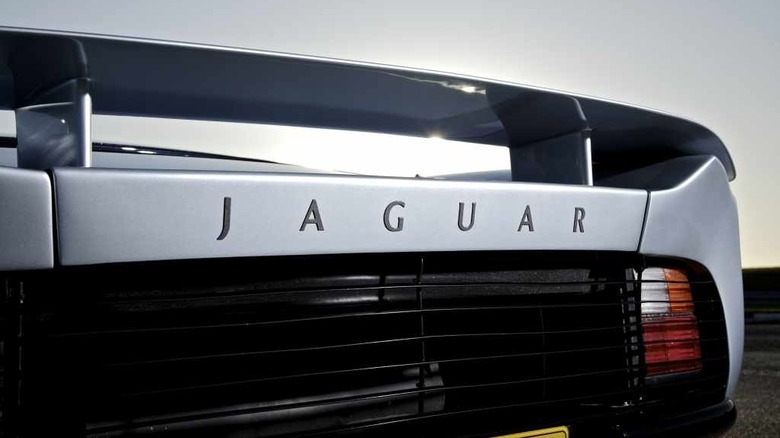
The XJ220 was supposed to be Jaguar's flagship supercar, but that's not quite how things turned out. Plans for a V12 engine were dashed, and it was built with a Metro-derived V6 instead — albeit one shared with the 6R4 rally car. The rear wheel drivetrain was disappointing, too, especially after the promise of a four-wheel drive, rear-wheel steer system.
The entire car was a collection of spare parts. It was even fitted with side mirrors from a Citroen CX, which were also fitted to the Aston Martin DB7, a British sports-come-GT car assembled in the same factory as the XJ220, in Bloxham. Presumably, there was a large box full of CX taillights stashed away there in the early 1990s.
Perhaps most degrading, though, were the XJ220's taillights, as they could be found on the miserable Rover 200 — a car that's about as far detached from the XJ220's image as is humanly possible. Prices of Jaguar XJ220s are now through the roof; expect to part with around $500,000 if you'd like one. But at least it's reassuring for owners to know that, if they crunch the gears, clout the side mirrors, or bump a taillight, repairs should be fairly reasonable, given the components' humble origins.
The McLaren F1 uses taillights from a bus
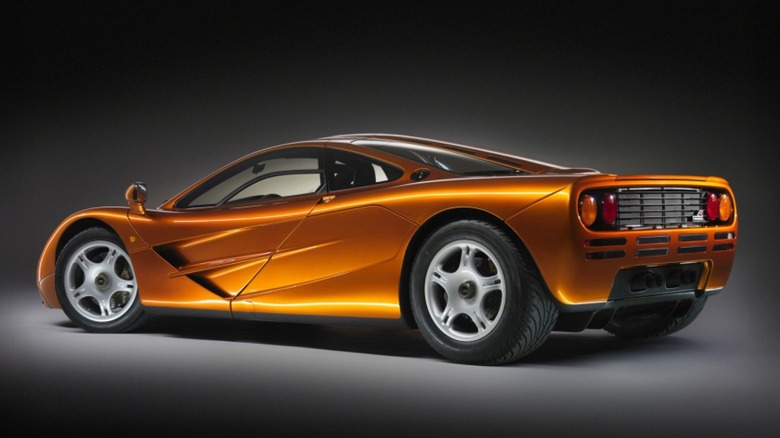
It's quite crazy to think that one of the world's most valuable cars — one example sold for $25 million — shares parts with lowly commuter models you wouldn't look twice at. Starting with those iconic rear lights, which are instantly recognizable to fans of cars from this era. They are not dissimilar from the taillights seen on Nissan's R34 GT-R, although the F1 secures them from a much less performance-focused vehicle — a VDL Bova Futura. Not heard of it before? We're not surprised; it's literally a bus.
The taillights were likely used for ease and economy, but they looked fantastic. As did those Corrado-sourced side mirrors, although at least the Volkswagen Corrado has some street cred, unlike the bus. While on the subject of McLaren F1 side mirrors, a total of between three and five (out of a total 106) examples had high-mounted mirrors, as per Gordon Murray's original design of the F1, and these weren't sourced from a Corrado. Instead, these are the same as the units fitted to a BMW Z1, so likely a little harder to find if you do accidentally knock one off in the parking lot.
Early Koenigsegg models pinched parts from the FD-generation RX-7
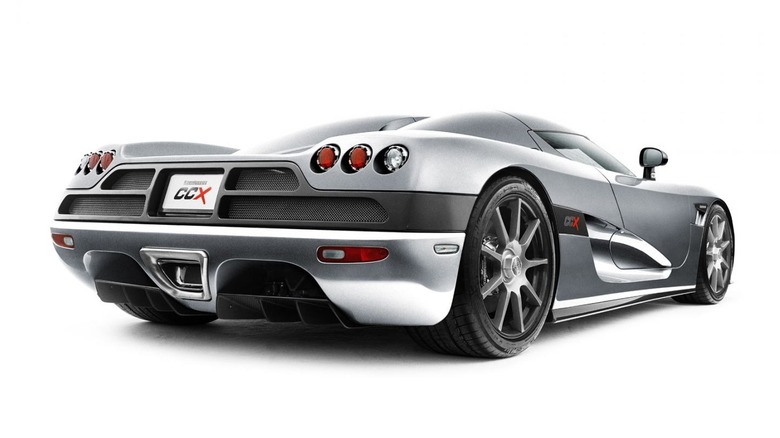
Cars don't come much more expensive than Koenigseggs. They are so exclusive, it's hard to pinpoint what models are worth at any given time, as there are so few auction results to use as a price predictor. However, we can see that a 2008 CCX sold for $1.215 million in 2021, and that similar prices have been asked in previous years, too.
So, when dropping seven figures on a mid-engine supercar, you might expect to find everything custom-made and exclusive to the model, but that's not exactly the case on older Koenigsegg models. Once again, it's at the rear end where we find these supercar automakers diving into the parts bin, as the CCX uses RX-7 FD rear reflectors.
That's not quite so damning as using bus or Rover parts, as per the McLaren and Jaguar above, because at least the old RX-7 is a cool car, and the FD is by far the best generation. Still, if you're forking out over a million dollars on a supercar, the last thing you want to see is Mazda-stamped parts as you're giving it a fresh coat of wax in your 20-car garage. On the bright side, Mazda is committed to manufacturing parts for its heritage models, like the FD RX-7, and while we doubt the rear reflectors are part of the current list of available and remanufactured parts, you never know — pressure from a horde of wealthy Koenigsegg owners just might convince them.
Lamborghini frequently dived into the parts bin
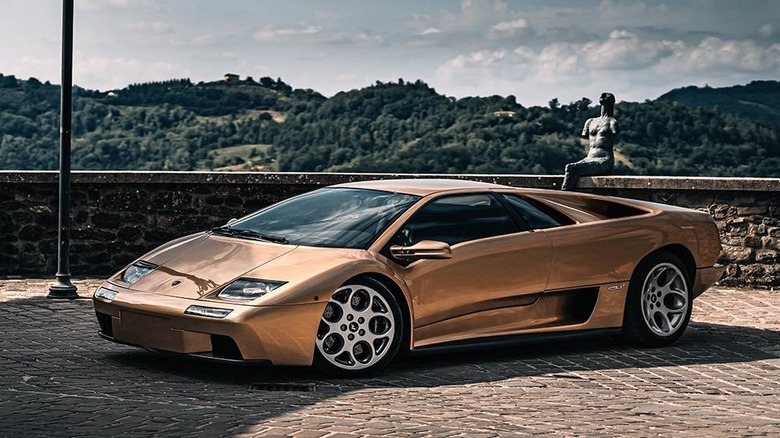
Name a supercar manufacturer, and we guarantee they've been caught pinching parts from boring everyday cars at least once or twice over the years. Lamborghini is the next culprit on our list, and the Italian supercar brand is no stranger to the parts bin, having been caught red-handed in there more than a few times.
Perhaps most notable is the case of the Lamborghini Diablo's headlights. When the facelifted Diablo lost its cool pop-up headlights, the automaker opted to replace them with units from the Nissan 300ZX. Much like the Koenigsegg CCX, the 300ZX is a cool Japanese sports car, so it at least ties in the performance nature of the Diablo. Headlights are one of those parts that fade and wear over time, so it might be quite reassuring for owners to know that it's a Nissan item, rather than something hand-assembled by a bunch of Italians in the 1990s. You can even buy remanufactured XENON-equipped items for $995, although they might not quite be at home on a Diablo as they would be a modified 300ZX.
The parts-bin-diving didn't end when Audi took over the brand. Lamborghini designers actually joined Aston Martin in the Ford pile, pinching turn signals from the first-generation Ford Focus for its then-new Murcielago model. The Focus was a great car, as it happened, but still, Ford-etched parts are not what you want to be finding on your 200-mph Italian V12-powered supercar.
Pagani joined Jaguar in pinching Rover parts for the otherwise magnificent Zonda
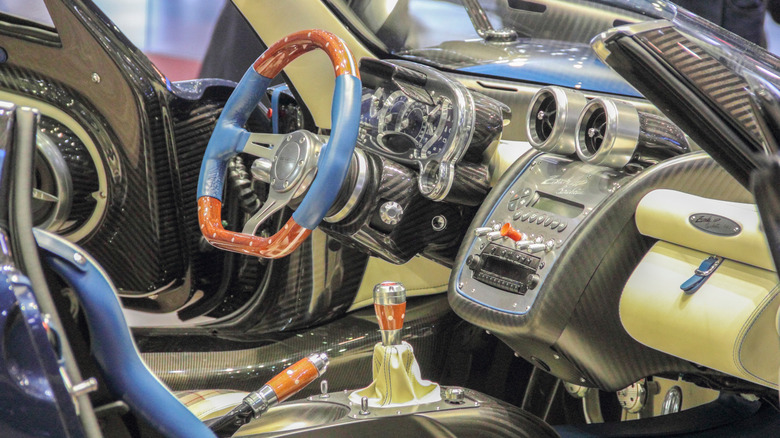
Rover parts must have been in surplus and going cheap during the '90s early '00s, as not only have Jaguar been found dipping into the Rover parts bin, but so has Pagani, which went looking for a climate control panel.
That's right — the now seven-figure (and some) Zonda models were built using leftover parts from the humble Rover 45. Since the arrival of the original Zonda, Pagani has gone on to develop some of the most awe-inspiring car interiors of all time, with models like the Utopia using pieces machined from blocks of aluminum. It's therefore hard to picture Rover buttons sitting center stage in arguably the most celebrated Pagani models of all time, but that's exactly what we find in the earliest Zondas.
Pagani also famously borrowed parts from another manufacturer, Mercedes-AMG, but what it borrowed here was nothing short of magnificent. The German tuning company supplied the Pagani's howling V12 powerplant, the largest of which sported a capacity of 7.3 liters and, in its 6.0-liter guise, delivered a tire-shredding 789 horsepower.