

8 Of The Largest Production Cars Ever Made

Big cars have always carried weight beyond their literal dimensions. Long hoods and vast rear compartments signaled wealth, power, and social standing. A truly big car let passengers ride behind the driver, step out gracefully at the curb, or enjoy the kind of isolation usually reserved for trains or private railcars. Later, especially in postwar America, length became an expression of optimism. Automakers treated sheetmetal the way architects treated square footage: more meant better (even if it barely fit in a parking space).
This list looks specifically at the largest passenger vehicles ever sold. Concept cars, design experiments, aftermarket stretches, and coachbuilt one-offs are out. Truly gigantic, genuine production vehicles from any era are in. For the sake of some semblance of objectivity, for today's purposes, "largest" is defined by overall factory length, since that is the most consistently recorded measurement across eras and markets. A few entries also earn their place by footprint and mass, because height and width matter when a vehicle starts to feel like architecture. From pre-War royalty cars to modern three-row SUVs, the common thread is simple: we have never stopped wanting more space than we strictly need. That's why this list will read as equal parts automotive spec sheet and cultural barometer. The shapes and badges change but, it turns out, the desire for more interior space around you never really goes out of style. Still, some of these are less accessible and less practical than others, so if all else fails, these are the biggest cars you could actually live with.
1959 Cadillac Fleetwood Seventy-Five

At just over 20 feet long, the 1959 Cadillac Fleetwood Seventy-Five is one of the longest production passenger cars America ever put into regular service. Cadillac designed it for the people who expected the biggest and most impressive thing in the showroom, and it delivered. The formal roofline, towering tailfins, and deep slab sides did not attempt to disguise its size. The whole point was to arrive somewhere and make everything else in the parking lot look small.
Inside, the Fleetwood Seventy-Five delivered a true limousine experience for passengers who rarely touched the steering wheel. Rear legroom, soft suspension tuning, and a focus on quiet comfort made it feel more like a rolling living room than a typical sedan. This was a car for executives, dignitaries, and people attending special events, when theatrics mattered more than parallel parking ability. It also represented the closing of an era. Within a decade, fuel prices and changing regulations would make such excess hard to justify, and the era of the unapologetic 20-foot sedan began to fade into history. Today, seeing one in person is a reminder of how far mainstream tastes have moved. Park a Seventy-Five next to almost any modern crossover, and it still wins on drama, even if the crossover technically matches its footprint. Besides, when you get right down to it, nobody does land yachts like Cadillac.
1968 Rolls-Royce Phantom VI
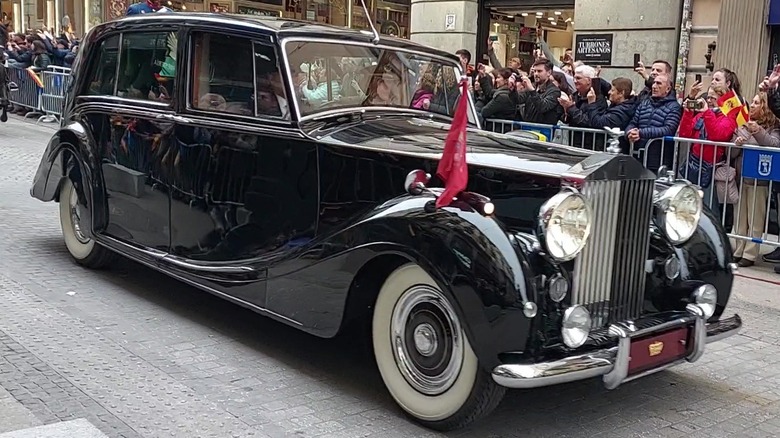
The Rolls-Royce Phantom VI stretched to about 19 and a half feet, with a footprint that bordered on small bus territory. Built beginning in 1968, the Phantom run was surprisingly lengthy, with a production run of variants and iterations that ended with limited numbers produced into the 1990s, it was never intended for ordinary owners. Many examples lived in royal fleets, government motor pools, or the garages of extremely wealthy private clients. Its sheer length allowed for vast rear doors, upright seating, and the kind of graceful entry and exit that mattered a lot more at a palace or embassy than in a grocery store parking lot.
Unlike mass-produced American land yachts, the Phantom VI combined that size with slow, painstaking construction. Bodies were built and trimmed largely by hand, often to specific customer requirements. The design language stayed traditional for decades, with little interest in chasing fashion or aerodynamics. That stubbornness is part of the Phantom's charm. It ignored downsizing, fuel crises, and changing tastes, because the people who ordered one valued continuity and ceremony. Even among the giants on this list, the Phantom VI stands out for how completely it treats length as a tool of soft power. It is not simply big for the sake of it, even if most of us don't quite realize how huge the Rolls-Royce Phantom actually is.
1973 Chrysler Imperial LeBaron
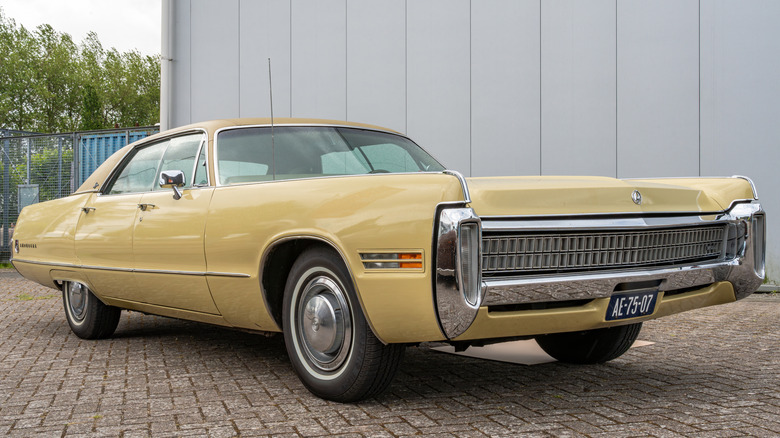
At just over 19 feet long, the 1973 Chrysler Imperial LeBaron ranked among the biggest American luxury sedans of the era, measuring longer than rivals like the Lincoln Continental and Cadillac's standard Fleetwood. It was the final big swing in Detroit's land yacht era, arriving just before fuel shortages and economic pressure made such cars politically and financially impractical. If you wanted proof that the early '70s were the high tide of size for regular four-door sedans, the LeBaron makes that case very clearly.
The LeBaron's mission was isolation. Its long wheelbase and soft suspension blurred road imperfections into a slow float, while thick doors and heavy sound insulation kept the outside world distant. This was luxury measured in inches and silence instead of lap times. The irony is that the car's success as a comfort machine made it a liability once priorities changed. When fuel economy and emissions became urgent concerns, a 19-foot flagship suddenly looked out of step. That timing makes the Imperial LeBaron feel like a closing chapter, a last confident statement before Detroit had to rethink what a big car should be. In that sense, the LeBaron is both peak and endpoint, a car that shows exactly how far American designers were willing to go before the world told them to turn around.
Mercedes-Benz 600 Pullman

The Mercedes-Benz 600 Pullman took the already imposing Grosser 600 and added serious extra length, stretching the wheelbase to create a four-door limousine more than 20 feet long. This was the car for heads of state, senior party officials, and industrial power brokers who needed something more formal than a standard luxury sedan. Specifically, if they needed an extra layer of protection, this was the first purpose-built luxury limousine offered by Mercedes-Benz with factory-integrated bullet-resistant armor. In traffic, a Pullman does not simply stand out. It looks like the escort vehicle for whatever is happening up front.
The extra length in a Pullman was not just for show. It created a rear cabin that could be laid out like a small lounge or meeting room, with opposing jump seats, conference seating, or deeply reclined chairs behind a partition. A complex hydraulic system quietly powered windows, seats, trunk lid, and even the sunroof, so that occupants never had to strain or gesture. Unlike some of its American contemporaries, the 600 Pullman avoided ornament for ornament's sake. Its clean lines and subtle detailing let the scale speak for itself. The result is a car that still feels like an instrument of government more than a personal toy, which is exactly what many of them were. When you see one in archival photos, surrounded by guards or parked in front of ministries, the car looks perfectly in scale with the institutions it served, which tells you everything about how it was conceived.
Bugatti Type 41 Royale
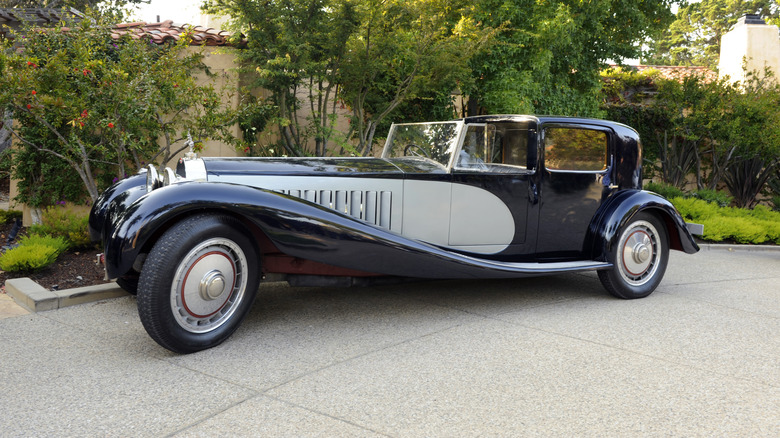
The Bugatti Type 41 Royale has a visual presence that uniquely complements it's objective size, somehow making it's roughly 19½ feet of length appear even larger. Ettore Bugatti intended it to serve European royalty, and the scale reflects that ambition. This was not transportation in the normal sense. It was a statement about who deserved the biggest, most technically impressive machine on the road.
Reality did not cooperate. Economic turmoil and changing politics meant there were very few buyers for a car this extravagant, and only six chassis were completed. Even so, the Royale's presence has echoed through history. Museums and collections treat surviving examples like rolling architecture, and modern photos still struggle to communicate just how long it really is. When people talk about the most extreme pre-War cars ever built, the Royale always comes up quickly. In simple length, it remains one of the most outsized expressions of automotive ego ever attempted by a major manufacturer. It also undercuts the idea that giant cars were purely an American obsession. Long before Detroit built its wildest sedans, Bugatti had already tried something even larger and far more exclusive. (Nothing's more exclusive than managing to sell too few to remain a sustainable product offering, even if one of the most expensive cars in the world was once sold for a refrigerator.)
2024 Chevrolet Suburban
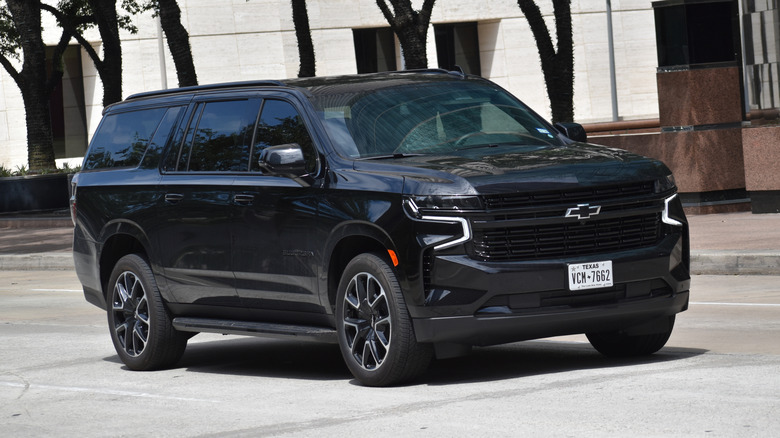
Finally, something you'll see later today in the school carpool line. The current generation Chevrolet Suburban carries on nearly a century of continuous nameplate history, and it now does that work at a truly imposing size. The 2024 Suburban spans just under 19 feet from nose to tail, but differs from the rest of this list by using every extra inch for pure human and cargo hauling practicality. Less for the comfort and grandeur and more for the really big packs of toilet paper from Costco, the humble Suburban is a size match for the land yacht stereotypes that appear previously on this list. But, the difference is that modern buyers tend to see that length as normal, or even necessary today, rather than indulgent.
That shift says a lot about where the market has gone. The Suburban's extra inches show up in real third row space, serious cargo volume with all seats in use, and towing capacity that matter to families with boats or campers. Yet in suburban school pickup lines and big box store parking lots, it no longer looks freakish. If anything, it has become the yardstick that other full-size SUVs are measured against, which makes its size all the more remarkable. Taken in that light, the Suburban is less an outlier and more a mirror. In the creation of a world where minivan sales are plummeting compared to SUVs, the Suburban is at least an accomplice.
2024 Cadillac Escalade ESV
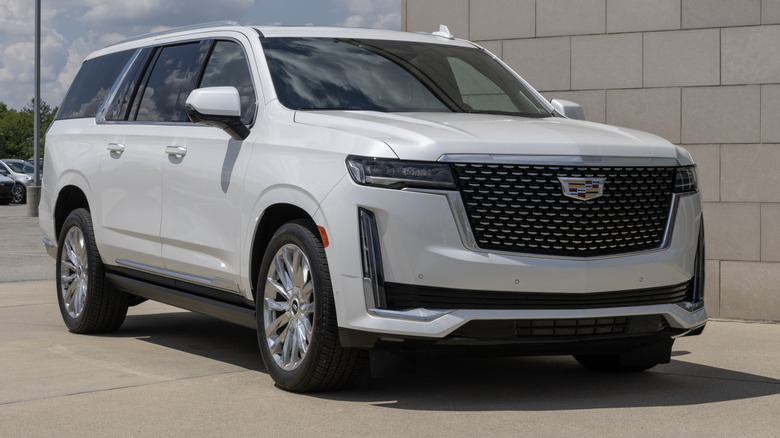
The 2024 Cadillac Escalade ESV is Cadillac's long-wheelbase flagship for the SUV era, and its dimensions underline that role. At roughly 19 feet in overall length, it exceeds most historic American luxury sedans, including a lot of the classic Fleetwoods and DeVilles that once defined the brand. The ESV exists because there is still a market for an oversized Cadillac, but that market now expects high ride height, three rows, and a tailgate rather than a trunk.
Inside, the extra length gives engineers room for a genuinely usable third row and serious cargo space without sacrificing the sense of occasion in the first two rows. Giant digital displays, elaborate lighting, and rich materials do the work that acres of chrome used to handle. On the outside, the Escalade uses sharp creases and a tall, blocky greenhouse to make sure its size reads clearly at a distance. It has the same kind of monumental footprint that big Cadillacs once enjoyed, but it delivers that feeling in a shape that lines up with modern buyer expectations. It is very much a land yacht, just one that rides higher and talks through touchscreens. If you buy one, just try not to think about how much the Cadillac Escalade depreciates in five years.
Ford Excursion

The Ford Excursion arrived for the 2000 model year and immediately reset expectations for how large a family oriented SUV could be. Built on unrepentantly trucky underpinnings, it stretched to roughly 19 feet in overall length. That made it longer than the Suburbans of its day as well as many classic full-size wagons, but Ford marketed it as a tool first and a status symbol second. If you needed to tow heavy trailers, carry lots of passengers, and haul serious cargo, the Excursion promised to do it all at once.
Critics saw it as a symbol of excess, especially as fuel prices rose and concerns about emissions grew louder. Owners tended to see something different. To them, the Excursion was a problem-solver that happened to loom over surrounding traffic. Production ended after a few short model years, but the template it set never really disappeared. Today's three-row, body-on-frame SUVs exist in the space the Excursion helped define, even if most are dialed back a bit in sheer mass. The fact that people still reference the Excursion when talking about huge SUVs shows how deeply its dimensions landed in the public imagination. If you spot one today, it still looks comically large, but it also feels familiar, because so many newer trucks and SUVs have grown to meet it. The rest of the market moved closer to the Excursion instead of leaving it behind.