

A-Body Vs.G-Body: What's The Difference Between These GM Platforms?
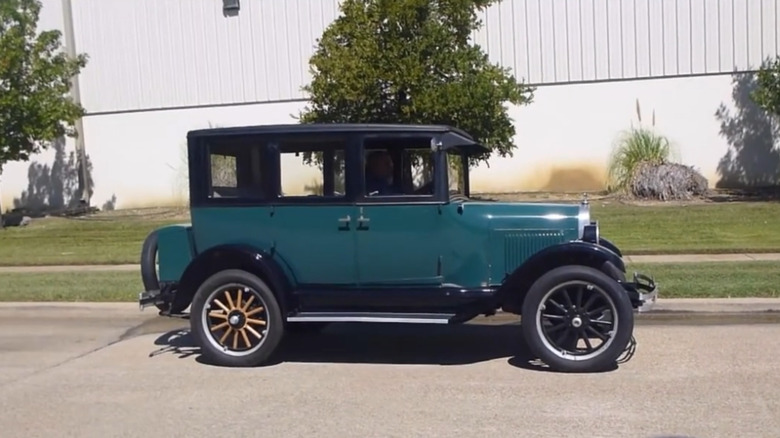
In terms of automaking, the idea of using the same basic bones to underpin multiple car models — known as platform sharing — has been around a long time. There's a good reason for that, too: It can greatly reduce the cost of developing new cars, since automakers don't have to worry about spending the effort and money needed to start from scratch each time they want to launch a new vehicle. These platforms often have simple alphabetic names, like the A-Body and G-Body under discussion today. The two platforms have gone from very similar, with only minor variations in wheelbases, to completely different over the years.
Here's a little factoid, though: The lack of creativity has sometimes left multiple automakers with the same platform names. For example, GM seems to have first started using A, B, C, and D designations for its vehicle platforms in 1926, but Chrysler ran through the same letters for its machines from the late 1950s to the late 1970s (and yes, the K in K-Car means a vehicle uses Chrysler's K platform). Meanwhile, beyond Ford's Model A and Model B, the Blue Oval debuted its own global C platform in 2004, and its successor sits beneath vehicles like the Ford Maverick and Bronco Sport.
GM's long-running A-Body and the slightly more recent G-Body have also been in and out of use as time's gone by. However, despite the differences in their names, the two platforms were once relatively similar. In fact, initial versions of the platforms were virtually identical, with the early G-Body having a wheelbase 2 inches longer than the A-Body. That said, the platforms did begin to drift apart in the years that followed. Yes, it sounds confusing, so let's straighten things out.
History of the GM A-Body
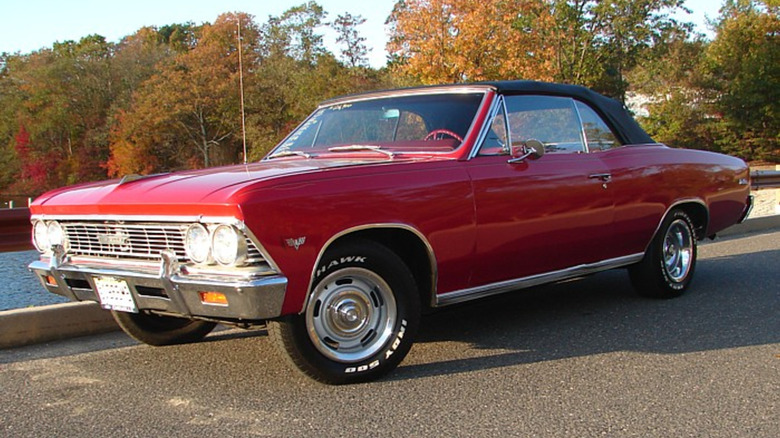
GM introduced its original A-Body and B-Body platforms, both for full-size cars, in 1926. To simplify things, GM eliminated the A-Body setup in the late 1950s and kept the B-Body designation. However, a few years later, in 1964, when GM began debuting its new line of midsize cars, the A-Body moniker was revived for that segment — beginning with the 1964 Chevrolet Chevelle. It slotted between Chevy small cars such as the Corvair and Corvette and larger, full-size rides like the Impala and Bel Air, kicking off the A-Body's classic era by underpinning the Bowtie brand's first batch of muscle cars — in fact, some folks consider the '64 Chevelle Malibu SS to be the king of the muscle cars. Jalopnik readers considered it one of the muscle cars with the best names, too.
The platform was transformed again in 1968 with much more expressive exterior designs that introduced bold curves and big hoods for mighty motors. It was during this time, and up into the early 1970s, that GM A-Body cars like the Pontiac GTO, Oldsmobile 442, and the Buick GS made their mark. The platform was again redesigned for the 1973 model year, ushering in the era of the Colonnade A-Body – known for their vertical, column-like roof pillars and relatively sharp handling.
The A-Body platform switched from RWD to FWD for 1982, leading to the introduction of the Buick Century, Chevrolet Celebrity, Oldsmobile Cutlass Ciera, and Pontiac 6000. The Ciera, for one, soldiered on with the A-Body platform until 1996.
History of the GM G-Body
For the GM G-Body cars, we have to first double-back to the classic A-Body family that was in production from 1969 to 1972. That's because the original 1969 G-Body platform was basically a variant of the A-Body from the same time, and the early G-Body cars, like the Pontiac Grand Prix and Chevrolet Monte Carlo, even rode on the same suspension as the A-Bodies. The difference was, as mentioned above, that these G-Body vehicles had a slightly longer wheelbase than their A-Body counterparts.
The next step in the G-Body evolution was born from an A-Body platform in 1982, when General Motors began using the A-Body designation for its then-new front-wheel cars. At that point, the platform that previously underpinned the RWD A-Bodies continued in use but was renamed the G-Body. These second-generation G-Bodies featured a shorter wheelbase when compared to the earlier version and represented a mid-level size for cars of the time.
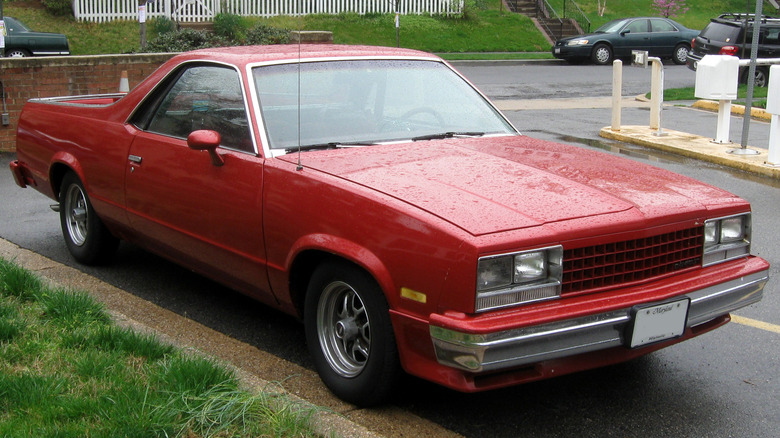
The G-Body cars were plenty popular with customers as well, partly because all of GM's divisions at the time — except for Cadillac — got at least one vehicle on the platform. Chevrolet and Pontiac had three each, with the Bowtie brand offering the Malibu, Monte Carlo, and El Camino — boasting a design element shared by Dodge Darts and the Ferrari 308 GTS. The Excitement division featured the Bonneville, Grand Prix, and LeMans. Also sitting beneath the Buick Regal, GMC Caballero, and Oldsmobile Cutlass, the G-Body lineup was responsible for approximately 10 million sales before ending production in the late 1980s.