

Trump Pens Executive Order Setting 2028 Moon Landing Like It Means Anything
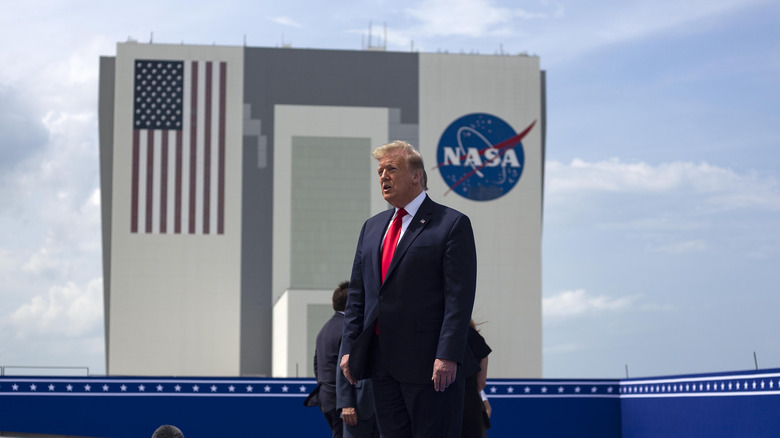
President Donald Trump issued an executive order on Thursday reiterating his vision for space policy, including setting a 2028 deadline for a lunar landing. However, it comes off more like a wishlist than an actual order to the federal government's executive branch. All of the major initiatives Trump mentioned are already underway and have suffered significant delays. Like his pointless address to the nation on Wednesday night, the order seemed like a desperate attempt to bolster his flagging approval rating. According to Gallup, Trump was polling at only 36% after November, a low for his second term and only two points from his all-time low after the January 6 attack.
The executive order, titled "Ensuring American Space Superiority," outlined the Trump administration's space policy for the rest of his term. If you've been following NASA's Artemis program in the slightest, this will sound extremely familiar. Americans will return to the Moon by 2028 "through the Artemis Program." A permanent lunar outpost will be established by 2030, and a lunar surface nuclear reactor will be ready for launch that same year. The administration will also encourage $50 billion of additional investment into the private space sector by 2028 and pave the way for a commercial replacement for the International Space Station by 2030.
The executive order is just words on a page
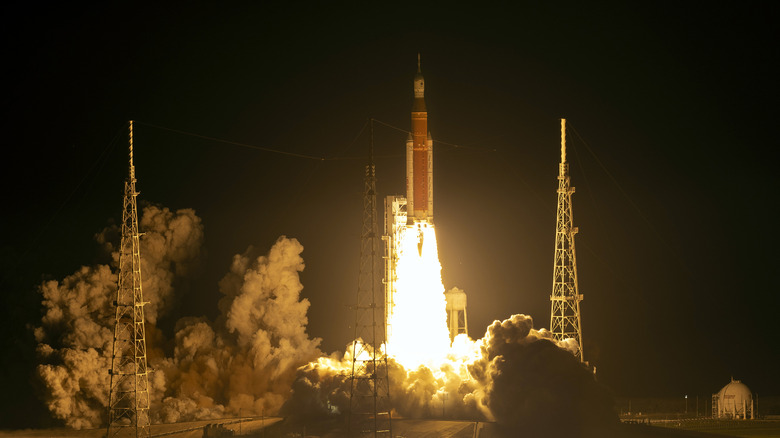
Outside of asking the NASA Administrator to reform the agency's acquisition process, the executive order is effectively meaningless. The decree from the Oval Office even states that NASA must achieve "those goals within available funding." My boss could order me to launch a Prius to Pluto, but they shouldn't expect a Toyota to hit exit velocity unless I get some money to do it. The President has already jeopardized the Artemis program's current timetable by gutting the agency's funding and workforce. Not to mention, Artemis III was initially scheduled to touch down on the Moon in 2024. However, development delays have pushed the crewed lunar landing back to the middle of 2027. An executive order isn't going to prevent further delays that would push Artemis III into the next President's term.
There's another reason why the executive order's timing wasn't a coincidence. Transportation Secretary Sean Duffy is no longer the interim NASA Administrator. Billionaire Jared Isaacman was finally confirmed by the Senate for the position the day before the order was enacted. He was first nominated in December 2024. Democratic and Republican lawmakers feared that he would sell the agency out to SpaceX, dragging out the nomination process. Isaacman ended up being the highest-profile casualty in Trump's public breakup with Elon Musk. The President used the fact that the Musk ally had previously donated to the Democrats as an excuse to withdraw his nomination in May. Despite everything, Isaacman continued meeting with Trump and gained enough favor to usurp Duffy at NASA.