

E-Bikes For Kids: What Every Parent Should Know Before Buying
We may receive a commission on purchases made from links.
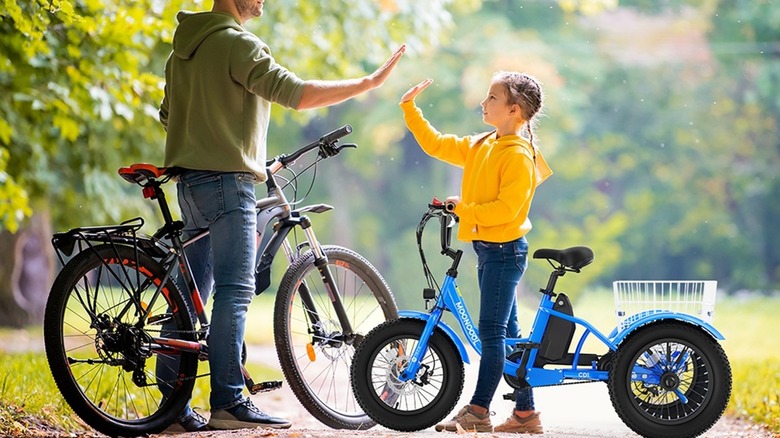
Youth-oriented bicycles first went on sale following WWI and have been a childhood staple ever since. However, over recent years, the e-bike has risen in popularity, with kids zipping around neighborhoods with the help of battery-powered electric motors. However, their popularity doesn't mean there isn't some confusion surrounding them, such as when parents accidentally buy their kids electric motorcycles instead of e-bikes, which you want to avoid considering the former is much more powerful.
An e-bike looks similar to a traditional bicycle, with pedals and handlebars, except for a few small differences. You may notice a thicker section along the frame or behind the seat, which holds a large battery. The motor can be housed on the hub of the wheels or near the pedals. These e-bikes commonly feature anywhere from around 250 watts of power up to a capped 750 watts. Anything with more watts is considered an electric motorcycle in the U.S. There are three classes that define e-bikes — class one and two have a maximum speed of 20mph, while class three goes up to 28 mph. While classes one and three use pedal-assisted power, class two includes the use of a throttle in addition to a pedaling aid. An age requirement usually doesn't apply for the first two classes — however, some states require riders to be 16 in order to use class three e-bikes.
Understanding the classes and difference in power between an e-bike and e-motorcycle is a good start, but there are still a few things parents need to consider before purchasing one for their child. The added weight, fitness concerns, injury risk, and additional maintenance are all worth a closer look for those interested.
E-bikes weigh more than traditional bicycles, which could take some getting used to
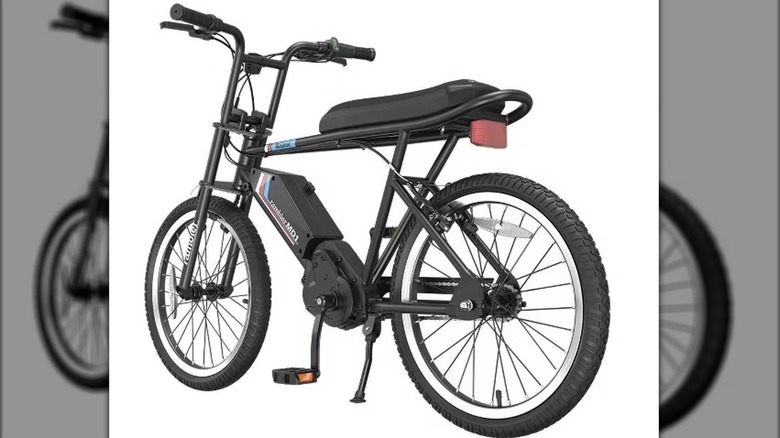
While an e-bike may look awfully close to a regular bike, it can be noticeably heavier. This is due to the extra components like the motor and battery. For example, a classic bicycle rated for children 7 and up may tip the scales at around 32 pounds. An e-bike for the same age bracket could be just over 43 pounds or heavier. Consider the fact that the average 8-year-old weighs between 44 and 80 pounds. That means an e-bike that's 43 pounds could potentially be nearly equal to a smaller child's weight. In a case like this, that extra weight can significantly impact the riding experience, making things much more difficult. Therefore, you should take this factor into account when looking for a youth e-bike, opting for lighter models that better accommodate your child, depending on their size.
This difference becomes important in terms of braking distance and general handling. A heavier e-bike will pose a greater challenge in situations where a child needs to balance at lower speeds. Getting on and off the e-bike may present some difficulties as well, again requiring added focus on equilibrium, made more difficult due to the added weight. While exact figures can vary between e-bike models, with the added pounds of the motor and battery, it will take longer to come to a stop than a traditional bicycle. Meaning, a child will need to start applying the brakes sooner, learning to incorporate extra stopping space while riding.
Your child will still get plenty of exercise on an e-bike as long as it has pedals
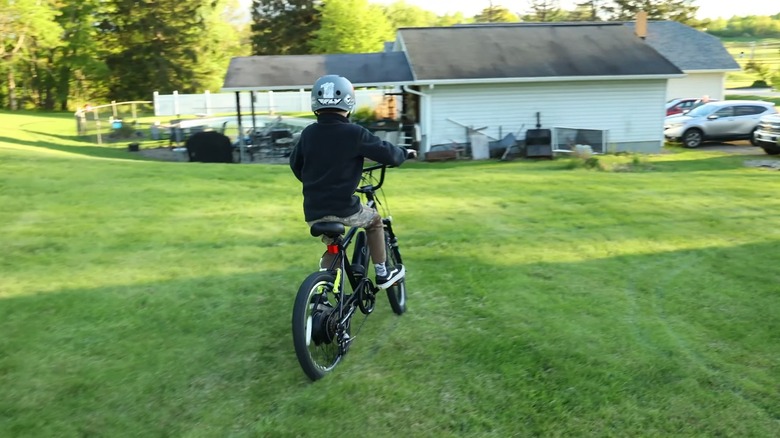
One of the myths surrounding e-bikes is that because they come equipped with a motor, it somehow does all the work, which negates the fitness benefits of traditional bicycles. On the contrary — you're still required to pedal, with the motor only offering some assistance. Chris Cherry, a professor at the University of Tennessee, explained to People for Bikes, "Research says people ride e-bikes more often and farther, so they get more physical activity, even though it's less intense."
In America, around one out of every five children meets the criteria for obesity, according to the CDC. One of the biggest contributing factors to this issue is simply a lack of physical activity. Because e-bikes can offer a rider some help on a steep hill and don't push the body nearly as hard as a regular bicycle, they're more approachable for kids of all fitness levels. While the electric motor takes the bite out of a lengthy ride, it also places the focus on fun, allowing children to not only stay on the e-bike longer, but also be more apt to get back on it, potentially increasing regular physical activity.
E-bikes are faster than traditional bicycles posing some concerns about potential injury
Regular cyclists travel approximately 12.6 mph on average, and a purely human-powered bike won't typically exceed this speed unless the rider encounters a lengthy downgrade or exerts a short burst of extra effort. While that may not sound too fast, it can be enough speed to cause a variety of injuries. Now consider that class one and two e-bikes can reach speeds of 20 mph in areas where it would be difficult with a classic bicycle, and you can understand some potential concerns.
Amy Frias, a health educator with Children's Health of Orange County (CHOC) and the Safe Kids Orange County coordinator, spoke on a Long Live Childhood podcast put on by CHOC, explaining, "But I'd kind of like to start with talking about what are some of the injuries that we're seeing here at Children's Health of Orange County and our trauma department when it comes to e-bikes. And we find these a lot with regular manual bikes as well, but we're seeing concussions, issues of fractures and skull fractures and facial fractures." One study, highlighted by Reuters, found that when compared to traditional bicycles and scooters, those on e-bike's had more than double the rate of internal injuries.
This doesn't mean that parents should avoid getting an e-bike for their child, but rather, extra caution and safe riding habits should be prioritized. For example, there are some accessories you actually need for your e-bike, including a proper helmet (which could be required by law for your child, depending on the state), among other things to help provide a safer experience.
Caring for an e-bike requires a bit more attention

A regular pedal-bike may need its tires pumped with air occasionally, and you may need to apply some chain lubricant to reduce noise. However, not much else goes into caring for a standard bike. An e-bike is different, though, because you have to take into account proper battery maintenance. With a traditional bicycle, you wouldn't think twice about parking it in a shed or garage regardless of the season, but an e-bike battery is best kept in environments around 68 degrees Fahrenheit.
Good charging habits, such as allowing it to cool following a long ride before plugging it into the charger, can also lengthen the life of the battery. Furthermore, don't allow the battery to reach 100% charge, as limiting it to around 80% reduces the rate of degradation. While there isn't any word yet on e-bikes for kids getting dual batteries, some recent releases, like the NIU twin-battery e-bike, are promising expansive ranges up to 90 miles to help eliminate some of the current limitations. However, this setup would still require extra care and proper charging habits for battery health.
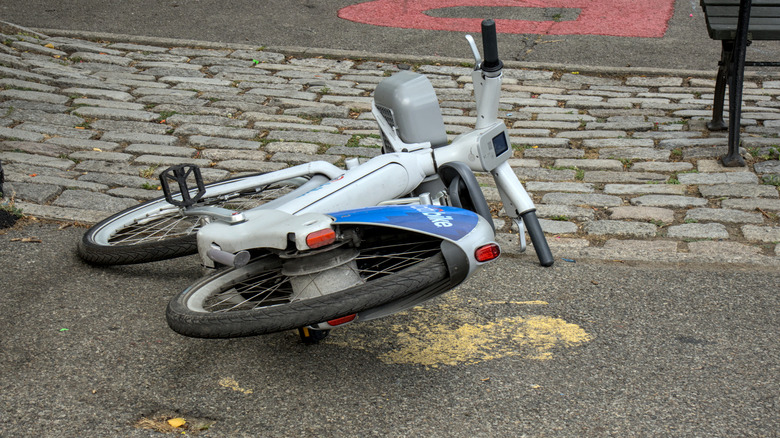
These are just a few examples of e-bike maintenance best practices that you should keep in mind if you're considering purchasing one for your child. Basically, if you decide on an e-bike for them and you want it to last, the days of throwing the bike down outside the house and leaving it to bake in the sun or get rained on are over.