

Ford 427 Vs 427 SOHC: How The Cammer Became A Totally Different Machine
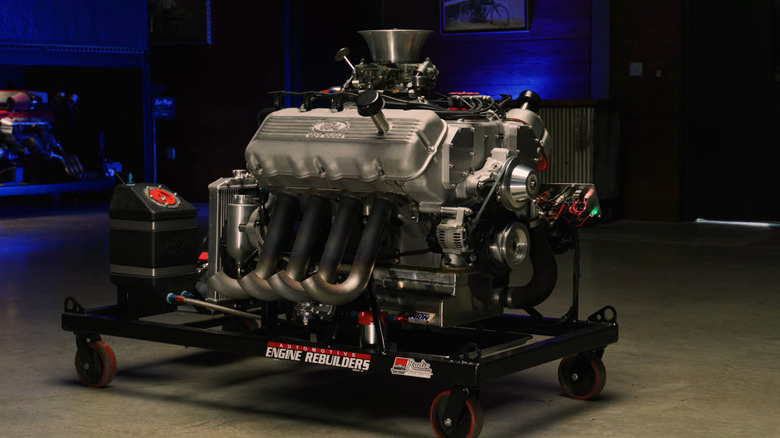
For engine enthusiasts and muscle car fans, the 1960s were a seriously exciting time. Engines were getting larger, outputs were soaring, and the rivalries within motorsport were heating up at a wild pace. By now, we've surely all heard the tale of Ford taking on Ferrari, securing a smattering of wins at Le Mans and beating them at their own game. But the Blue Oval brand had rivalries building on its home turf, too.
On the NASCAR circuit, Chrysler was quickly taking Ford's crown, and it was all thanks to a new ace up the automaker's sleeve — the 426ci Elephant HEMI engine. At the '64 Daytona 500, Chrysler claimed the top three places, firmly putting Ford in their place, demonstrating the impressive performance that was offered by its new HEMI V8. Keen not to be outshone for too long, Ford engineers got busy in the workshop, and their starting point was to dig out the GT40's side-oiler 427-FE motor.
Now, Ford already knew the engine was both powerful and reliable thanks to previous race successes, the much of the engine was left largely untouched, save for tweaks to the idler gear, a few updates to the 427's lubrication system, and cross-bolted main bearing caps — the latter a necessity for handling the sort of grunt Ford had in mind for destroying the Elephant's NASCAR dominance.
However, while the block was kept mostly unchanged from the 427-FE lump, Ford engineers got busy working on the top end. The heads were completely redesigned with hemispherical combustion chambers, and the team opted for a single overhead camshaft design. Here is where the engine's nickname "Cammer" stems from.
Heavy modifications to the top end differentiated the Cammer engine from its 427-FE base
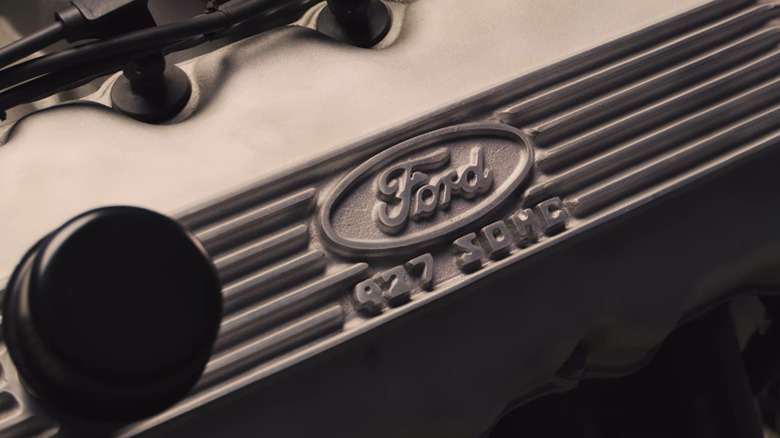
Other changes included modifications to the valvetrain, such as larger, stainless steel valves, in addition to a wild 6-foot timing chain. This came with complications, but Ford managed to make the design work by varying the cam timing to account for stretch under load, however this forever remained a weakness of this otherwise truly impressive hemi engine.
It's reported that the engineering team took in the region of just 90 days to transform the race-proven GT40 side-oiler V8 into the mighty Cammer engine, and the outputs achieved are a testament to the good work done. With a single four-barrel carburetor attached, the Cammer kicked out no fewer than 616 horse and 515 lb-ft of torque, however, with a dual-carb setup, these figures would swell to 657 and 575 respectively. The 427-FE, by comparison, produced between 485 and 505 horsepower in the GT40, which just goes to show how effective the modifications made were. In order to achieve these heady figures, compression ratios for the Cammer were notoriously high — up to 12:1 was possible.
Now, numerous Dodge models were fitted with the 426ci HEMI engine, and while road-spec cars were rated at 425 horsepower, the 426 in race-trim sported a higher compression ratio, and so performance would have been a little livelier. While the legendary Elephant engine would have taken some beating, the numbers kicked out by the Cammer suggest Ford had the tool for the job. Sadly, though, the Cammer would never see the track as Ford had intended.
Regulations kept the Cammer from competing
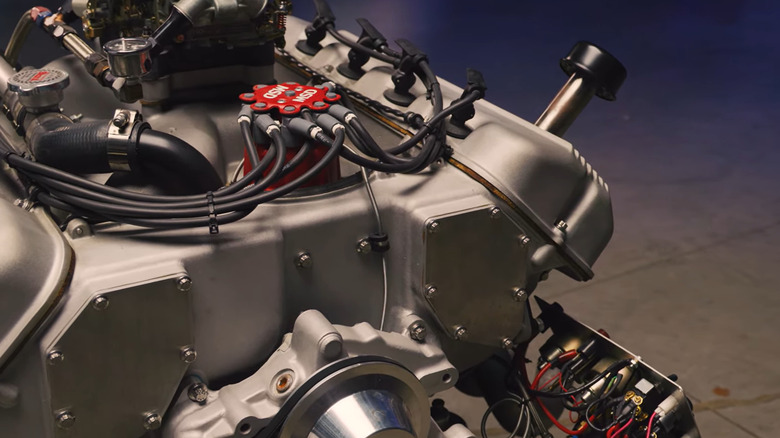
After having completely transformed the 427-FE engine into the legendary Cammer, with outputs ready to rock the NASCAR world, the powers that be quickly came to rain on Ford's parade. Not only did Bill France, the guy at the top of the NASCAR power-tree back in the mid '60s, decide that Ford's new overhead cam design was too European for the American series, but the sanctioning body then went on to outlaw these more custom engines altogether. The thought behind this decision was that the so-called "stock" cars were no longer that, and despite valiant efforts from Ford to overrule these decisions, the outcome stuck.
Well, for a short while anyway. In '66, the engines were actually allowed, but only if Ford raced with the larger Galaxie model. This would see the Blue Oval team sporting a racer which weighed a good 430 pounds heavier than the competition, and so at this point, the brand decided to step away from NASCAR altogether.
With no production models churned out with the Cammer under the hood, and only 500 or so units ever made, the engine is exceedingly rare these days. Especially so in standard condition, as so many were modified for extra power in the drag racing scene. It's a real shame that the story of Ford's 427 Cammer was cut short, but it still remains one of the most interesting chapters of Ford's performance history, and a real "what could've been" story for NASCAR.
How the 427 Cammer influenced the drag scene

With NASCAR off the table, Ford looked to find an alternative use for the Cammer engine, and the drag racing scene seemed like the ideal answer. The engine was scarce, but Ford made sure key figures within the scene had access to the SOHC V8. This includes legends such as Tom Hoover, Pete Robinson, and Connie Kalitta — all nitro racers of the era.
For these racers, the Cammer engine made a great base, but it wasn't race-ready straight out of the box. The main issue was that nearly seven-foot timing chain, but Pete Robinson — along with help from other industry professionals — redesigned the timing system into a gear drive. Once modified accordingly, the engine excelled in Top Fuel dragsters, with notable examples appearing at the U.S. Nationals in '67, in addition to finding homes in flip-top funny cars of the era.
Ultimately, the scarcity of the engine would soon stop the fun. Despite big names like Connie Kalitta continuing to endorse the engine in Top Fuel applications, it was simply too rare for others to join in and put Cammers to use. When they do crop up, they command serious figures — even reproduction heads fetch big bucks when they surface for sale.