

How To Tell If You Need A New Cabin Filter
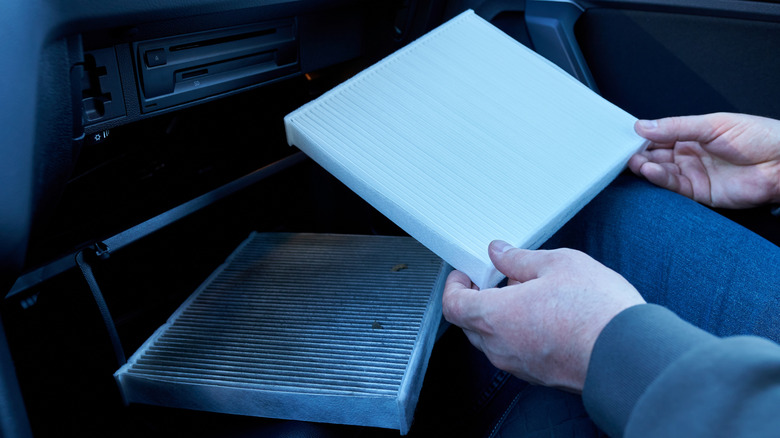
Cars need a bevy of fluids and filters to keep running like champs, and one of the most overlooked is the cabin air filter. Similar to how periodic filter replacements are necessary for home air conditioners and furnaces, the cabin filter allows your car's HVAC system to protect itself against harmful pollutants like dust and pollen. That's why automakers suggest replacing the cabin filter once a year or at least every 15,000 miles to keep the air clean.
Your car's air conditioning won't like it if the cabin filter gets nasty. Decreased airflow from the air vents is one of the most obvious and noticeable symptoms of a dirty or clogged cabin filter. It may also cause unusual whistling noises from under the glovebox or dashboard.
Next comes a faint or strong moldy smell when turning on the AC, which is often a clear sign that the cabin filter is ready to give up the ghost. It sounds gross, we know, but mold buildup is not unusual in neglected HVAC systems, and changing the cabin filter frequently is typically enough to prevent your car's AC from smelling like stale cheese and vinegar. Indeed, changing the cabin filter is a top tip for keeping your car's AC blowing cold.
Furthermore, it's a good idea to check the cabin filter if you or your passengers are sneezing more frequently than usual when inside the car or if you develop allergic reactions from the dirty air. Of course, the most telltale sign is an extremely dirty filter, but you'll have to remove it before you can perform a physical inspection.
How much does it cost to replace my car's cabin filter?
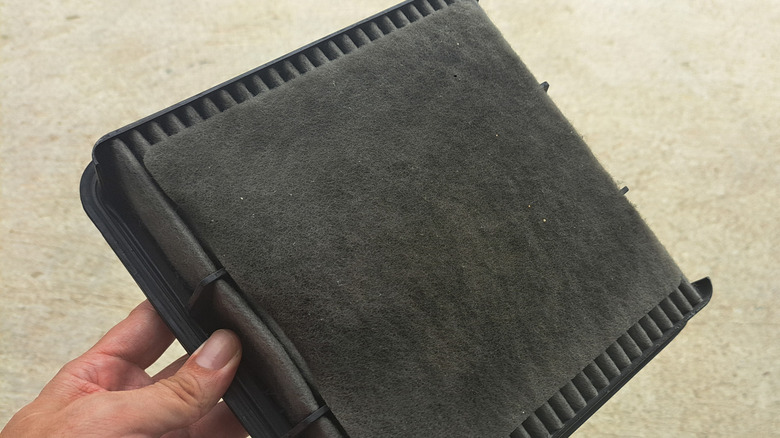
For most cars, it shouldn't cost much to replace a cabin air filter, although the cost can vary depending on the type of filter and the vehicle. You can expect to pay $20 to $50 for a new filter, but the cost can balloon to $100 or more for premium cars and luxury sedans.
The most affordable option is a pleated particle filter with a papery texture, which is typically derived from synthetic polyester. Meanwhile, activated carbon, high-efficiency particulate air (HEPA), and electrostatic cabin filters are typically costlier but better at filtering odors and smaller particles to ward off air irritants inside the cabin.
In most cases, the most affordable cabin filters are good enough for the job, especially if you plan on replacing them more often or earlier than the recommended duration. However, consider upgrading to quality charcoal or HEPA filters if you have respiratory issues or are sensitive to inhaling dust and pollen. Electrostatic or washable cabin filters are a wise investment to help reduce landfill waste while also helping to provide cleaner air, but they are among the costliest of the bunch. However, the pricier ones will typically last longer and are more efficient at purifying the air.
Replacing the cabin air filter is easy-peasy
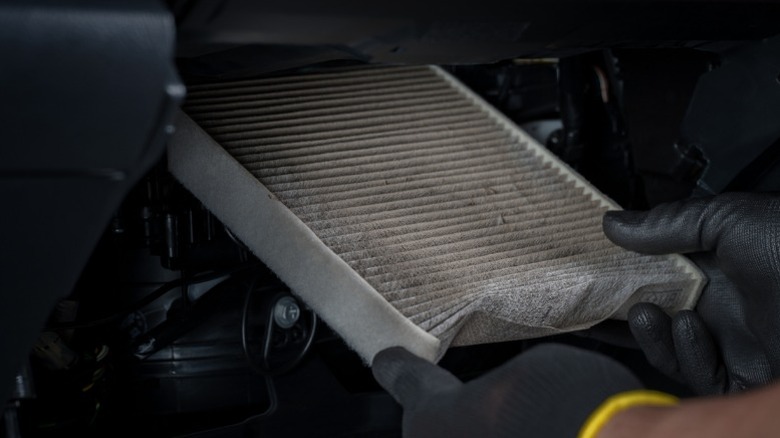
You can pay for labor and let a technician do the work, or you can save cash and do it yourself. Some cars have the cabin filter behind the glovebox. Others may house it somewhere behind the dashboard or under the hood. Whatever the case, consulting the owner's manual will typically show you the filter's location, how to replace it, and the recommended service intervals.
You'll need basic tools like a Phillips or flathead screwdriver to possibly remove a panel or two, and you'll need to drop the glovebox to access the filter housing in some cases. However, replacing it is nothing more than removing a cover, pulling out the old filter, and putting in a new one.
As to whether you can clean a dirty cabin filter, we suggest replacing it if the filter media is discolored or inundated with dirt, especially if the filter is very filthy after less than 15,000 miles or a single year. It's the same deal with the engine air filter, where it's better to replace it than clean it and risk damaging the filter's fibers. Finally, we heavily endorse checking the condition of the cabin filter every 5,000 or so miles and replacing it more often if you drive a lot or live in dusty areas.