

Snow Chains Vs. Snow Socks Vs. Winter Tires: Which Is Best For You?
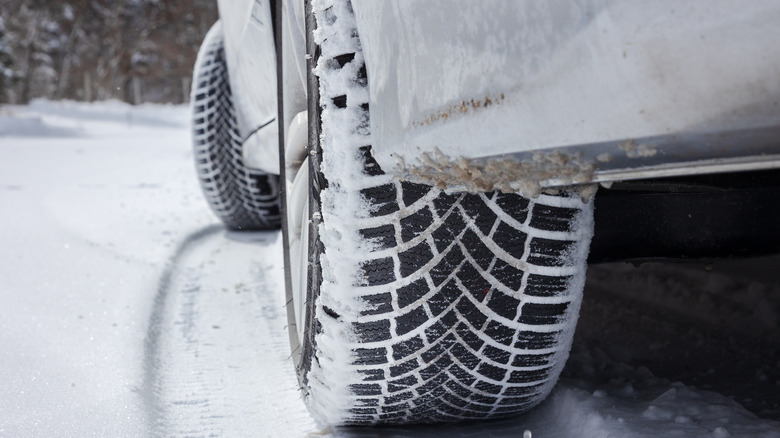
Depending on where you reside in the United States, winter driving can be exceptionally difficult, with traction concerns over snow-packed and icy streets. In fact, more than 70% of the country's roads span areas which get an average of five or more inches of snow, per the U.S. Department of Transportation. Speaking of which, here's how state DOTs deal with snow on the roads in winter.
There are many ways to boost your car's traction in snow and ice, with each offering a different approach. But not all options are suitable in every scenario. So, between specialized winter tires, chains, and snow socks, which option should you choose? As you might expect, the answer depends on each use case. However, for daily driving over the course of the season, tests have shown the superior performance of winter tires over the all-season variety, so that's a good place to start. But there are situations where chains or snow socks could make all the difference — and they could be required by law.
Snow chains are old school, but do they still make for a good option?
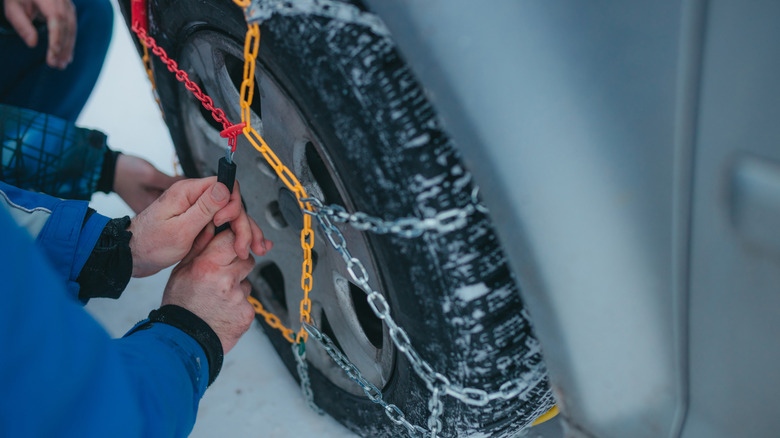
Traction during winter isn't a new problem. The first snow chain was invented back at the start of the 20th century by a man named Harry D. Weed from New York. Considering the road infrastructure — or lack thereof — during that time, the Weed Chain Tire Grip must have been an amazing option. In fact, tire chains are still great picks in some situations, particularly if you're traveling at high elevations. While specific regulations differ among states, those with mountainous regions like Colorado and California require the use of chains in certain scenarios. For instance, California's Department of Transportation, Caltrans, has three levels dictating chain use, with the highest mandating snow chains and not allowing the use of snow socks.
While chains have been the go-to choice for years, some tests have shown they aren't a top performer in every winter scenario. Where chains really shine is when the road has accumulated several inches of snow, to the point that even winter tires might helplessly spin. The chains, which wrap several times across the width of the tires, can carve into the powder, forcefully pushing through it. They have also proven valuable on ice in some tests, being able to grab into the slick surface and stop vehicles from excessively sliding.
However, compared to alternatives, installation is more time-intensive when fitting chains. A complex web of metal (and straps, in some cases) needs to slide over the wheels. Once in place, you can't drive over 30 mph if you don't want to damage the chains. The ride is less than pleasant, too, with vibration radiating through the cabin.
Snow socks: how they work and stand up against alternatives
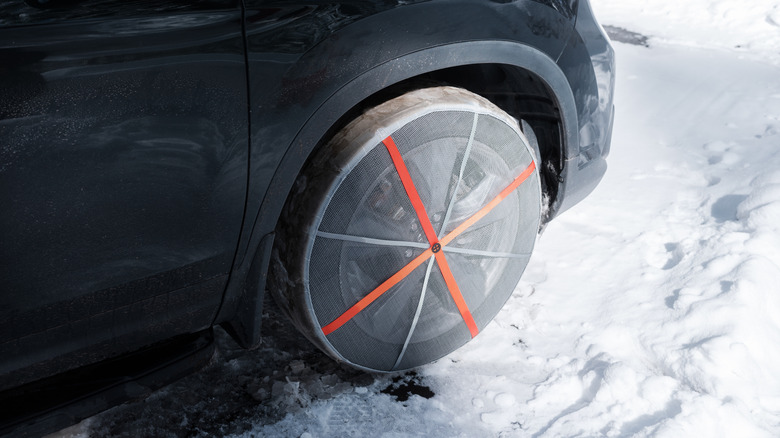
Acting as relative newcomers to the winter traction arena, snow socks were invented in the '90s by AutoSock, a Norwegian company. Essentially, snow begins to stick to these socks as the car drives forward. It turns out that snow actually has pretty great traction on itself. Will Robbins, a Bridgestone tire specialist, explained this phenomenon to Popular Science by stating, "When you make a snowball, it packs together because snow wants to stick to itself." Installation can be easier than traditional chains, but it helps when you have someone with you, as the car will need to inch forward at certain points to get the sock wrapped around the tire.
Based on tests by The Fast Lane Car on YouTube, these socks perform better than you might think. On snow-packed roads in the Colorado Rockies, the first test involved accelerating to 25 mph and then braking hard on a decline to measure stopping distance. The second experiment had the driver begin from a stop on a slight incline to time the car's journey over a short distance. Both acceleration and stopping ability were best with a snow sock on every wheel, outperforming chains and winter tires.
However, like chains, you'll have to keeps speeds below 25-30 mph depending on the sock. They also don't perform as well on ice. There, the sock material just wasn't able to find a solid footing, which is problematic on surfaces with black ice — which is one of the worst things about driving in the winter.
Winter tires: the best choice for daily seasonal driving
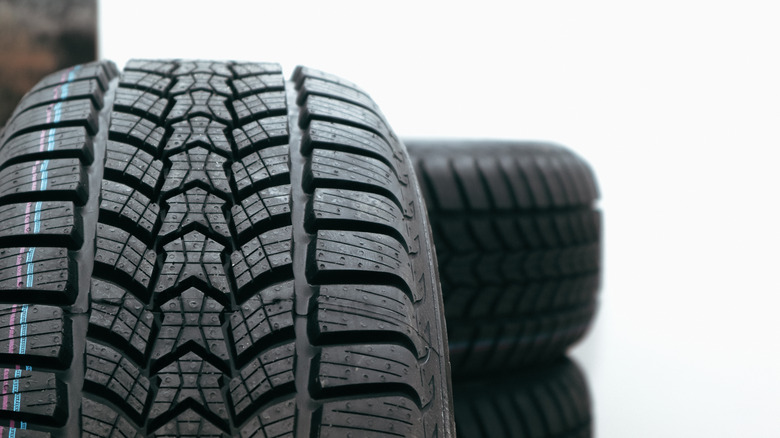
There are a few aspects of winter tires that separate them from other types like all-season. The first is the tread, which becomes evident when viewing these different tire types side-by-side. Unlike the all-season tread, which features smaller gaps between ribs and a more understated pattern, the winter tire looks a bit more extreme. It includes deep jagged patterns with additional space between channels of angled tread. This allows them to find traction by digging into winter roads, moving and directing snow around the tire.
Winter tires offer some advantages over alternatives, as you aren't required to stop and install them like chains or socks. Although you'll need to swap them out once the season is over, they're always ready for a winter storm. And you don't have to bother with guesswork, as these are the best winter and snow tires, per Consumer Reports.
However, not every snow tire is created equally, with the composition of rubber used playing a significant part in terms of performance. Some winter tires are rated for more extreme cold, which means the compound isn't as susceptible to hardening. This allows for more flexibility in the tread while aiding its grip.