

Name Brand Vs. Store Brand Motor Oil: Does It Make A Difference?
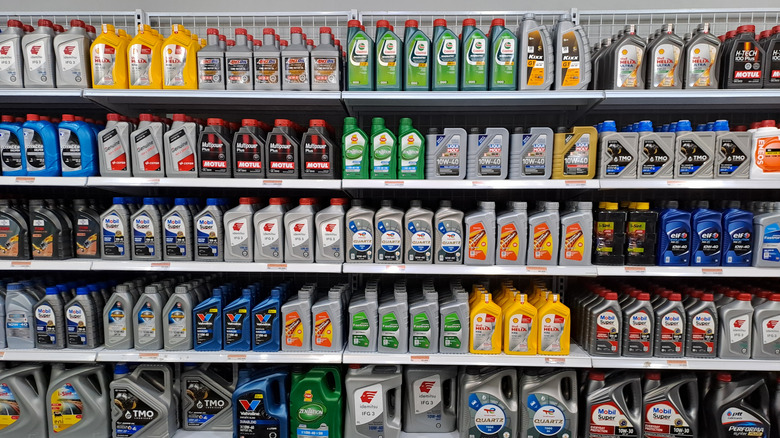
Imagine standing in front of an aisle with two bottles of oil looking down at you. Both of them claim to meet the same standards. The only difference is that one is a run-of-the-mill store brand while the other bears the name of a reputable company. As with many other products, you end up wondering whether you are shelling out the extra cash just for the logo.
Unlike light bulbs or paper towels, engine oil has quality differences that might not be apparent at first glance. However, after a few months or years, the gap starts to show. Motor oil isn't a one-size-fits-all mix of base oil and additives, and formulations can vary — sometimes by a lot.
The internal chemistry of store brand oils varies despite meeting minimum standards from manufacturers and the American Petroleum Institute. This, in turn, affects how long the oil lasts, as well as its engine protection capabilities. This isn't the case with name brand oils, as most contain much better refinements that help them withstand engine heat and contaminants a lot better. (Here are some of the most common oil contaminants and what exactly they can do to your engine.)
How quality differences show up inside the engine
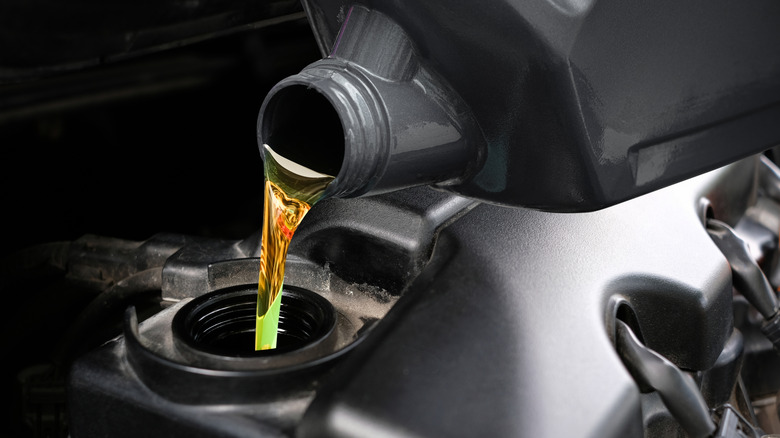
Motor oils are responsible for a lot behind the scenes without most drivers ever realizing it. It handles nearly everything, including lubrication, cleaning, cooling, sealing, corrosion protection, and shock absorption. How well it does its job depends on the base oil strength and additive quality, which are key differentiating factors between brands. Research and tests have shed light on the fact that cheaper oils tend to break down much faster, and they also lose viscosity when subjected to heat. That means sludge builds up sooner and the oil has to be changed more often to maintain protection. This applies even when your ride is sitting idle for months, because oil can go bad just sitting in your engine, too. Inexpensive oils can show higher wear rates and inconsistent quality from batch to batch.
Meanwhile, premium and mid-tier name brands typically exceed minimum requirements and provide more consistent protection. Analysts note that the best way to see the difference is through oil analysis. Run one oil for a normal interval, sample it, use testing kits to determine how it's holding up, and then try another brand.
Cost, longevity, and what really matters when choosing oil

So does brand matter? Not in the way most people think. A big brand isn't always outright better than store brand alternatives. It doesn't matter if the oil was made by a local brand or a well-known one as long as the quality is not compromised. If the quality is top-notch, the oil tends to last longer (no need to follow that ages-old 3000 mile rule) and it also keeps your engine tidy. On the flip side, cheap oils that compromise on additives may sound enticing to the wallet, but they can become a much bigger problem down the line. Clogged passages and melted engines may lead to heftier repair costs than the few dollars extra you'll fork out for quality oil.
Start with your vehicle's required viscosity and certifications. Then, choose a brand (store or name brand) that reliably meets those standards and has a track record of consistent formulation. Switch brands if you want; that alone won't harm your engine. Just avoid oils that barely meet minimums or offer suspiciously low prices. Quality oil is a small investment that pays off every mile.