

Defense Bill Proposes What If Army Didn't Have To Learn Anything From Fatal DC Crash
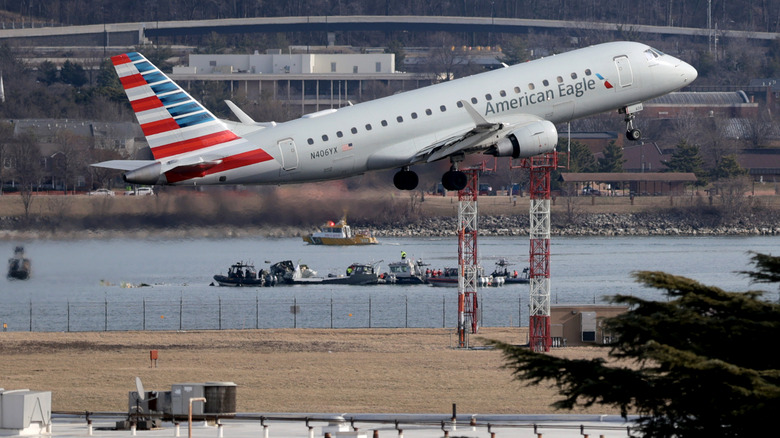
It's an absurd time to ask for fewer safety precautions and less oversight in aviation safety. In an extremely rare moment, the National Transportation Safety Board on Wednesday railed against a section of the proposed National Defense Authorization Act, which would give the military "unfettered access" to Washington, D.C.'s airspace. Lest we forget, a U.S. Army helicopter collided with an American Airlines regional jet over the Potomac River in January. The mid-air collision killed 67 people, the country's deadliest air disaster since November 2001.
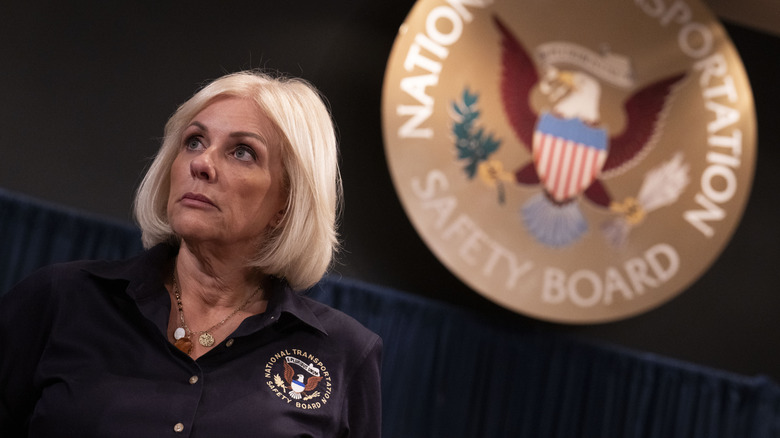
The 3,000-page NDAA will authorize the Department of Defense's astronomical $900 billion budget for next year. However, a section of the bill would allow any military department secretary or flag officer to permit helicopter training flights through D.C. airspace with modern aircraft-tracking devices disabled. According to the Hill, the bill passed in the House on Wednesday and set to be voted on in the Senate ahead of a year-end deadline. In response, NTSB Chair Jennifer Homendy said during a press conference:
"I want to be very clear that [Section 373 of the NDAA] does not in any way enhance safety. In fact, it reverses safety changes made after the midair collision, after issuance of our safety recommendations, after Secretary of Transportation Sean Duffy rightfully implemented our urgent safety recommendations, and essentially gives the military unfettered access to the crowded and complex D.C. airspace."
Seriously, what is Congress doing?
What was the point of the entire investigation if all the findings are ignored and we actively make things worse? Near-misses in D.C. over the months after the fatal mid-air collision only illustrated how dangerous the airspace still was. The Army's 12th Aviation Battalion was forced to pause helicopter flights in May after a Black Hawk helicopter forced two aborted landings at Reagan National Airport. Secretary Duffy claimed that the Army was ignoring the FAA-imposed safety rules that allowed helicopter flights to resume.
Homendy's cutting comments are absolutely correct. She added, "An unthinkable dismissal of our investigation and of 67 families who lost loved ones in a tragedy that was entirely preventable." The signs of the air safety system's fragility have only become more apparent since January. Newark Liberty International Airport suffered a radar and communications blackout in April. Air traffic control was unable to contact or track planes for 90 seconds. The understaffed facility then spent three hours with a single air traffic controller just a few weeks later.