

Before You Store Your RV For Winter, Do This To Protect Your Battery
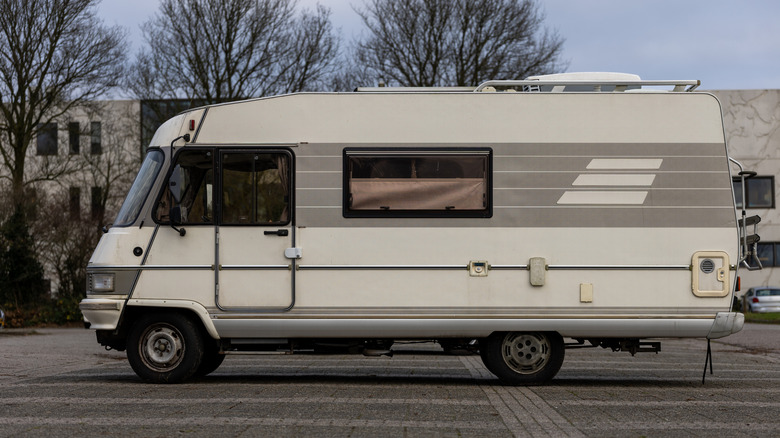
As RVs get put away for the winter season, one part faces more malfunctions than almost anything else: the battery. Owners often find themselves with an RV that won't recharge because the battery suffered damage, due to long periods of inactivity, cold temperatures, and gradual self-discharge. How you prep the vehicle before storing it can make all the difference.
There are primarily two types of batteries found in RVs: lead-acid and lithium iron phosphate. The process of properly storing an RV with lead-acid batteries starts with a quick inspection. If you notice corrosion on the terminals or acid residue in the battery box, neutralize with baking soda and a battery-safe cleaner. Then, clean it off thoroughly.
You should also check that the level of electrolyte inside the battery is about half an inch above the plates. Anything lower than that exposes the plates to air and permanently reduces the battery's capacity. If the level of electrolyte is low, add enough distilled water to cover the plates. Then, fully charge the battery. Many RV owners move the battery indoors for winter and connect it to a fully automatic maintainer, which prevents it from self-discharging and avoids exposing the battery to the overcharging risks of an old-style trickle charger.
Preparation for lithium batteries is a lot easier: Simply charge them to the range suggested by the manufacturer, disconnect them completely from the RV, and leave them like that. Without any parasitic loads eating away the battery's charge, they lose only 1% to 2% charge per month on their own.
Why lead-acid and lithium batteries need different winter habits
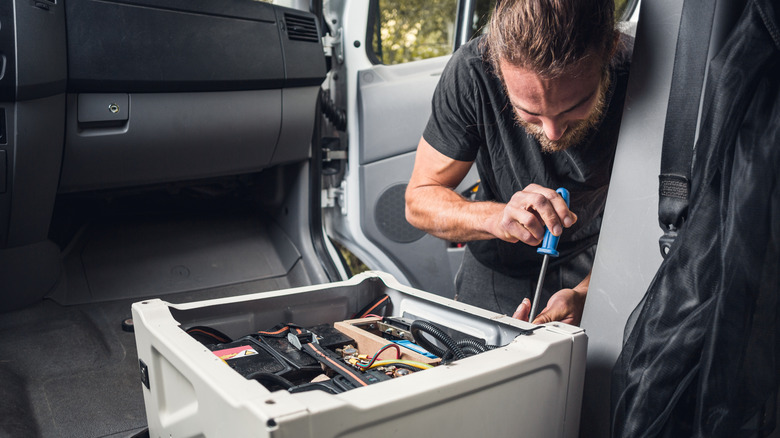
What really happens to an RV battery between the day you park the rig and the moment you fire it up months later isn't obvious from the outside. Even a battery that looks perfectly clean can be losing charge the entire time it sits still, and winter conditions accelerate that process.
Lead-acid batteries depend on a balance of sulfuric acid and water. As the RV sits and the battery discharges, over time, the acid concentration slowly drops. That shift makes the remaining liquid freeze at higher temperatures than it would during the summer (although, you'll find that car batteries often fail faster in hot climates). A deep freeze can cause the battery case to crack, leading to leaks and permanent damage. The chemical shift continues even if the RV is turned off, because small draws inside the rig can keep pulling voltage.
Some lithium batteries behave differently from lead-acid models by trading the liquid medium for a solid ceramic or polymer layer. However, many types, including traditional lithium iron phosphate batteries, still use liquid electrolytes with lithium ions. The key difference is that these do not typically freeze or require water-level maintenance like lead-acid batteries.
Internal management systems further limit how fast lithium batteries lose their charge. They are not immune to slow drains from anything left connected inside the RV, and that is why shutting the rig completely off becomes so important during winter storage. Without that disconnect, even a low monthly drain can cause problems by spring. Hopefully, with the adoption of real-world solid-state batteries, this battery problem will soon be solved.