

These Hybrids Can Get 50 MPG Or More
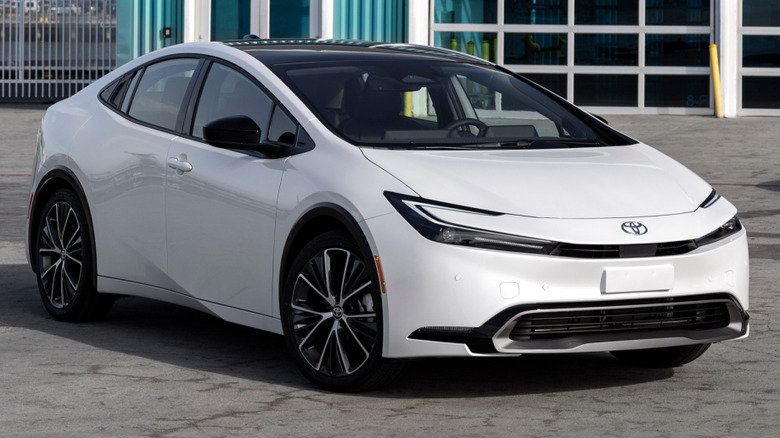
Fuel makes up a sizable portion of car running costs – GasBuddy data reveals that drivers in the United States spent $423.1 billion on gas in 2024. For many who are concerned about gas prices, switching to a highly economical car such as a hybrid is a good way to keep those expenses down. Today's hybrids deliver better fuel economy figures than their nonhybrid counterparts thanks to electric motors that supplement the main engine's output and assist with activities that require a lot of fuel, such as acceleration or restarting after a stop.
But not all hybrid cars are equal when it comes to saving money on fuel bills. And so we dug into the Environmental Protection Agency (EPA) data to find the most efficient hybrids you can buy. Plug-in hybrids (PHEVs) were not considered, as their efficiency largely depends on how much battery capacity they have and how regularly they are charged. If you never plug your PHEV in to charge, it would work almost the same way as a traditional hybrid, relying on its gasoline engine and regenerative braking to recoup energy while driving. This usually leads to higher fuel consumption compared to when you charge the battery, since it overworks the engine.
2026 Hyundai Sonata Hybrid: 51 mpg
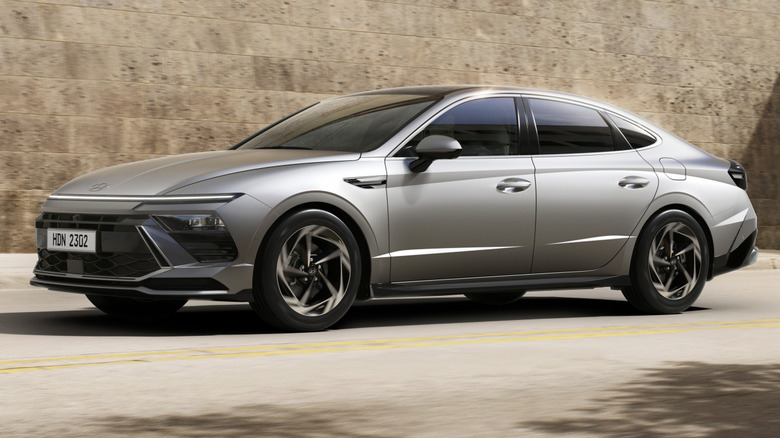
Hyundai's achingly beautiful Sonata midsize family sedan is available with a range of powertrain options, including a 192-hp 2.5-liter four-cylinder and 290-hp turbo-four. But you're unlikely to be considering those if you're after something with impressively high fuel economy. For that, there's the base-spec hybrid trim called Sonata Hybrid Blue. It pairs a 2.0-liter four-cylinder with a motor-generator that combines for 192 hp and a fuel economy figure of 51 mpg in city-highway driving, making it slightly more efficient than the SEL and Limited hybrid models, which are both good for 47 mpg combined.
Pricing starts at $29,050 (MSRP), and the Sonata Blue Hybrid offers enough to tease buyers away from the competition. A 12.3-inch infotainment system comes standard, for one thing. Plus, you get things like wireless Apple CarPlay and Android Auto, adaptive cruise control, driver attention warning, lane-keeping assist, and blind-spot monitoring as standard. There's a good amount of head and legroom, too, and the trunk is also a reasonable size at 15.6 cubic feet.
Warranty and maintenance coverage are another area where the Sonata Blue Hybrid does well. Hyundai provides a five-year or 60,000 miles comprehensive limited warranty, and the powertrain gets its own coverage for up to 10 years or 100,000 miles. On top of that, there's a 10-year (100,000-mile) coverage for the high voltage battery pack and hybrid system components.
2025 Toyota Camry: 51 mpg
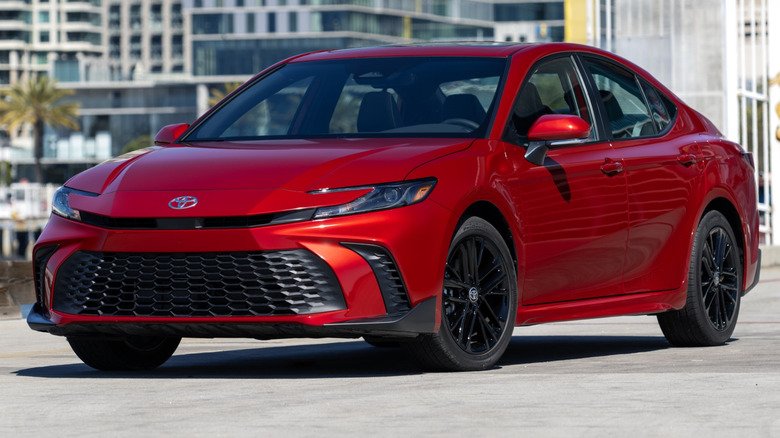
The Toyota Camry is going hybrid-only, meaning any model is a good bet for efficiency. However, if you want the most economical version of the Camry, the 2026 Toyota Camry LE is the one to get. In front-wheel-drive form, it averages 51 mpg from its 225-hp 2.5-liter four-cylinder engine and two electric motors. All-wheel-drive Camry LE models add a third motor that drives the rear wheels, giving them 232 hp. However, in this configuration, fuel economy dips marginally to 50 mpg. The least efficient variants of the Camry return 43 mpg.
The Camry LE starts at $29,000 (excluding a $1,195 destination charge). Along with the reasonable power, what makes the Camry such an interesting proposition is the number of features on offer. Standard equipment includes an 8-inch touchscreen infotainment system along with a 7-inch digital gauge cluster, wireless Apple CarPlay and Android Auto, a wireless smartphone charger, plus a Wi-Fi hotspot.
Additionally, there's the Toyota Safety Sense 3.0 system, which bundles adaptive cruise control, rear cross-traffic alert, forward collision warning, forward automatic emergency braking, traffic sign recognition, and a host of other advanced safety features. A thorough redesign for 2025 also means the Camry is contemporary in style. However, if you're fine with using a smaller Toyota car, the 2026 Toyota Corolla Hybrid is even cheaper than the Camry. It is priced from $24,575 (before destination charges are applied) and achieves up to 50 mpg combined.
2026 Kia Niro: 53 mpg
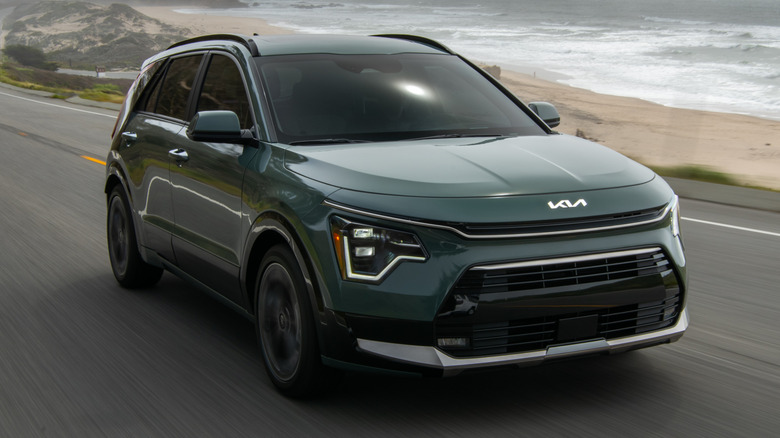
From hybrid to plug-in hybrid and electric power, the Kia Niro has something for everyone. The subcompact crossover SUV is widely regarded as a value champion and has proven to be pretty fuel efficient in all three forms. Opt for the conventional hybrid model, and you get a 1.6-liter four-cylinder paired with an electric motor to produce 139 hp and return up to 53 mpg, enough to make it the most fuel-efficient hybrid SUV around.
That economy figure applies to the Kia Niro LX, EX, and SX. Because they're equipped with larger 18-inch alloy wheels (the others come with 16s), the EX Touring and SX Touring trims are understandably a bit less efficient, with both returning 49 mpg combined. Among all the various Kia Niro trims on offer, buyers shopping on a budget might find the base-spec LX trim attractive because of its more affordable starting MSRP of $26,990.
That gets you an eight-inch touchscreen display, wireless Apple CarPlay and Android Auto, heated outside mirrors, forward collision warning, blind spot monitoring, driver attention monitoring, rear-seat alert, and a host of other features. Kia covers its cars with a five-year or 60,000-mile warranty as standard, and that extends to the Niro, which also gets a 10-year, 100,000-mile coverage for the powertrain, EV battery, and EV system.
2026 Hyundai Elantra Hybrid: 54 mpg
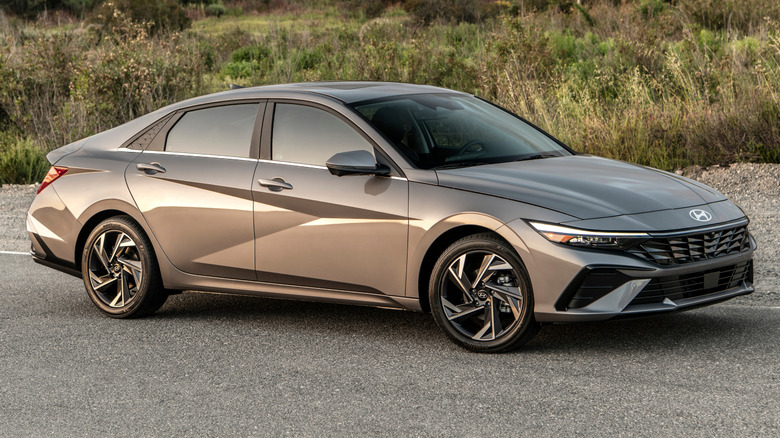
These days, the Elantra lives in the shadow of the Hyundai Tucson sales-wise. But it still sells in huge numbers and remains Hyundai's best-selling car overall, with more than 14 million units sold since its introduction in 1990. Its reasonable price tag, high-tech interior, decent reliability record, and now-sharpened styling are central to the compact car's appeal to discerning modern shoppers. This is further boosted by an exceptional fuel economy figure of 54 mpg in hybrid spec.
That requires the entry-level Elantra Hybrid Blue, which starts at $25,450 (before a $1,245 destination charge is applied); the SEL Sport ($27,425) and Limited trims ($29,800) both average 50 mpg. All three trims feature a 1.6-liter inline four-cylinder engine mated to an electric motor to produce 139 total hp and 195 lb-ft of torque. While a CVT is common across many hybrid cars, Hyundai opted for a six-speed dual-clutch automatic transmission, which is said to recreate the feel of a nonhybrid car.
2026 Toyota Prius: 57 mpg
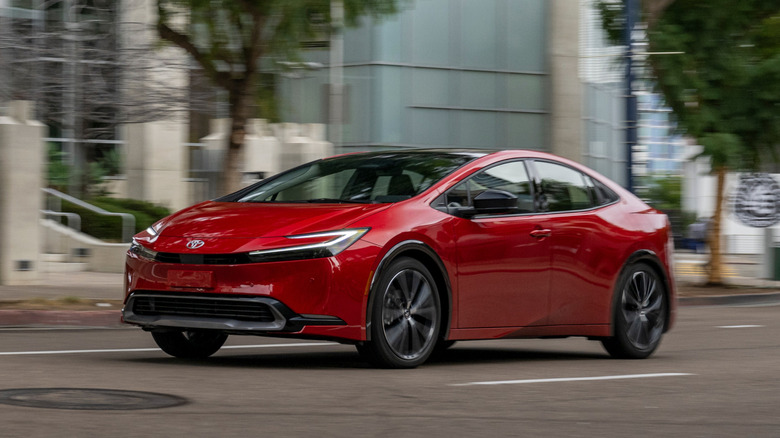
Here's one that everybody sees coming. The Toyota Prius inspired the entire hybrid market segment when it debuted in 1997, becoming the world's first mass-produced hybrid car. It's fitting, then, that it continues to reign supreme as the most fuel-efficient conventional hybrid car decades later, despite now having to share the spotlight with a multitude of other compelling cars.
Our review of the fifth-generation Prius found the car to be immensely pleasant. The design looks attractive, with brilliant attention to detail, and there are lots of standard features and a whopping 23.8 cubic feet of cargo room to work with. All variants of the Prius are just as economical as you'd expect, but those looking to achieve the advertised 57 mpg will need to consider the base-spec front-wheel-drive Prius LE trim.
Opting for an all-wheel-drive Prius LE sees that return drop to 54 mpg. The Prius Nightshade Edition, XLE, and Limited trims, meanwhile, achieve 52 mpg in front-drive configuration, while the all-wheel drive versions are good for 49 mpg.