

7 Cars Powered By A Ferrari Engine (That Aren't A Ferrari)

The thing about automotive enthusiasts is that most of us are looking for a way to sneak a taste of the best the industry has to offer despite not necessarily having the means to drop six or seven figures on the high-end brand that hung on our bedroom walls in the distant past and/or current present. For some, that means letting the BMW dealer tell them the sweet little lie that "M Sport" and "M Car" are practically synonyms. For others, it might be deciding that an Audi Q8 is the "real" Lamborghini Urus.
Yet it would be reasonable to assume that Ferrari, arguably the gatekeepingest company in the world, might not leave any shortcuts to experiencing that special sauce without shelling out the big bucks. Lucky for us, it turns out that there are indeed a few ways to taste the incomparable experience of a Ferrari engine accessible even to those who browse the DuPont Registry purely for luxury retail escapism and have no firsthand inkling of the allocation formulas that'll unashamedly curtail even those capable of showing up with the dealership's asking price in cash stuffed in a duffel bag riding in last model's front trunk. Or maybe you do and you just happen to think that the V6-powered hybrid Ferrari F80 sounds like ass. Either way, perhaps you'll never know the feeling of screaming down the Autostrada in a blur of Rosso Corsa (aka "resale red"), yet there are still plenty of back doors to the Ferrari experience, no prancing horse required.
Alfa Romeo 8C
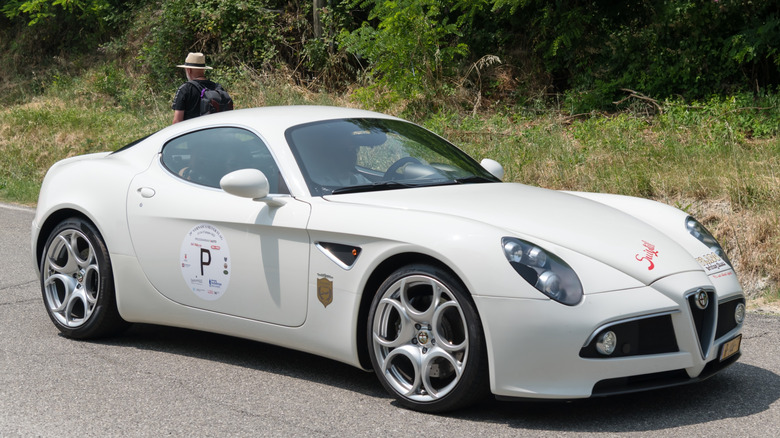
Those with the financial means (and dealership connections) to have taken delivery of the Ferrari 458 Speciale or the Aperta would have known they were becoming part of history. At a time when any company's latest naturally aspirated V8 could have been the last, this high-revving, 4.5-liter piece of automotive engineering pulled no punches. In fact, if there's any decision along the way that might make you look sideways for a moment, it's that this particular motor found its first home under the hood of a Maserati.
Co-developed between the two companies, the F136 was destined for those big-name Ferrari models we mentioned earlier, but not before cutting its teeth in the Maserati Coupe in 2001 and making its way to our first entry, the Alfa Romeo 8C. The 8C was a limited-run halo meant to drag Alfa back into the spotlight using the best hardware the Fiat empire could offer. Retrospective coverage consistently notes the same thing: The car is flawed, cramped, and awkward to live with, but the engine and styling are so spectacular that none of that matters. It's a distinctly Ferrari-like experience that can be yours without the prancing horse, and it's no wonder that the Alfa Romeo 8C was the start of the Alfa Romeo rebirth.
Maserati Quattroporte (select years)
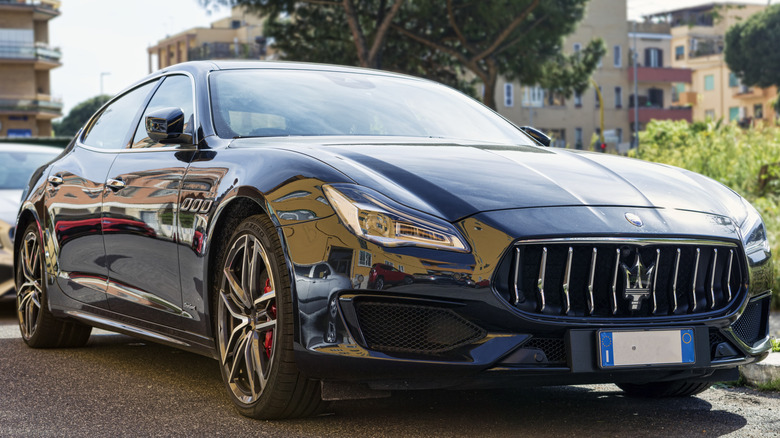
When we talk about "parts bin specials," we're often referring to superficial elements like windshield wipers and switchgear. But as automotive mergers, co-designs, and parts-sharing agreements matured, one good turn deserved another. That's why it shouldn't be that surprising that the delightful Ferrari-Maserati mashup of the F136 that we just told you made its debut in a Maserati would also find its way into, well ... other Maseratis.
Sure, the Quattroporte is more of a luxury sedan than a sports car, but that didn't stop the company from going hard under the hood — a grand saloon boasting (in some model years) a formidable motor forged in Maranello, even adding a little something by beefing the displacement up to 4.7 liters while they were at it. Somewhere between a sleeper and a super sedan, drivers billed the Quattroporte as an auditory treat with ample power and surprising agility, the kind of thing where if you know, you know (and if you don't, you could easily assume you're lined up at the red light with a late-model Stellantis product with no soul and attractive lease offers).
Of course, because good things tend to come to the end, if we were giving you five things to know about the Maserati Quattroporte as it existed in later iterations, the first one is definitely that it later ended up with a turbocharged V6 with a Chrysler engine block from Kokomo.
Maserati GranTurismo / GranCabrio (select years)
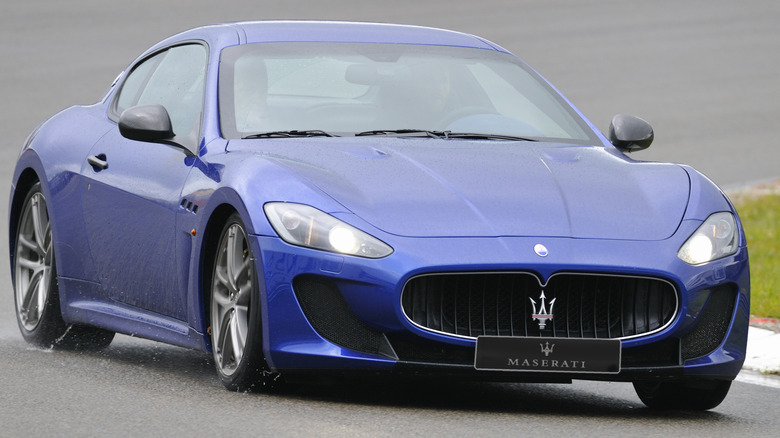
A great engine can be implemented in many forms, and one of the most satisfying is when track-worthy intensity is dialed in for long-haul grand touring comfort. So if the sound of a Ferrari speaks to you but an honest assessment of your actual life leans more toward blasting up to highway speed from the on-ramp than dialing in your apex on turn four, the Maserati GranTurismo and its convertible sibling, the Maserati GranCabrio, are here for you (beginning with the mid-2000s model years). It's the same power plant we haven't shut up about so far (we'll move on shortly), but dialed in for the open road with torque-happy acceleration and effortless cruising speed.
Under the skin, the GranTurismo's chassis and suspension are tuned for GT manners, accommodating long legs with a comfortable ride and docile composure when you aren't asking it to yell. It's a sophisticated package once chosen by a certain category of discriminating driver, making it all the more tempting to get in over your head mechanically because used Maserati GranTurismos are getting scarily cheap to buy.
Lancia Thema 8.32
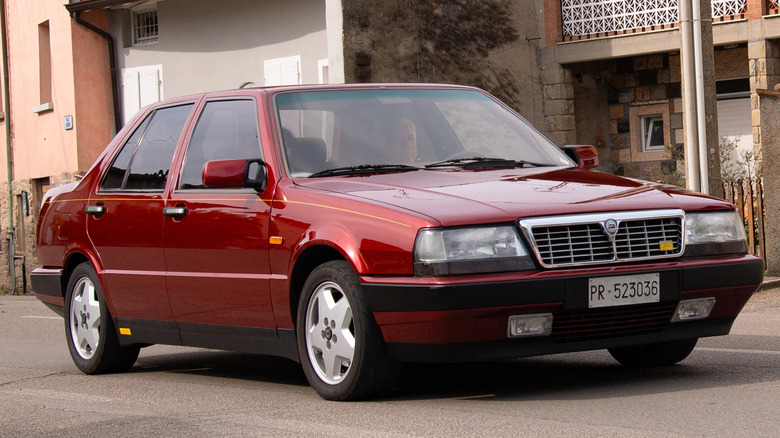
If there's a car that perfectly embodies the idea of a "Q-ship" — innocuous on the surface, deadly underneath — it's the Lancia Thema 8.32. On paper, it's a mid-'80s front-wheel-drive executive sedan, leather and wood and boring subtlety all around. Under the hood, at its heart, lurks a V8 with genuine Ferrari ancestry, borrowing a punchy V8 from the Ferrari 308 of that era. It went from 0 to 60 in a period-impressive sub-seven seconds, which is just enough time for you to ask "why?" before realizing that packing big, fun power into otherwise innocuous sedans was and remains a well-accepted ethos for German manufacturers. So, it's borderline reasonable that their European neighbors might take a crack at it as well.
That said, this wasn't a package without compromise, and even though they did a remarkable amount of work to rework the motor to meet the need, at the end of the day, it was still a boxy '80s sedan with a very heavy motor stuffed into a front wheel drive architecture that's going to remind you of all of the above the first time you try to use the steering wheel and the gas pedal at the same time. Still, even in a universe where Ferrari has deigned to allow the Purosangue to exist, the company doesn't seem to be on the verge of a super sedan, so perhaps the best you can do is to meet the car with an engine you could destroy by turning the steering wheel.
Fiat Dino (Coupé and Spider)
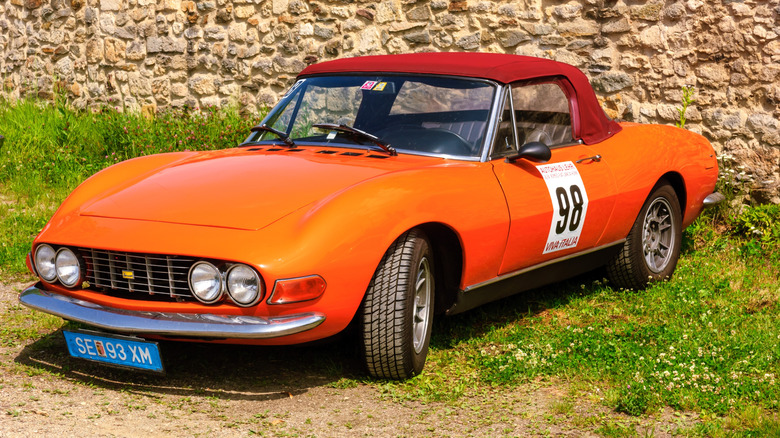
The Fiat Dino is perhaps the purest example of corporate-engineering pragmatism. Ferrari needed 500 homologation engines to race in Formula 2; Fiat needed a sporty halo for its brand. The solution was to build a road car using Ferrari's V6 and call it the Dino, and the result was a car that was anything but a motorsports regulatory compromise, hiding genuine Maranello engineering in Fiat clothing.
That V6, known to purist nerd types as the Dino V6, powered both the Dino Coupé and Spider, giving them a voice, a rev range, and a character that far outclassed the price tag and packaging. Named after Enzo Ferrari's son, the Dino V6 really did live up to the pedigree, boasting 180 horsepower at 6,600 rpm from the longitudinal, DOHC setup with three double body carbs. As proof of the legitimate chops represented by this pragmatic collab, the Dino outlasted the need for the Formula 2 homologation hurdle it was conceived of to clear, with successful sales leading to the launch of a second series in 1968. This thing is no gimmick, which is maybe why this guy spent $1.3 million to restore a Dino with a Ferrari F40 engine. (Now that's a car powered by a Ferrari engine that isn't a Ferrari.)
Lancia Stratos
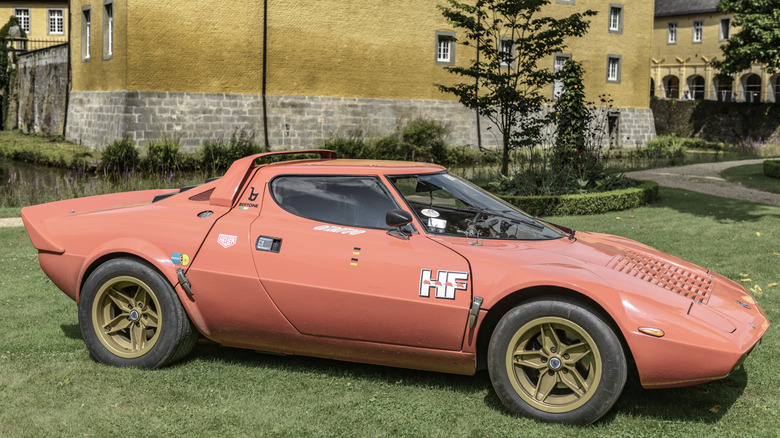
The Lancia Stratos HF backs into automotive greatness from two different directions. On one hand, it borrows the homologation Dino V6 you just read about, bringing Ferrari power to yet another non-Ferrari platform. At the same time, it takes its broader design from none other than Marcello Gandini, the man behind the legendary Countach, marrying bold Lamborghini design sensibilities to a car that's not a Lamborghini and beefy Ferrari power to a car that isn't a Ferrari. It's no wonder that Ferrari was initially reluctant to back the project for fear of it cannibalizing interest in the Dino 246 of the day.
Fortunately for us, the company found a way to move past its reservations and delivered one of the most iconic rally cars ever created. Lightweight, mid-engined, and shaped like a doorstop designed by a madman, the Stratos was a pure homologation weapon. It's an odd little car that's packed with character and exotic car energy but with none of the pretense. The thing is smaller than a Miata, which should give you some idea of the enduring enthusiast appeal. As if its character on the road or the dirt wasn't explanation enough, it further explains its place in automotive circles when you learn about delightful quirks like how the Lancia Stratos took window operation to its most simplified form, so eat your hearts out, track cars with the cute strap.
ASA 1000 GT
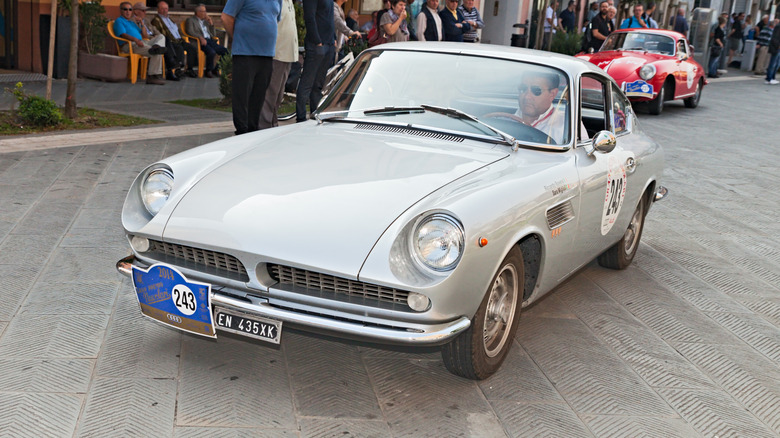
Sometimes the oddest stories are the most magnetic, and the ASA 1000 GT is proof of that. A tiny micro-GT from the early 1960s, it was built by a small Italian firm, styled by Giugiaro for Bertone, and powered by a scaled-down engine derived from Ferrari's own V12 architecture. And by "derived from" we don't mean "tiny V12" as much as we mean "they lopped off a third of the cylinders into a poppin' little four-banger."
Compact, unassuming, almost toy-like, the ASA 1000 GT nevertheless carried genuine Ferrari engineering. Fewer than 100 coupes were produced, but the car endures as a cult classic because it dared to shrink Ferrari's spirit into a more accessible package. It's something of an obscure footnote in history, sure, but in a world where we're told that Ferrari's first EV will be a quad-motor 1,000-plus horsepower monster called the Elettrica, maybe we're in store for a future where a remarkable little four-cylinder with prancing horse DNA but without the badge to match might feel like more of a Ferrari than what's coming off the line in Maranello.